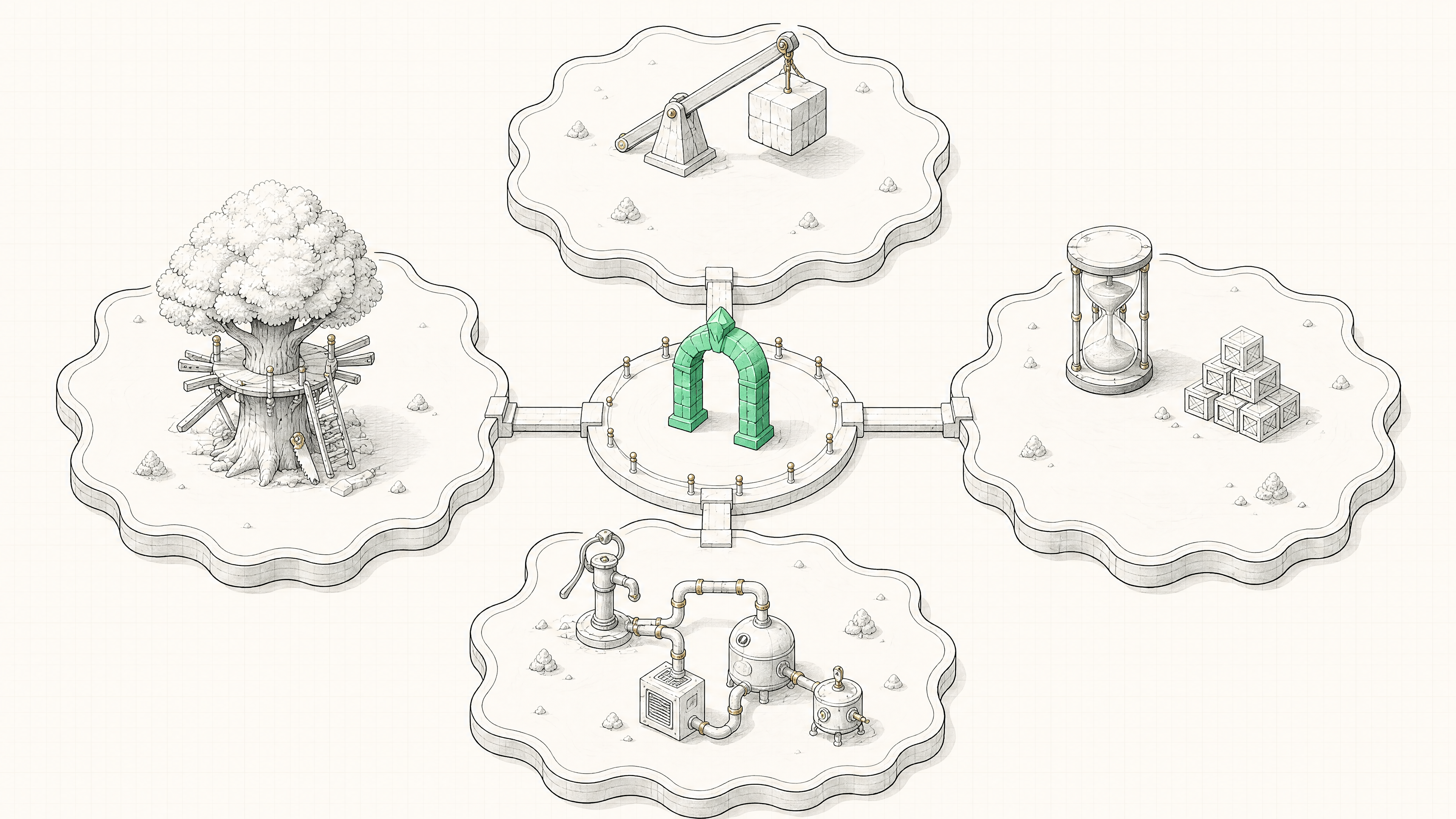
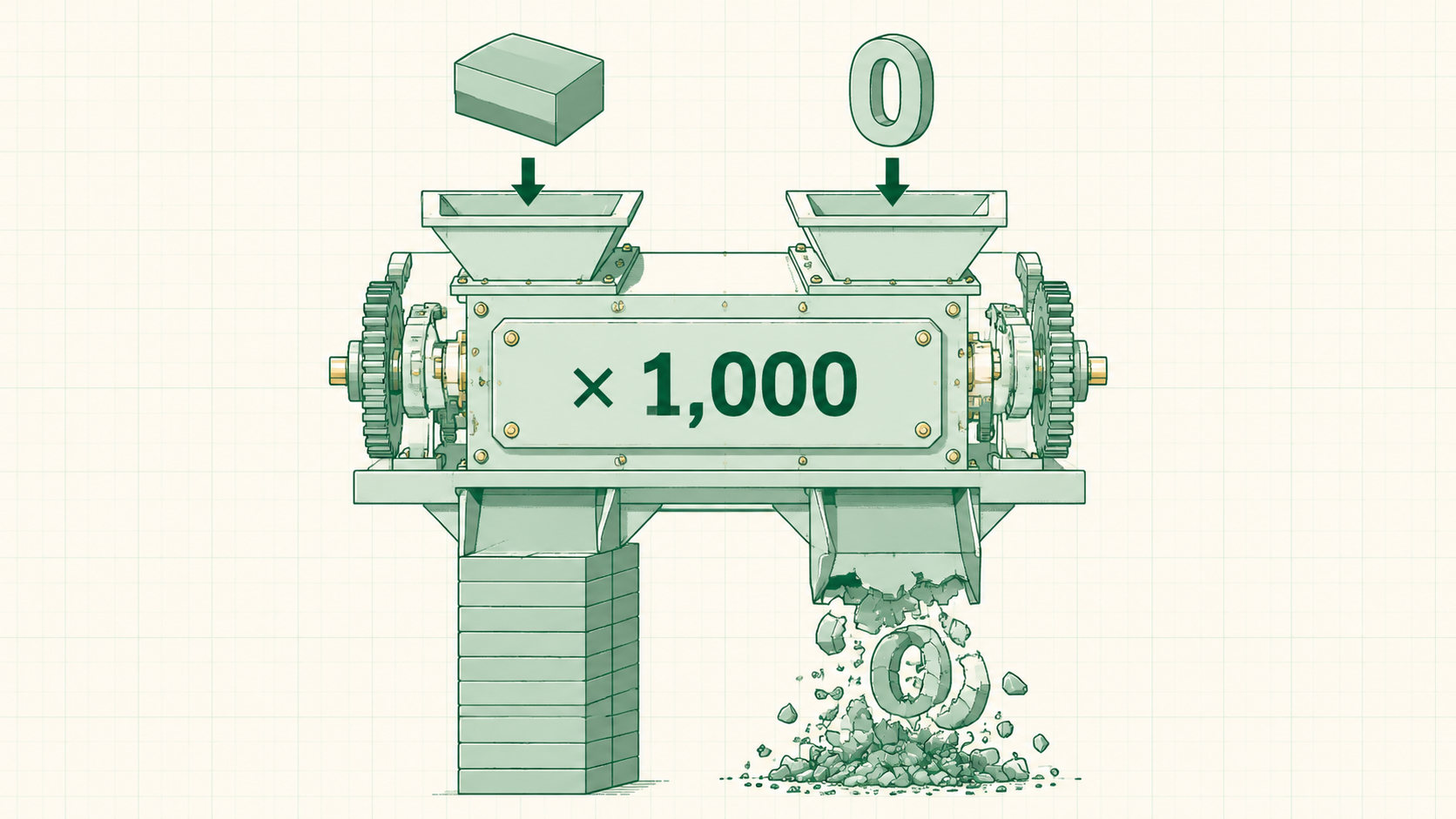
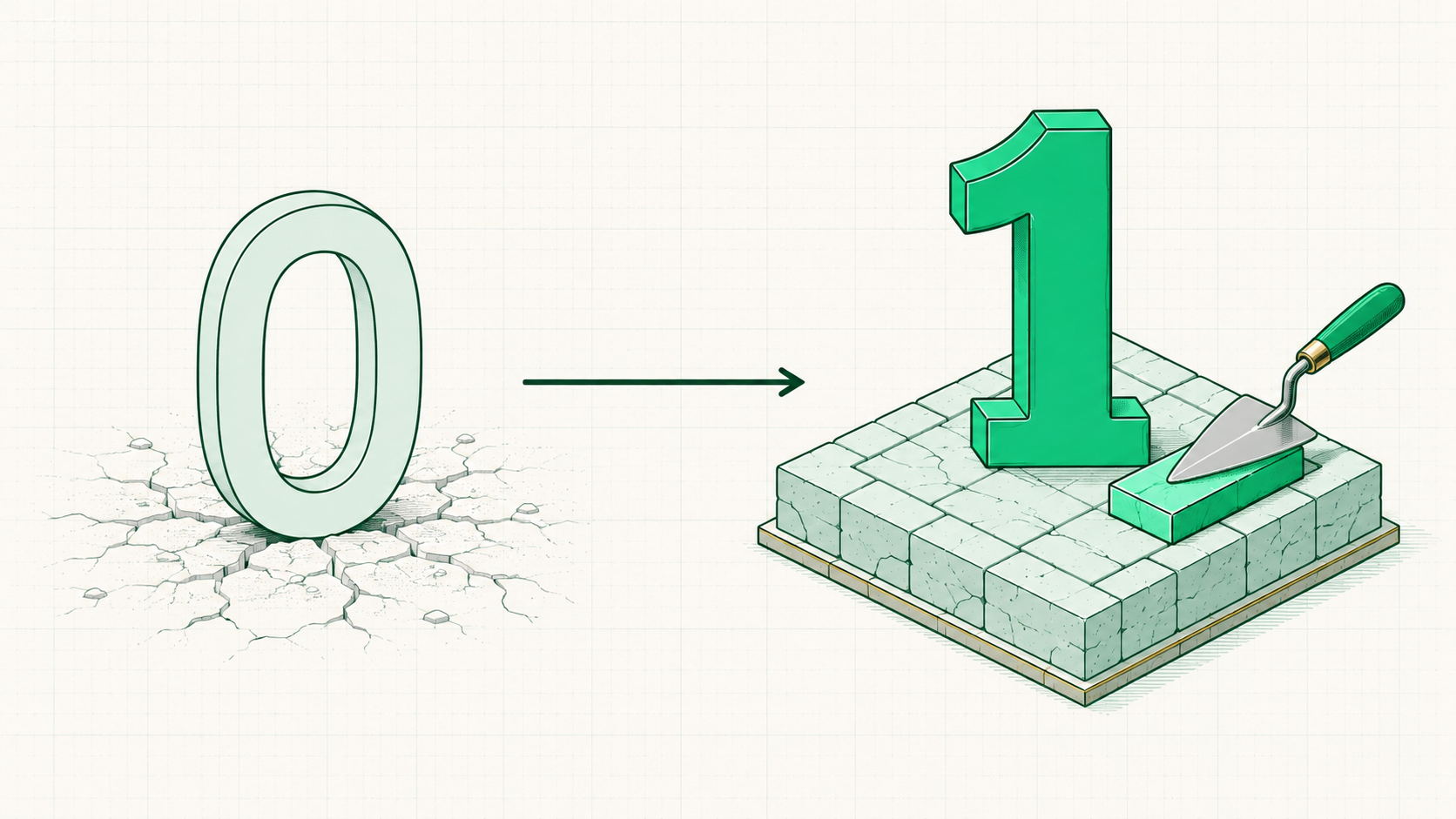
AI multiplies whatever walks in the door — point it at something with zero underlying knowledge and it hands back garbage, because the right questions never get asked.
 🖼Image
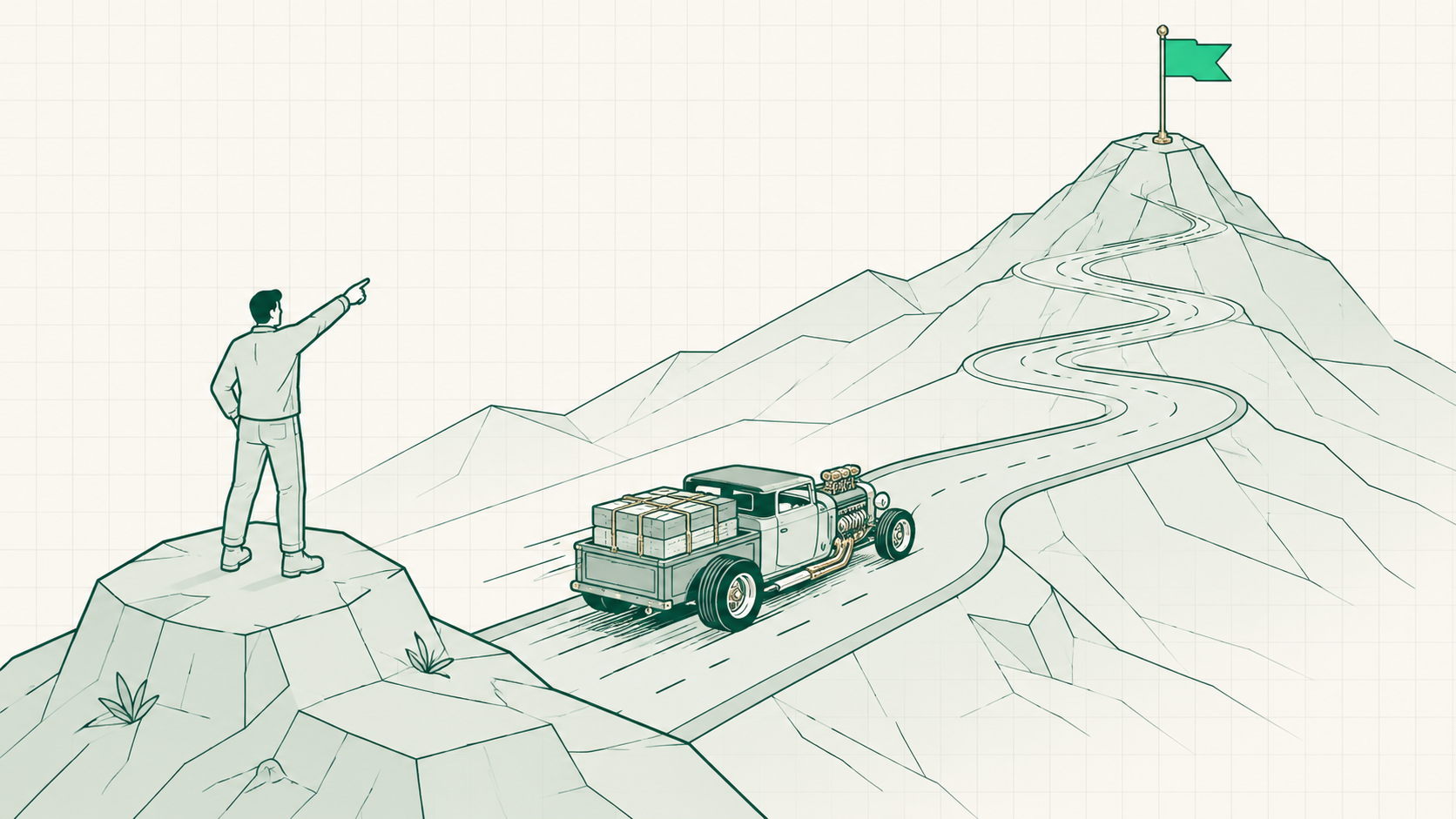
LLMs work off next-token prediction — brilliant at getting somewhere, bad at deciding where. Judgment, taste, and the destination stay human.
 🖼Image
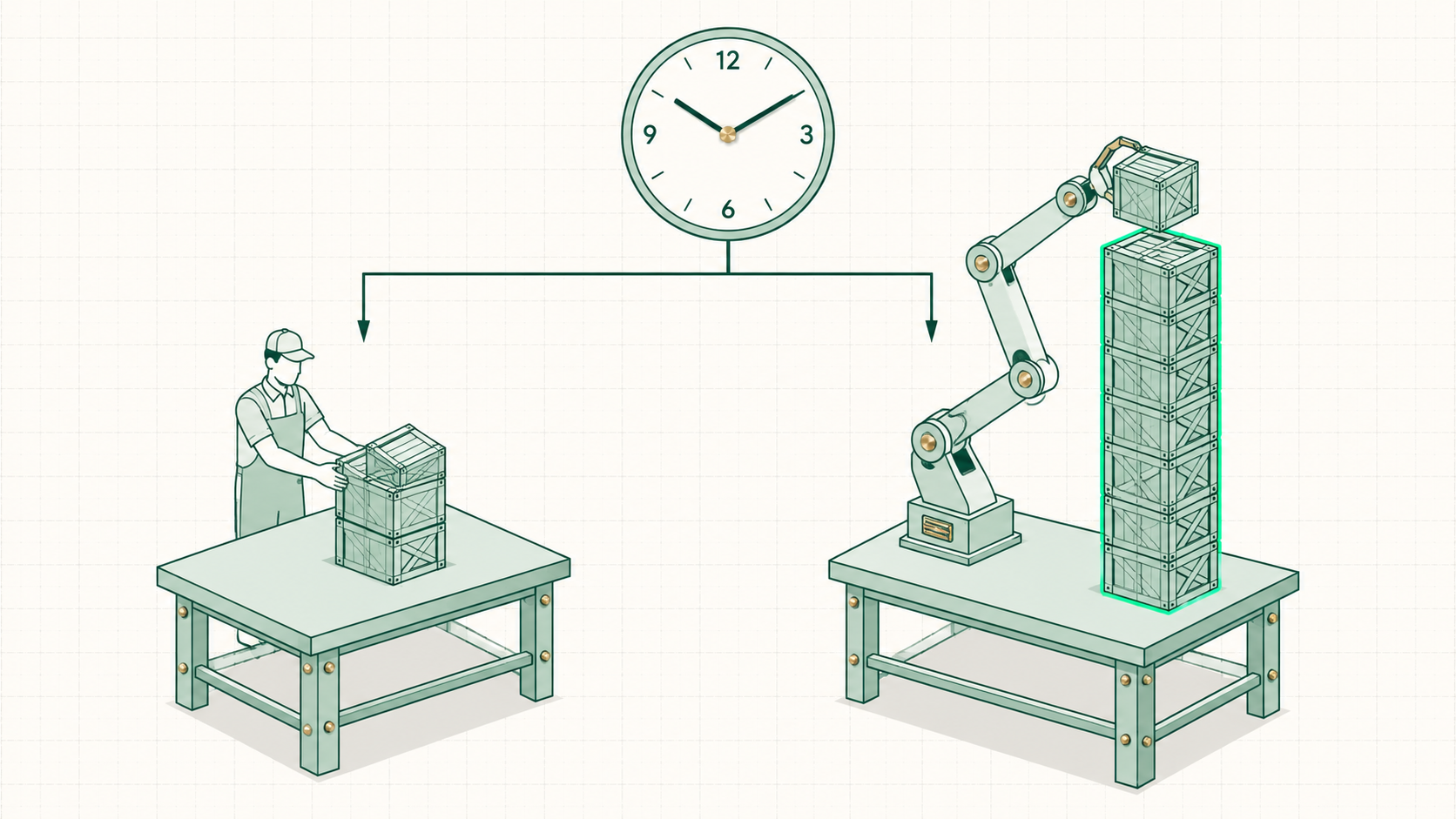
AI doesn't shrink the work week — the same hours go in and the output multiplies. Working less with AI means getting dominated by whoever kept the same hours.
 🖼Image
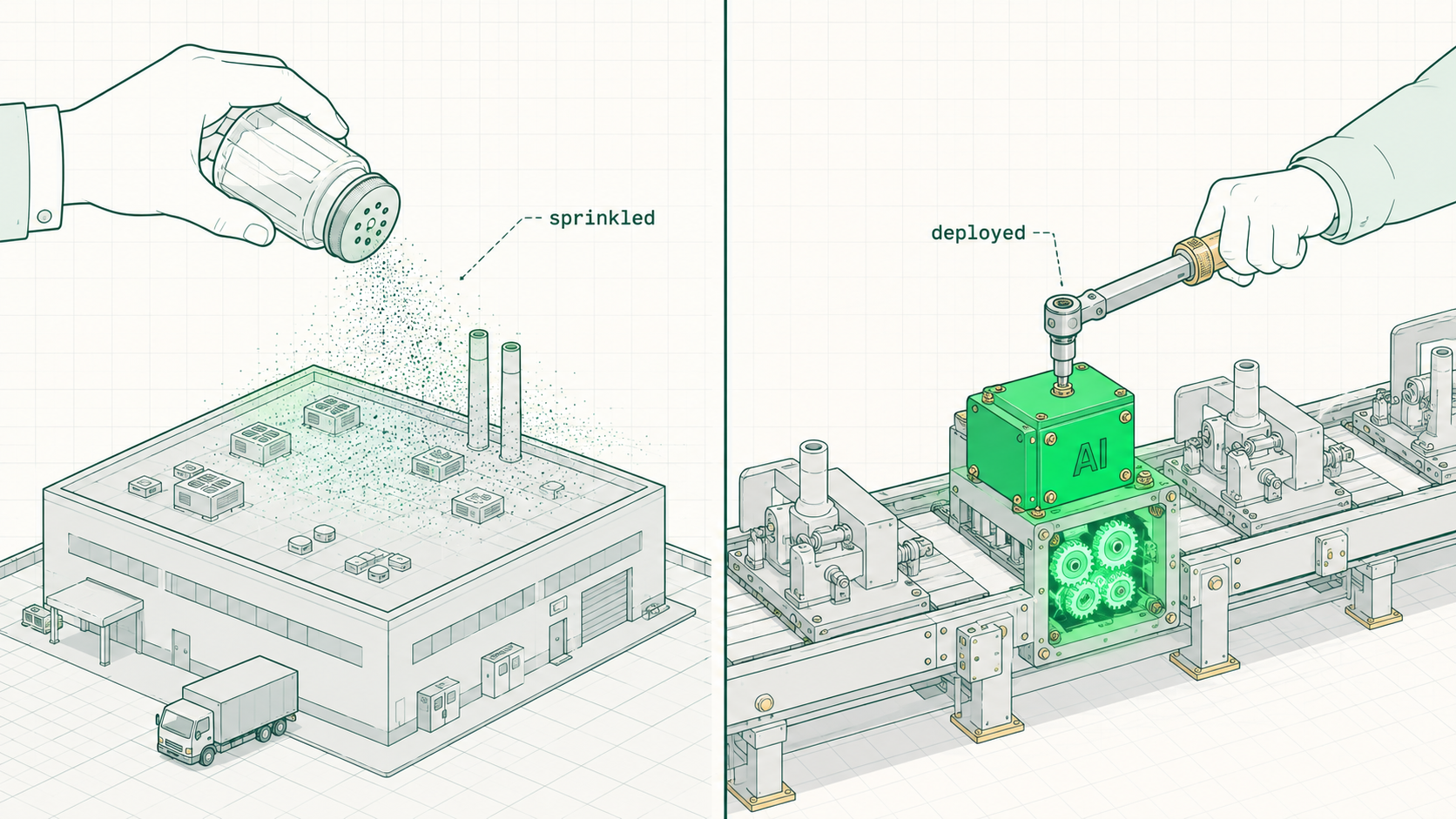
Revenue doesn't grow from adding AI to a business — it grows from deploying AI onto specific functions, specific jobs, specific processes.
 🖼Image
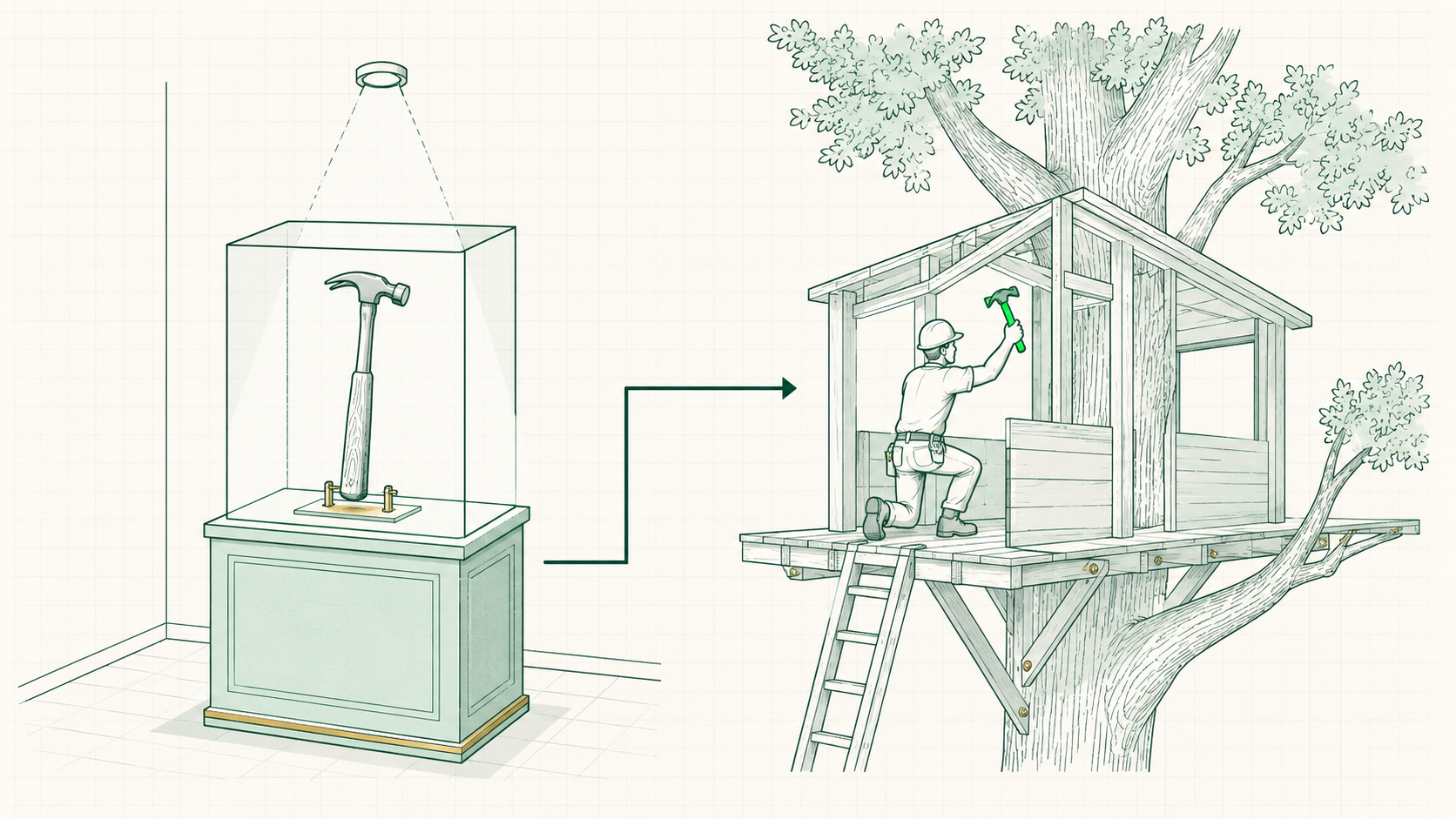
A hammer gets picked up for a purpose — the tool is too general to study by itself, and AI is the most general tool there has ever been.
 🖼Image
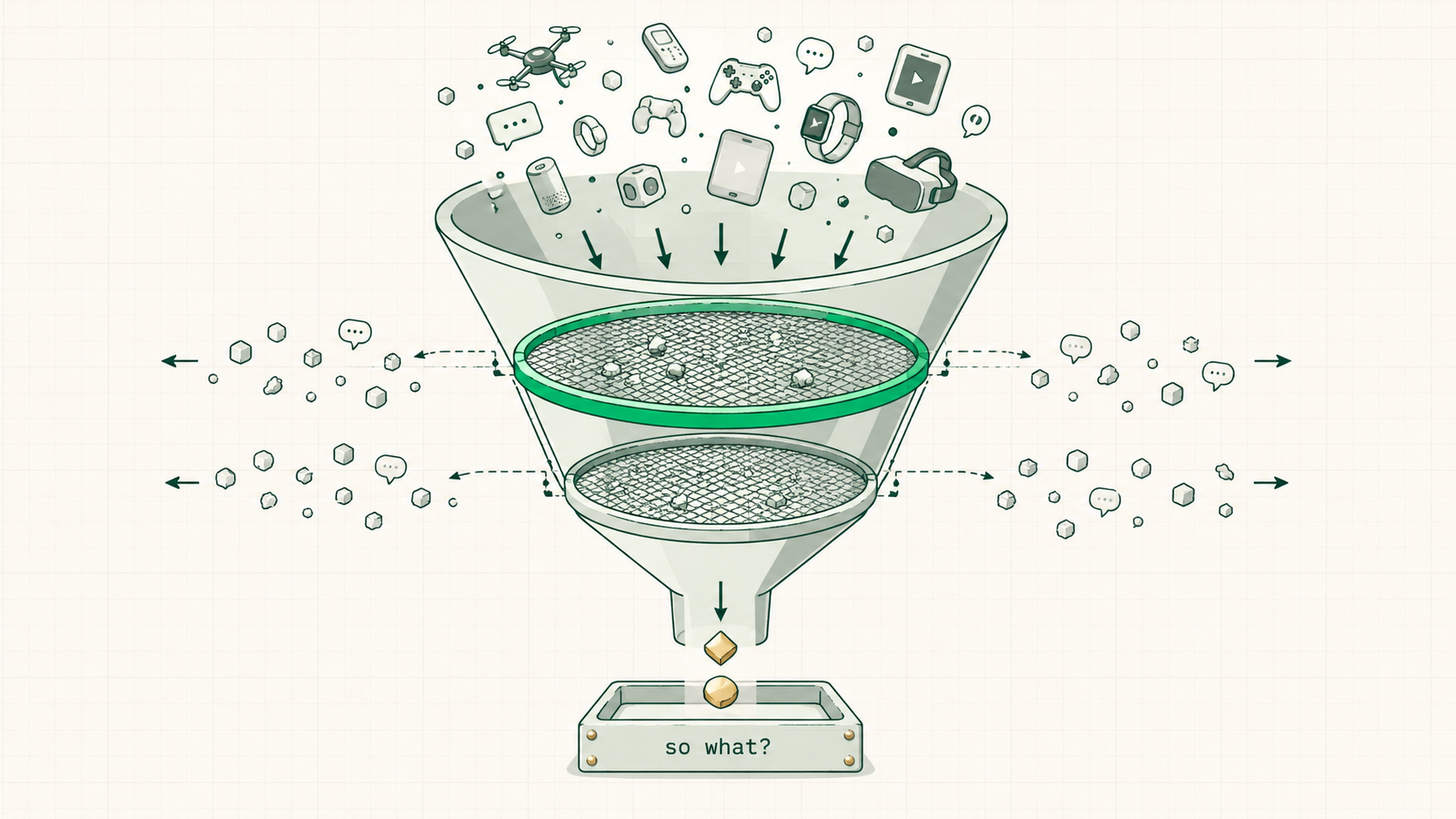
Every AI thing gets the same two questions — what problem is this actually solving, and how much revenue is behind the person claiming it.
 🖼Image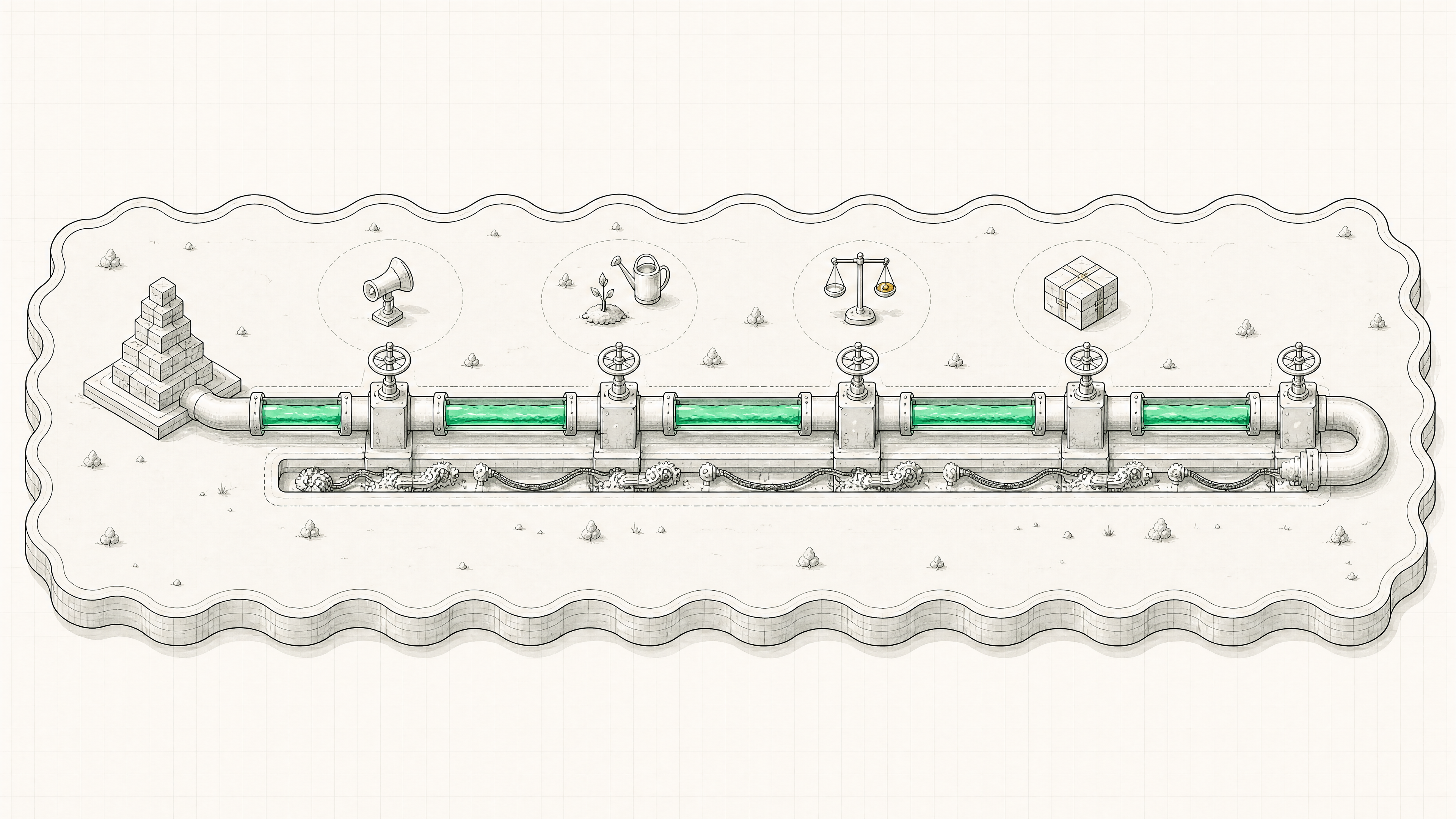
Principle 1 said AI multiplies what's already there — this section is the "already there." And honestly, most owners never got taught the fundamentals of how a business actually works.
 🖼Image
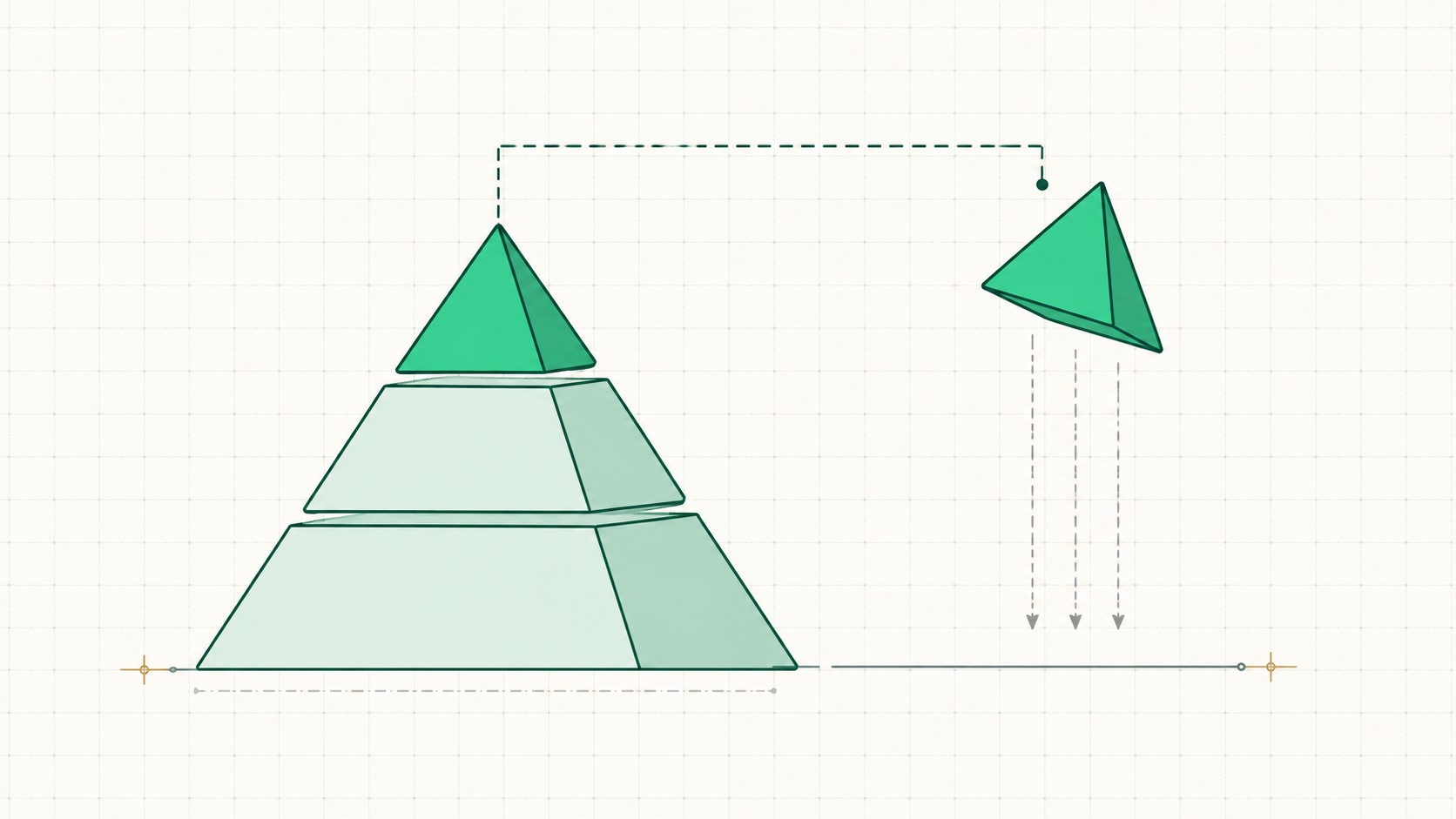
Three levels: the six functions at the base, the systems that run them, and AI on top. Starting with AI is starting at the top of a pyramid with nothing underneath.
 🖼Image
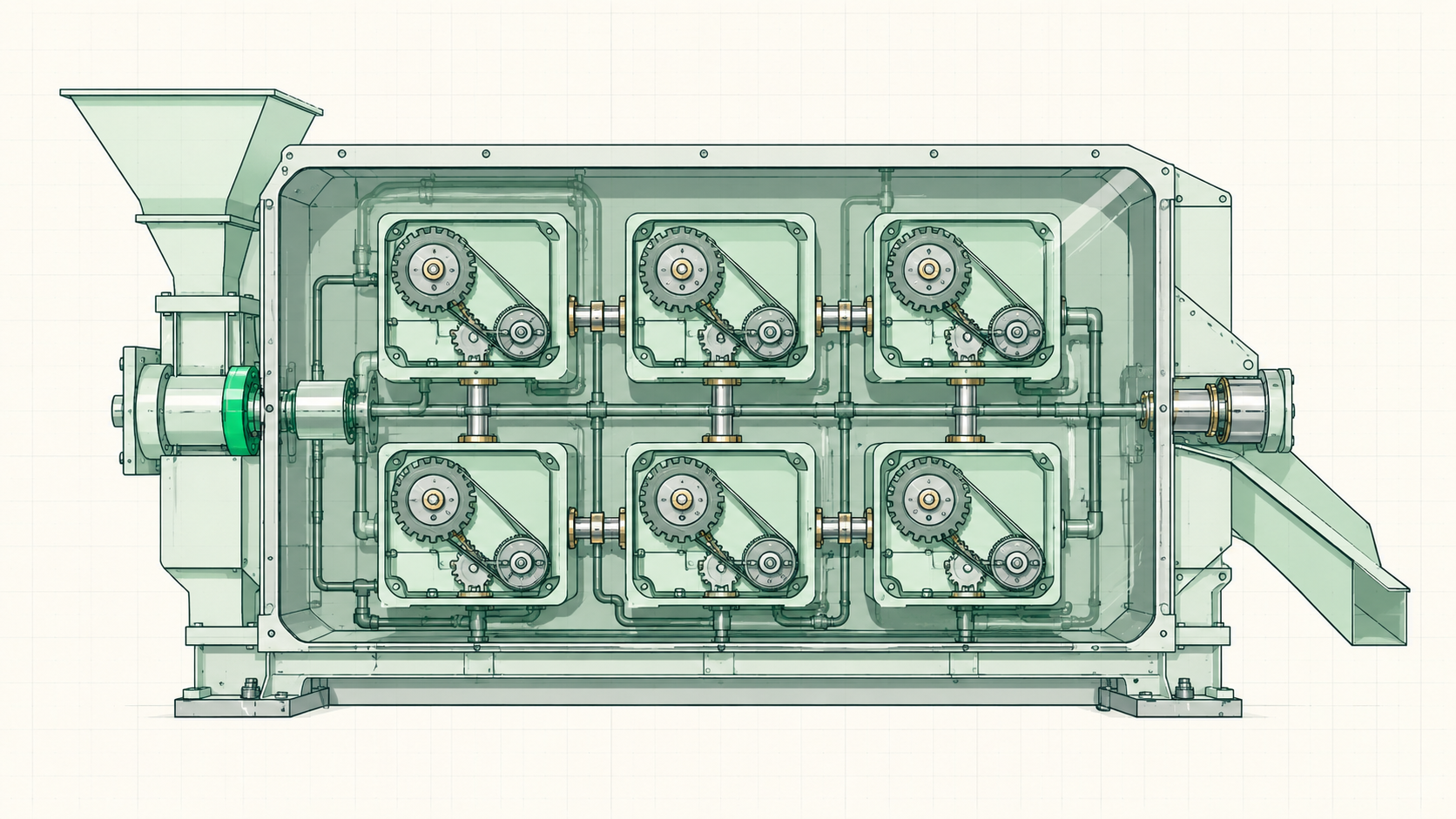
One really big system with departments inside it — those departments are the six jobs, and seeing the machine is what makes the constraint idea land in the next part.
 🖼Image
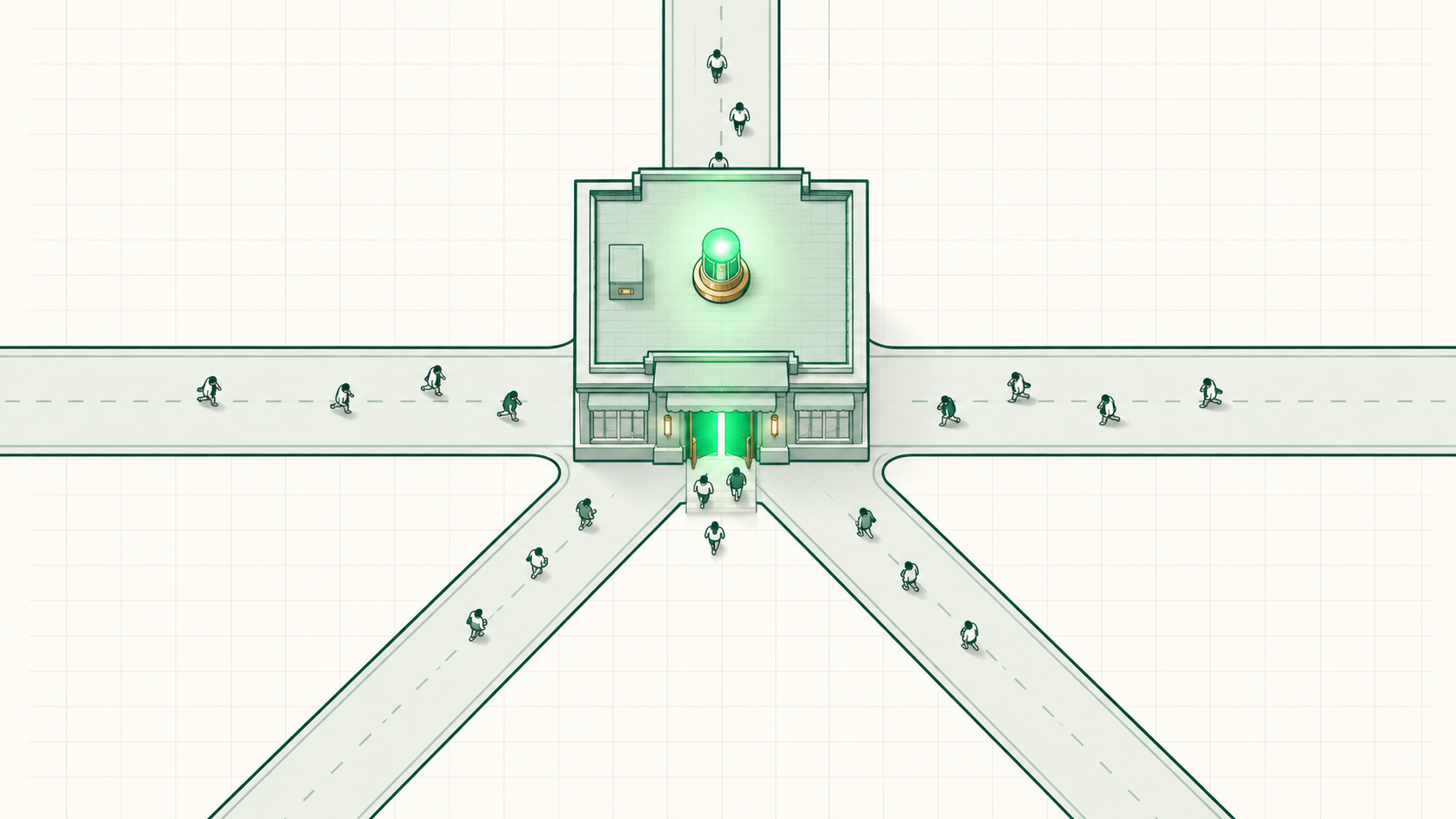
One question: how does anyone know the business exists — how does someone find out about it at all.
 🖼Image
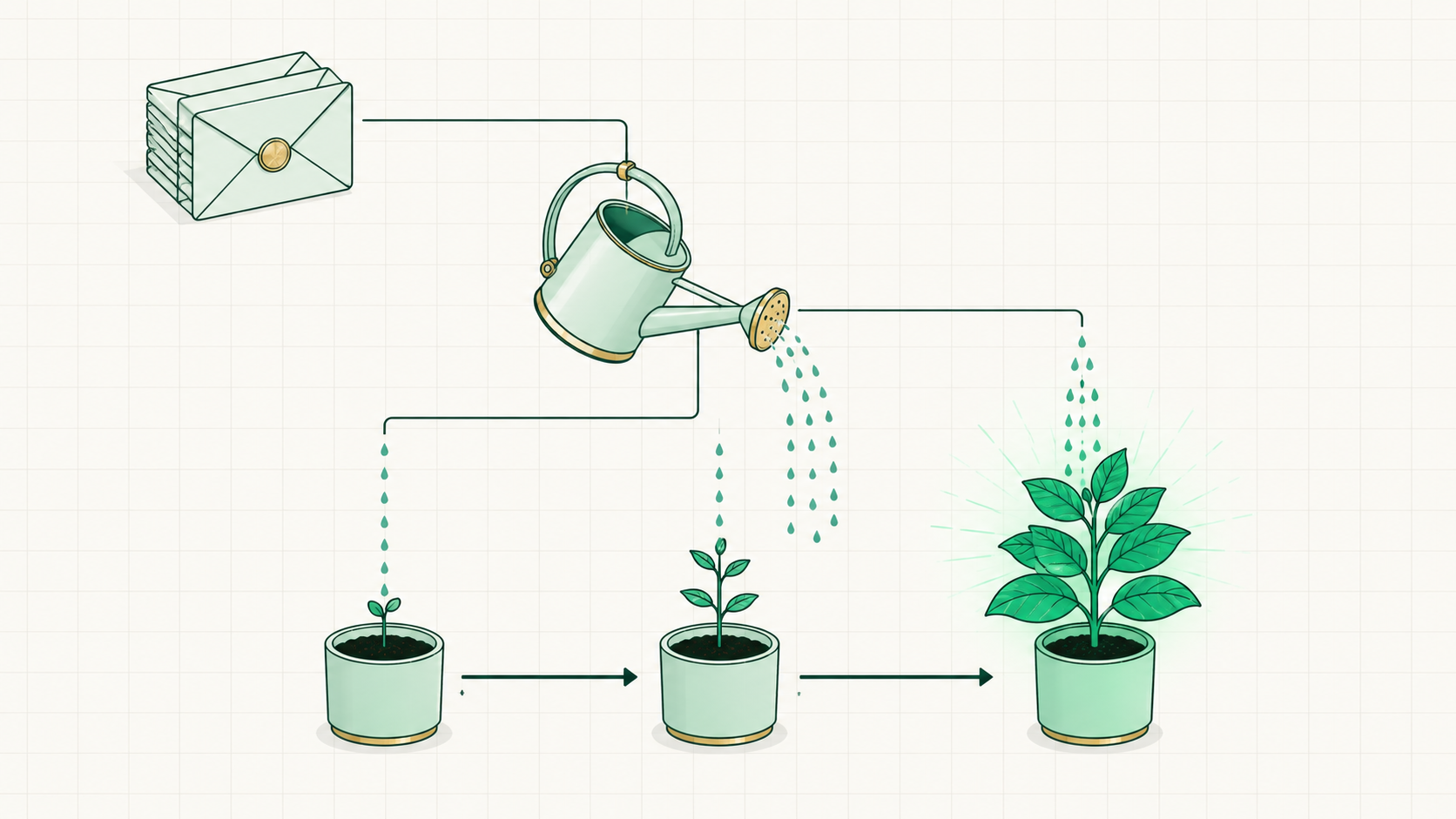
Turning "interested" into know, like, and trust — enough trust that a sales conversation feels natural instead of pushy.
 🖼Image
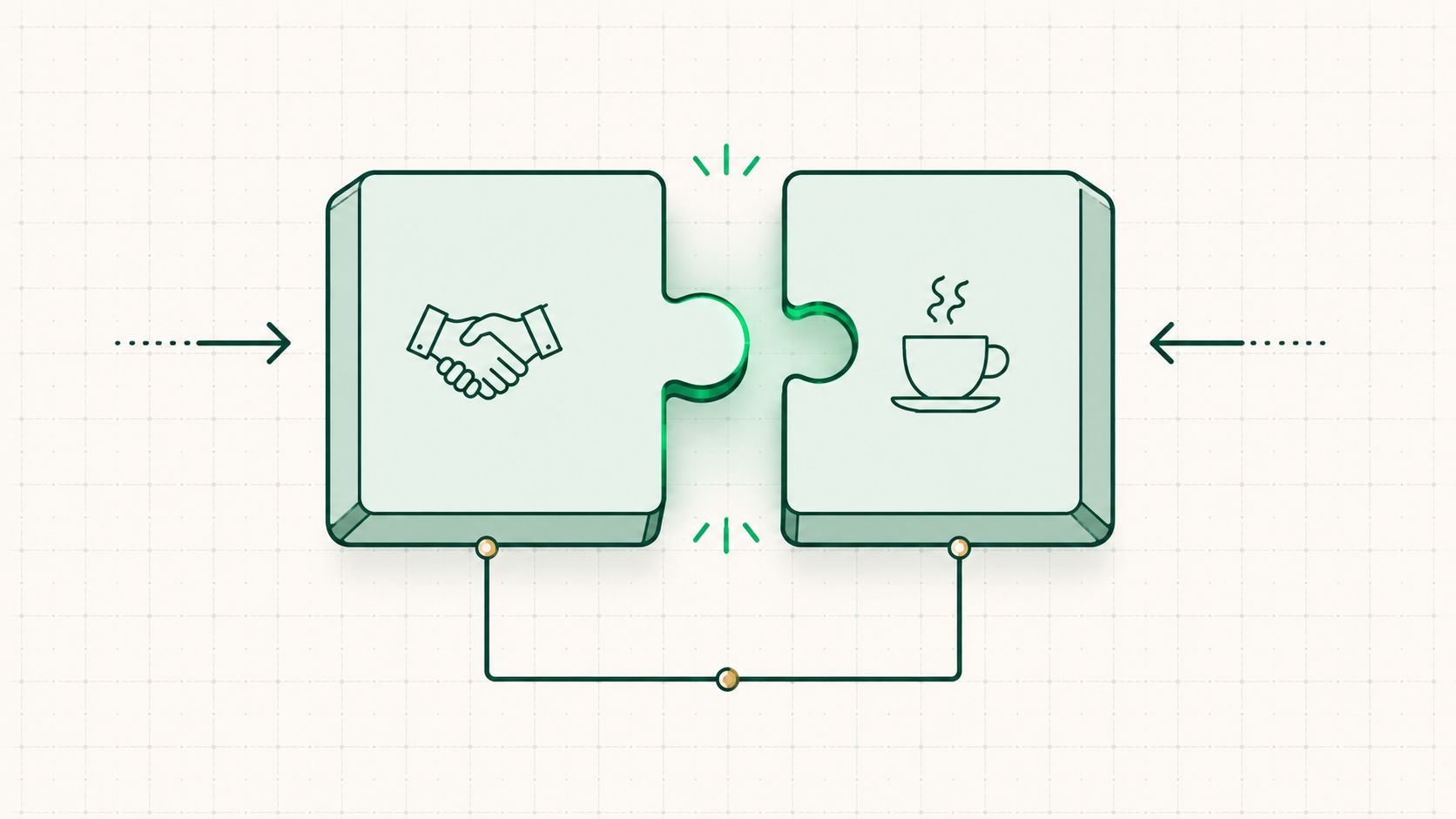
Lead gen plus lead nurture is what everyone calls "marketing" — split apart here because they are two separate jobs.
 🖼Image
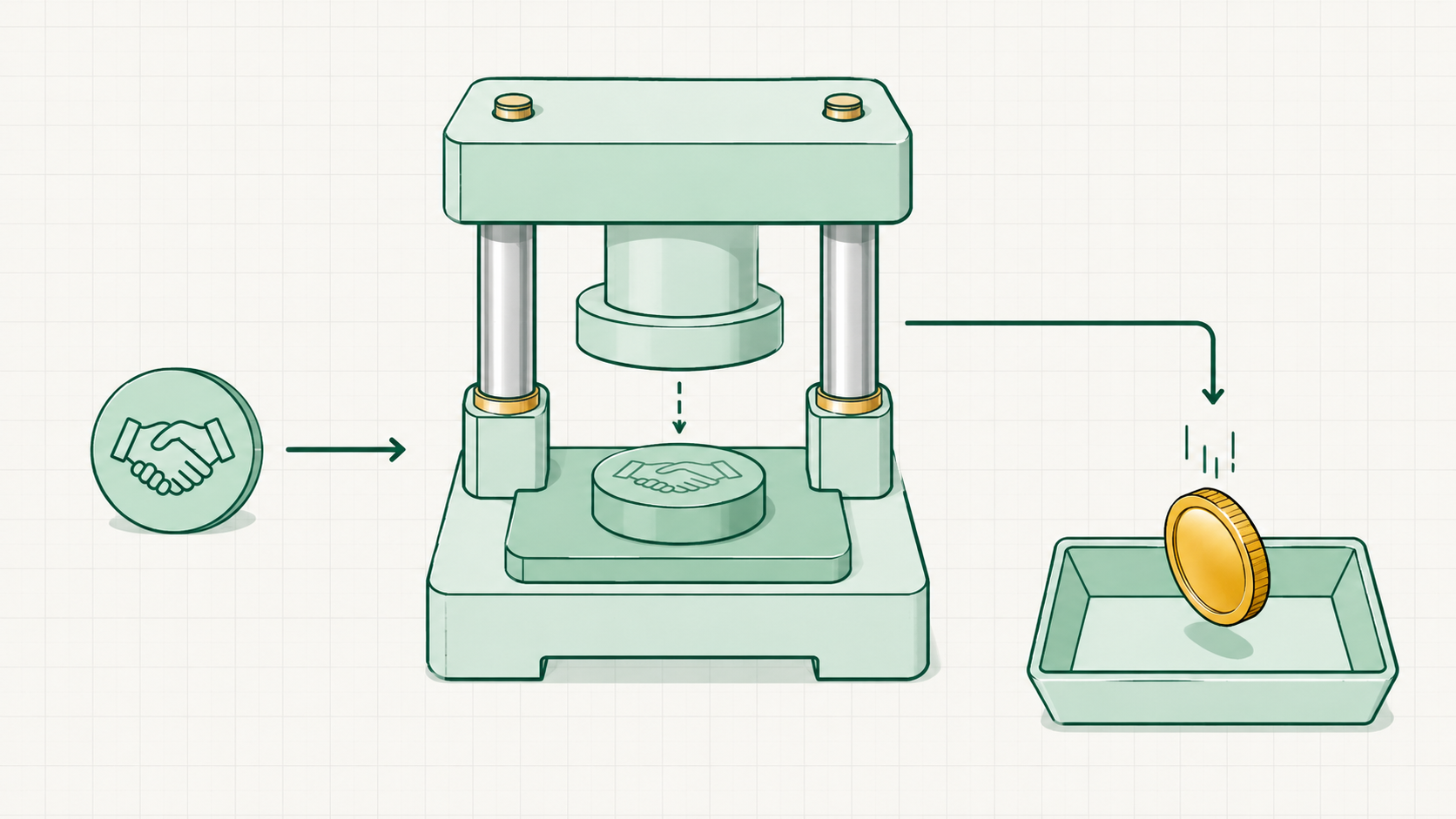
The conversion that takes interest and turns it into dollars — trust converted into promises the customer pays real money for.
 🖼Image
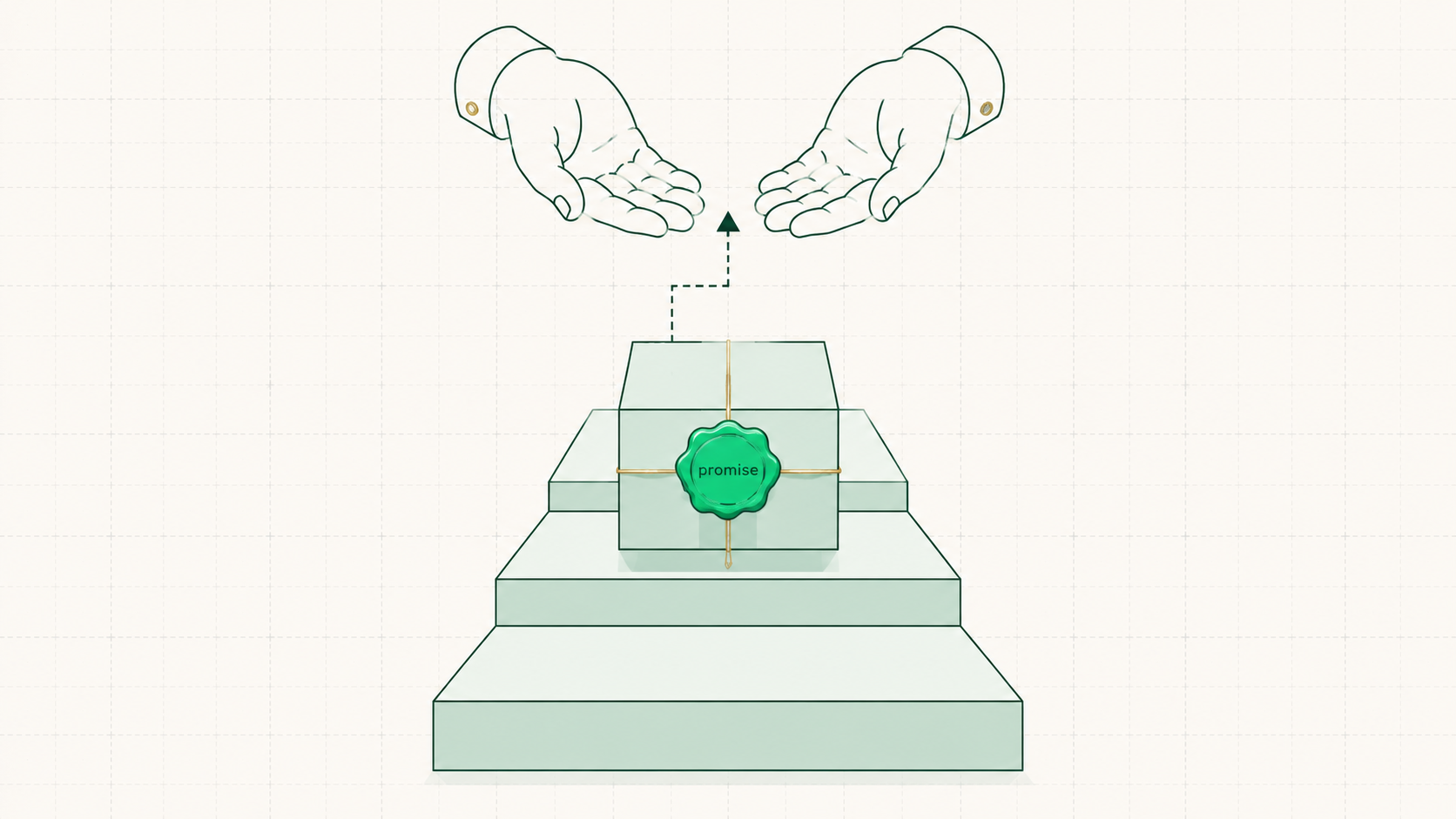
Fulfillment: delivering, for those dollars, on the promises made in the sales process.
 🖼Image
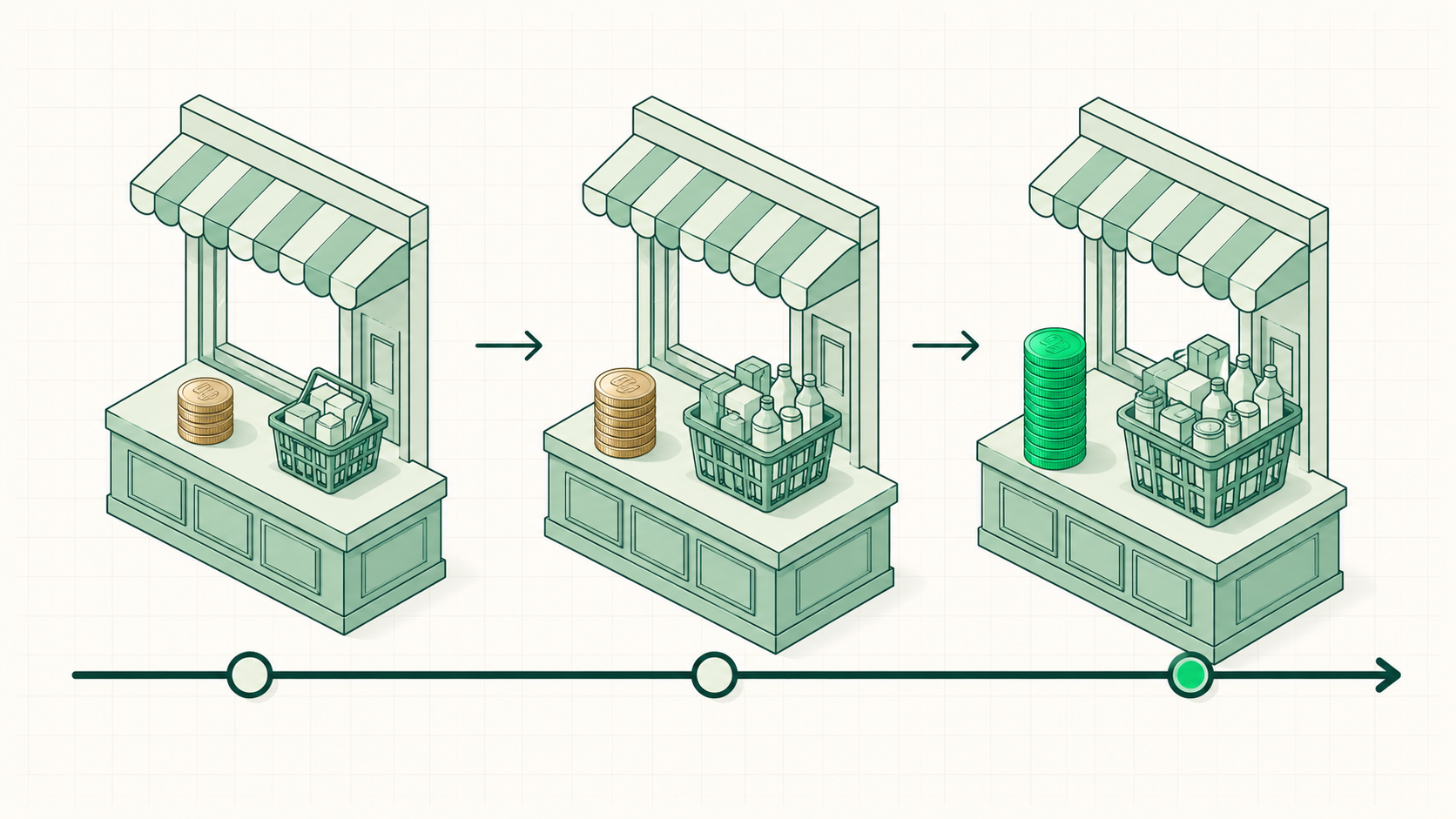
Making more promises so the same customer pays again — spending more, staying longer, or both.
 🖼Image
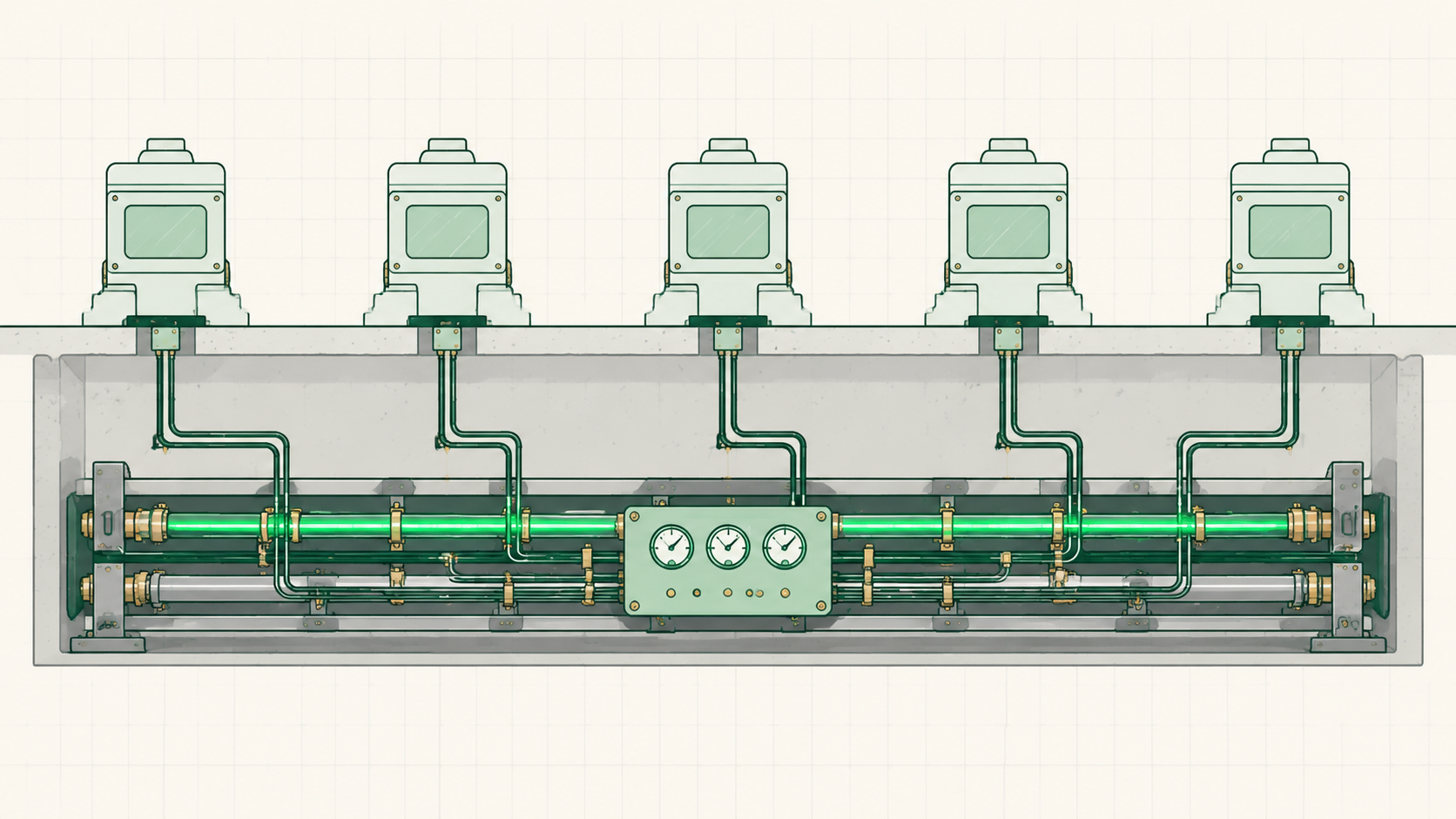
All the unsexy stuff that has to happen — the infrastructure that lets the other five jobs work at all, including the scoreboard: knowing the numbers is an ops job, and that matters in the next part.
 🖼Image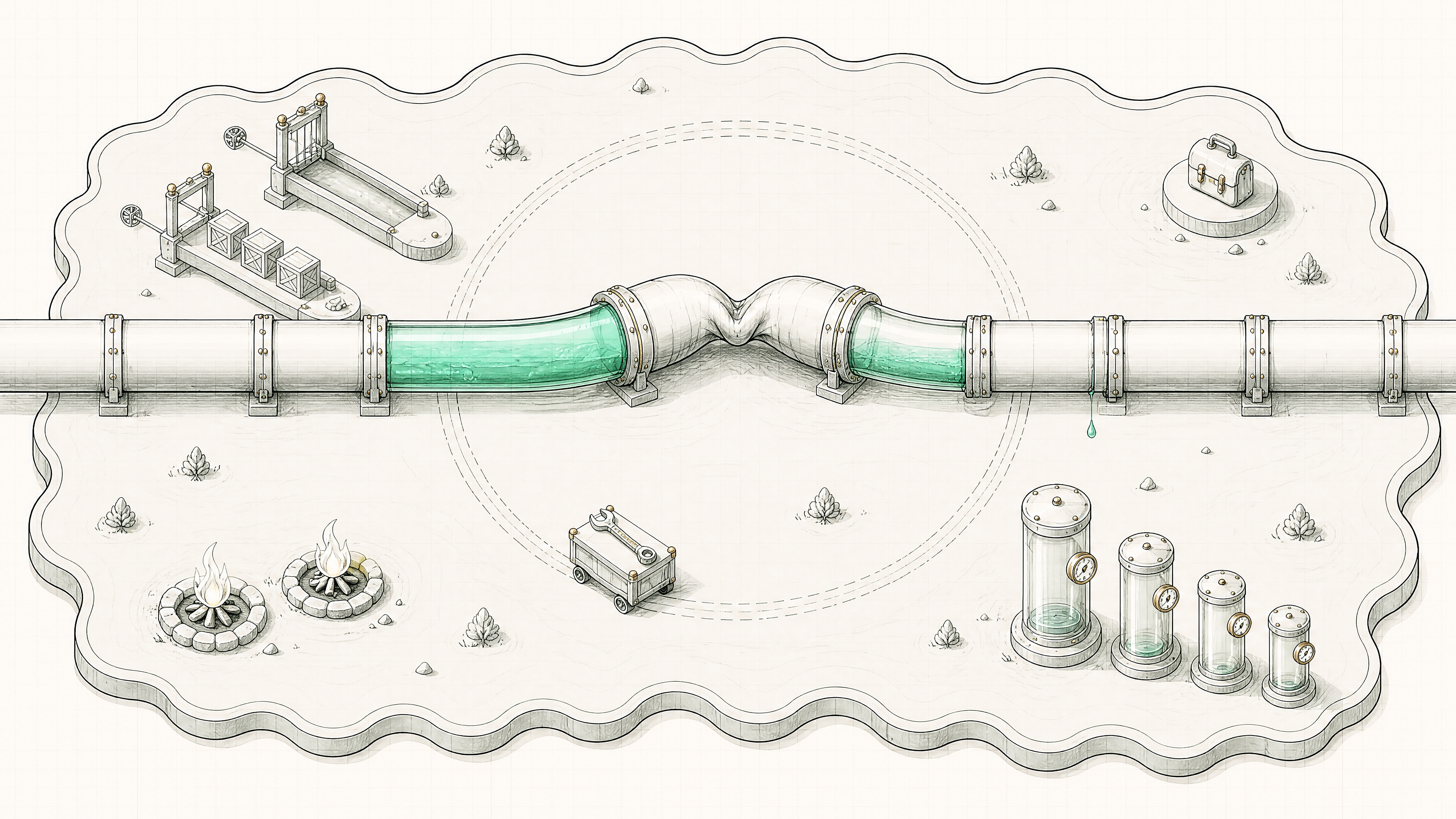
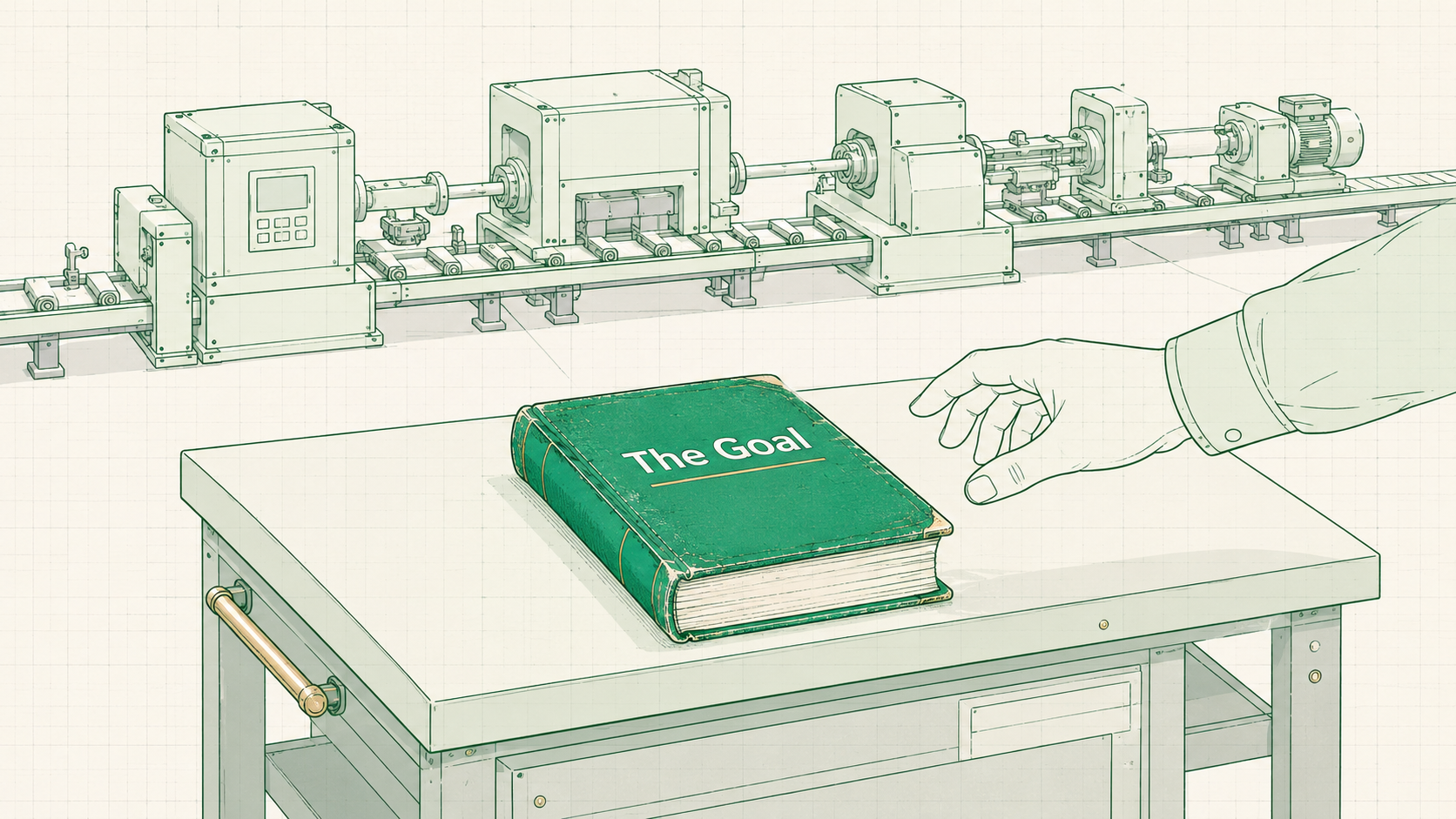
It comes from the supply-chain world — a first-principles understanding of how systems work. And a business is exactly that: one big system with departments inside.
 🖼Image
A system keeps growing until it hits its bottleneck — which means at any moment a business has exactly one constraint, one biggest fire.
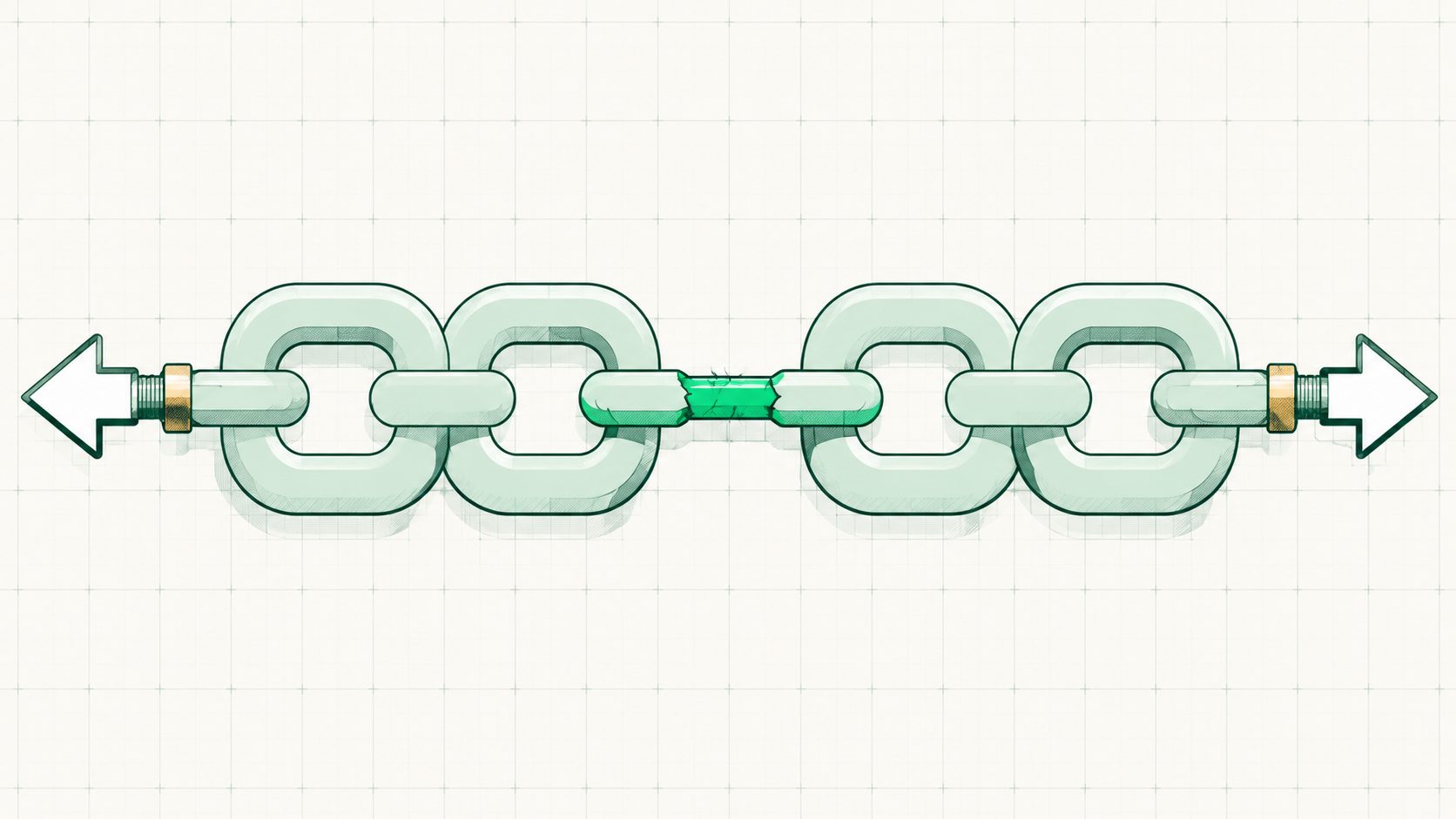 🖼Image
The same rule, walked through the six jobs — whichever job is weakest decides how many customers come out the other end of the machine.
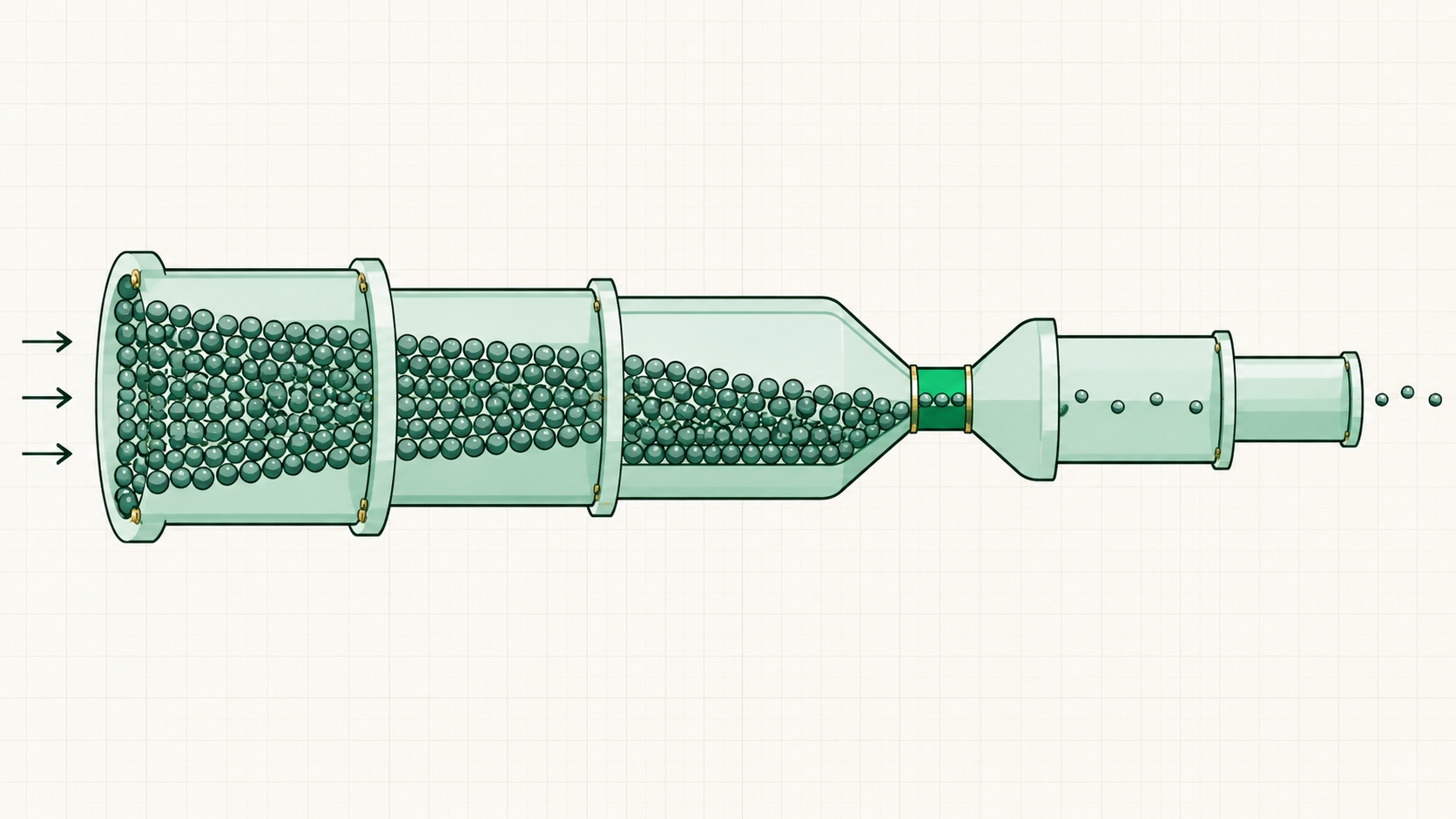 🖼Image
Working on a non-constraint feels productive — things get done, boxes get checked — but revenue doesn't move. That's the loop most owners live in.
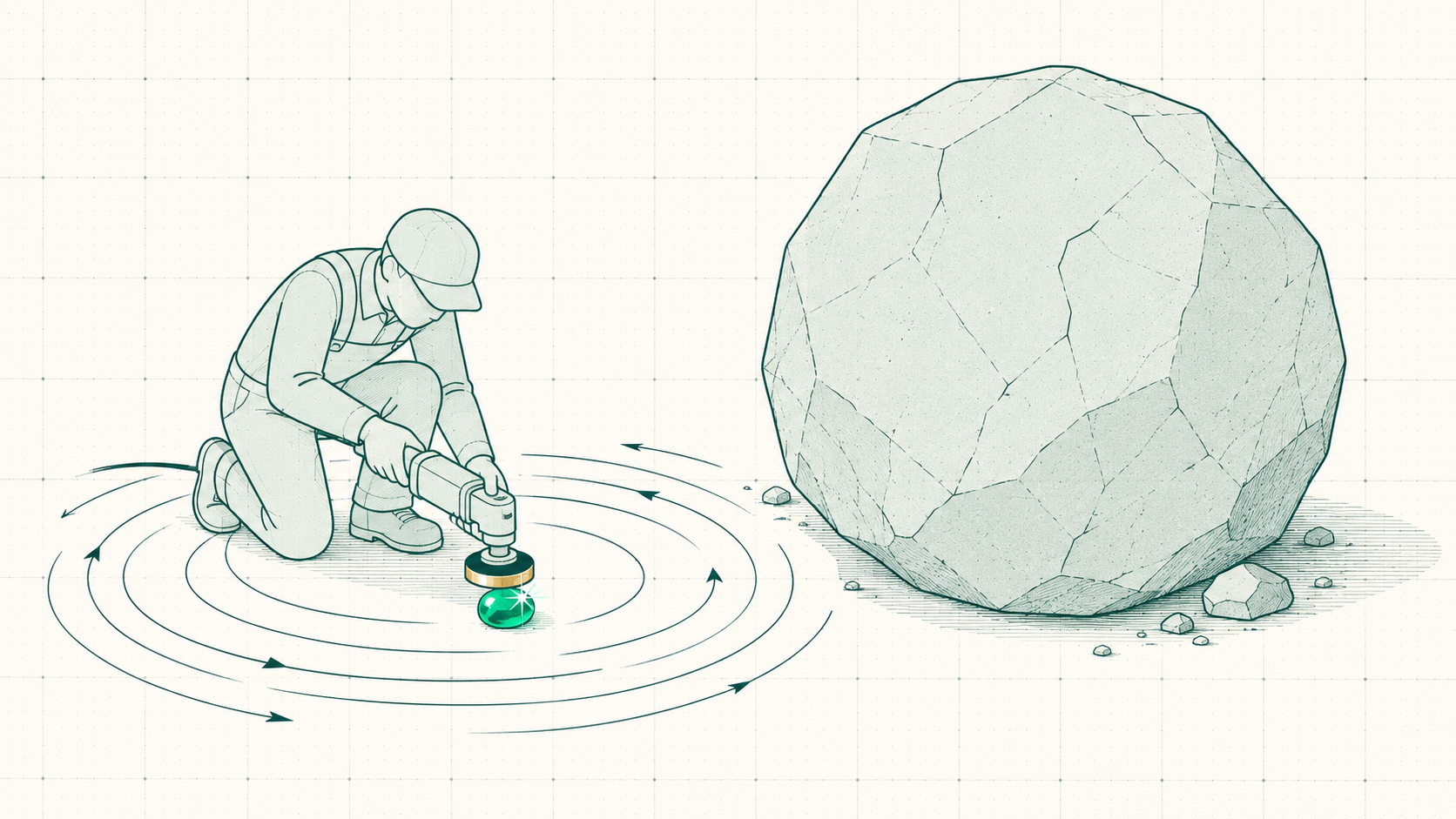 🖼Image
The hardest thing about being an entrepreneur — being OK letting the small fires burn, to focus on the singular fire that will take down the business.
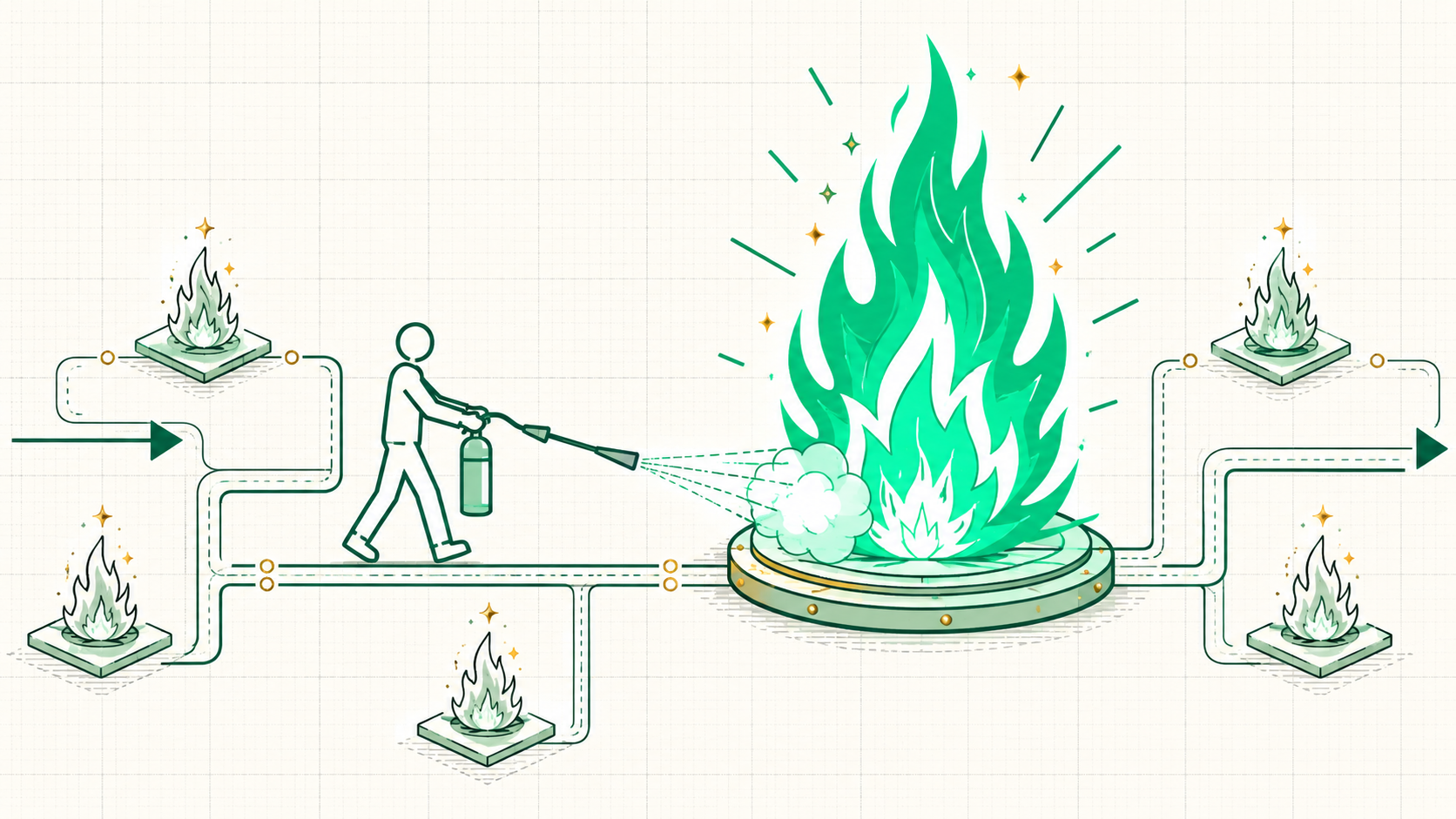 🖼Image
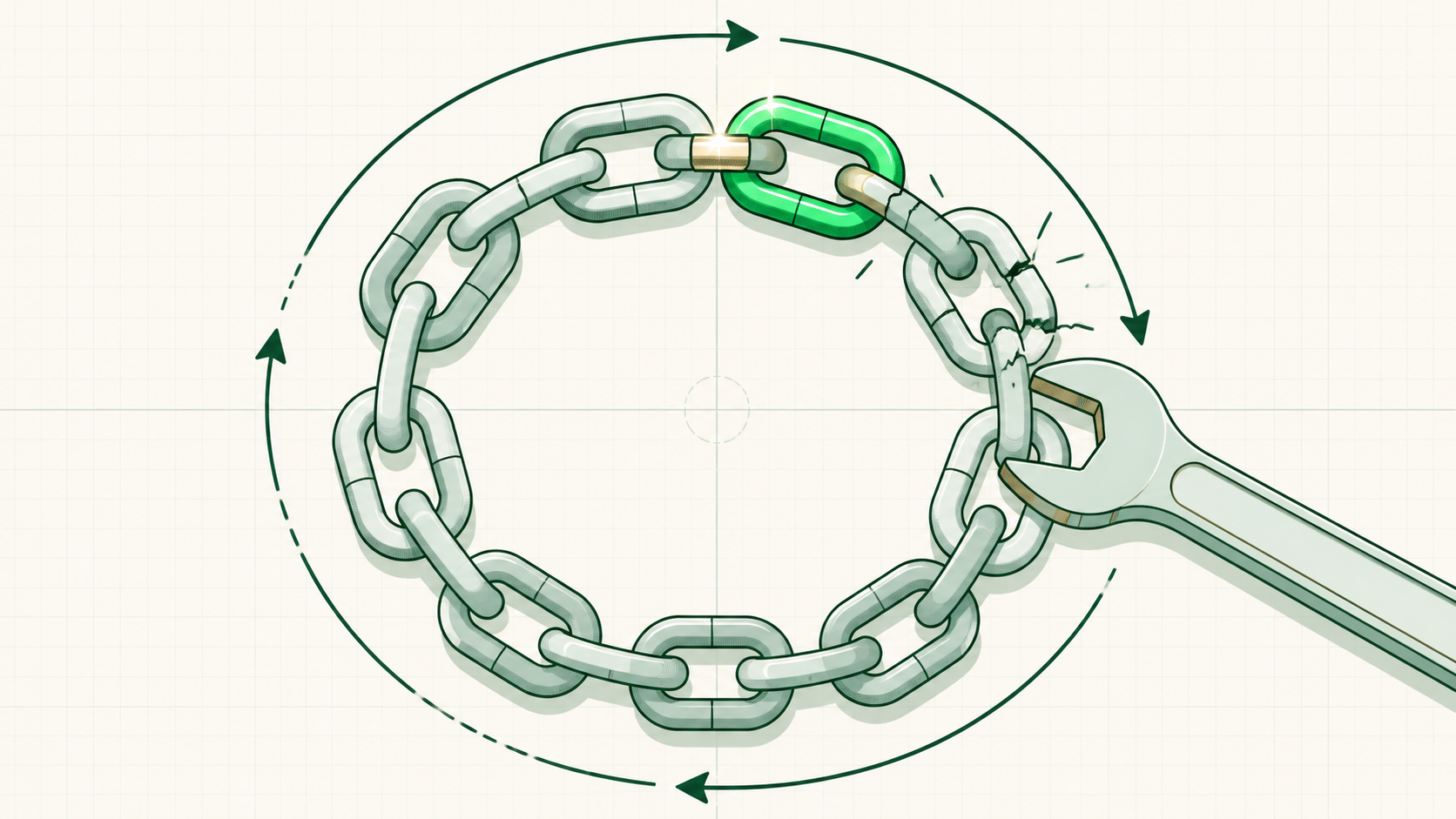
The moment the constraint gets fixed, it moves — fix lead flow and sales becomes the bottleneck, fix sales and delivery is next. Growing a business is that loop on repeat.
 🖼Image
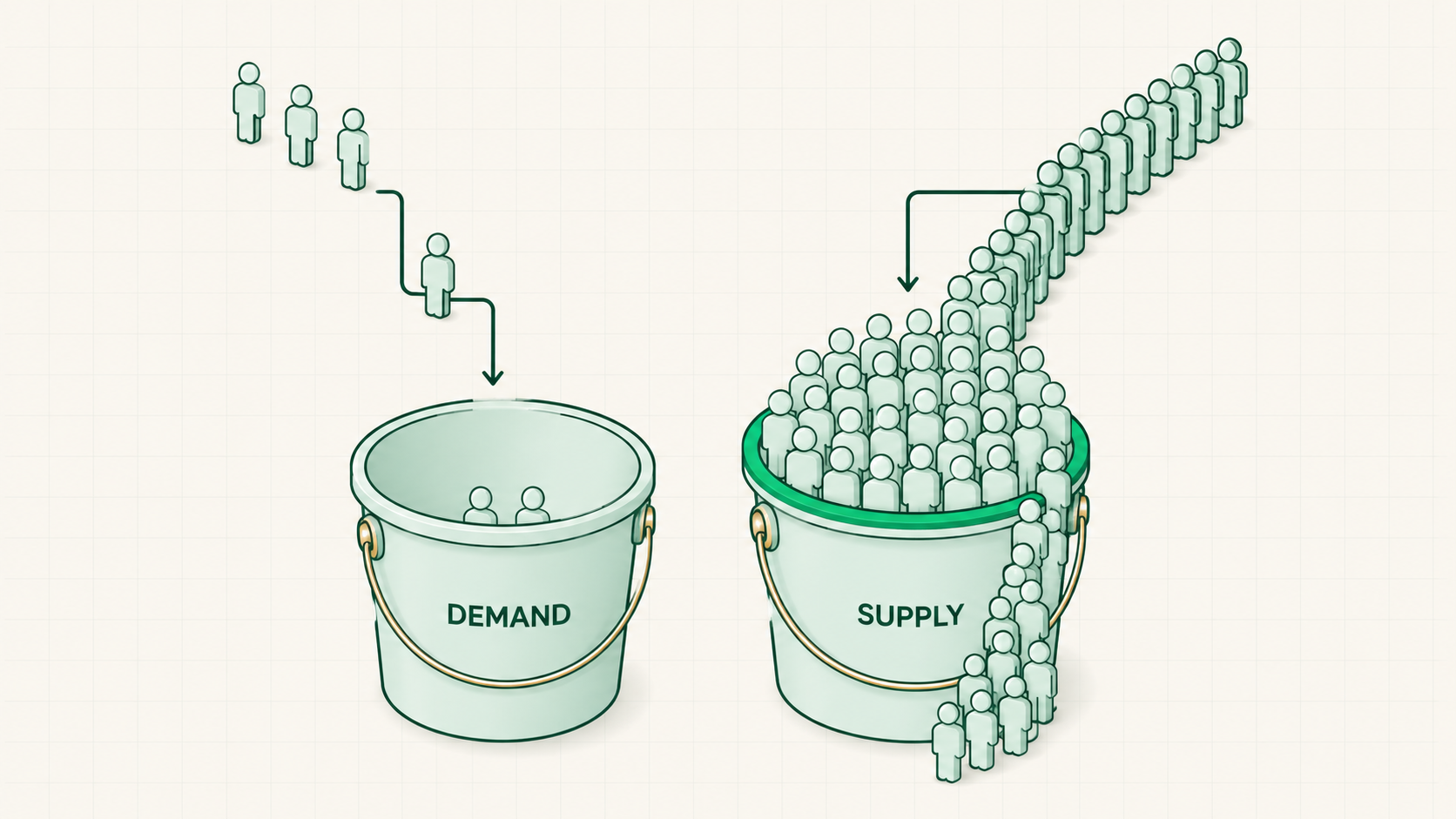
Almost every constraint lands in one of two buckets — demand constrained (not enough people trying to buy) or supply constrained (more buyers than capacity, a waitlist).
 🖼Image
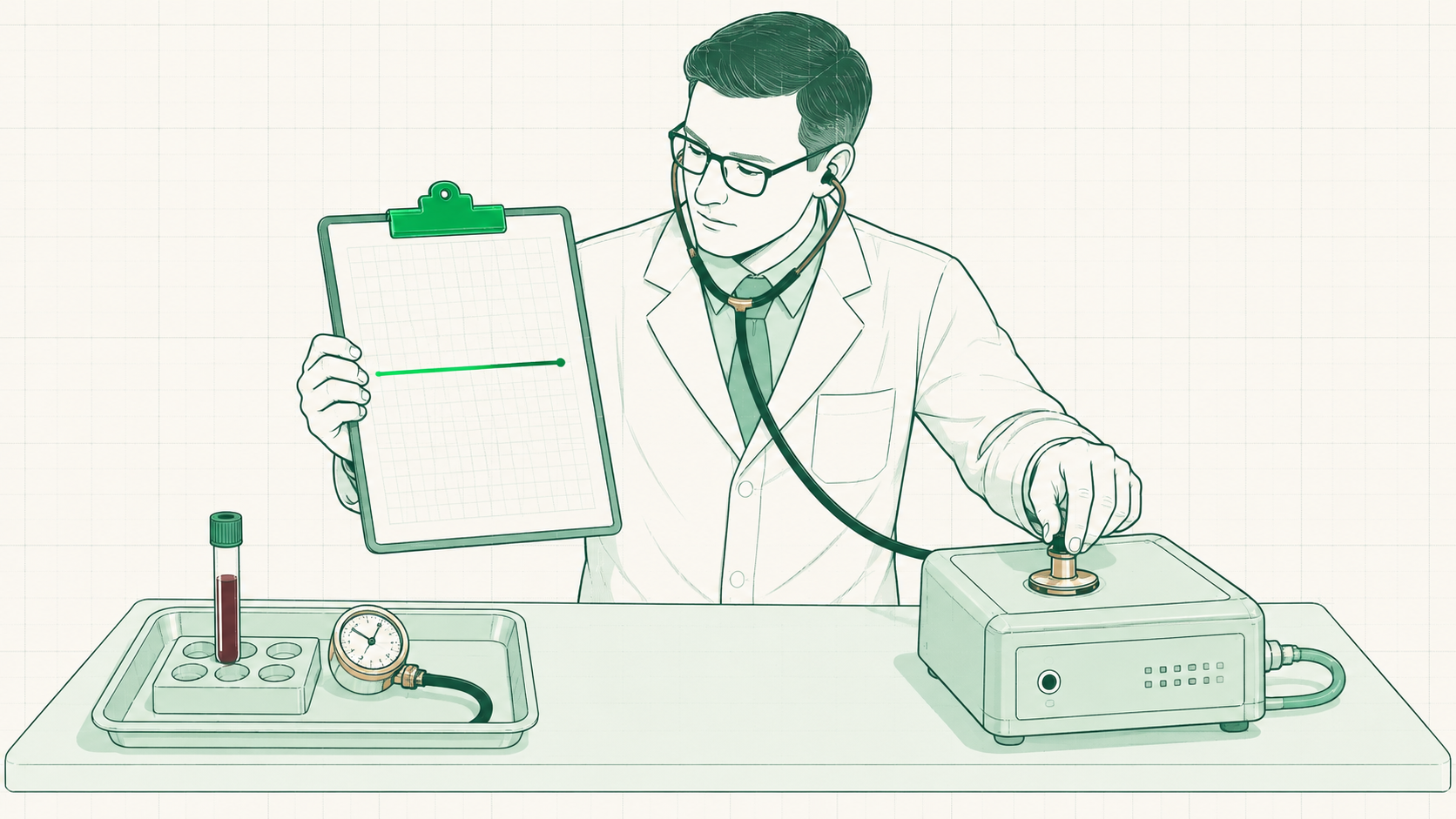
Without the numbers it is impossible to determine the constraint — and knowing the numbers is an ops function, which is exactly why ops matters.
 🖼Image
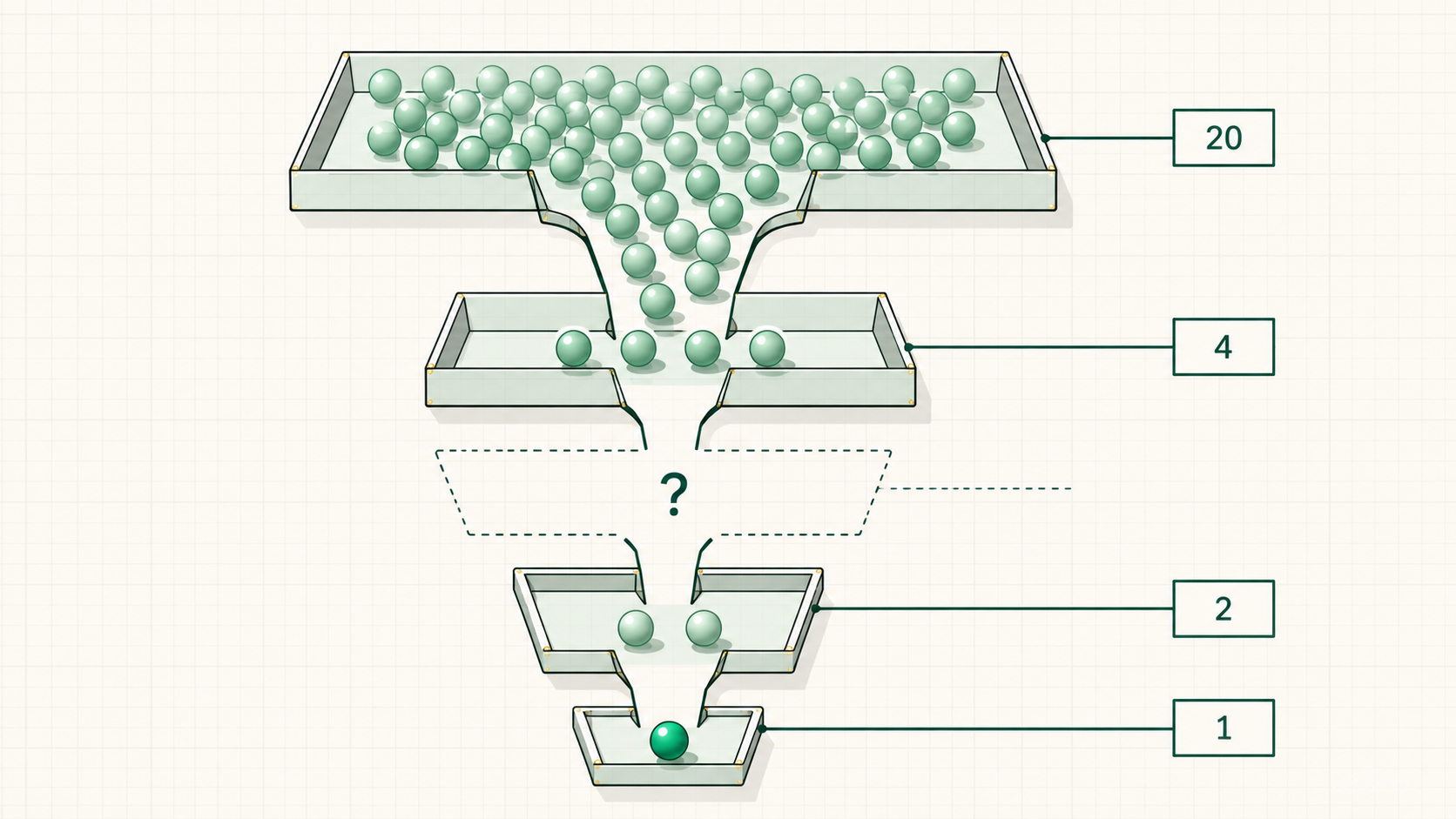
The same machine, read as numbers — and every gap between two numbers is a conversion rate pointing at exactly one job.
 🖼Image
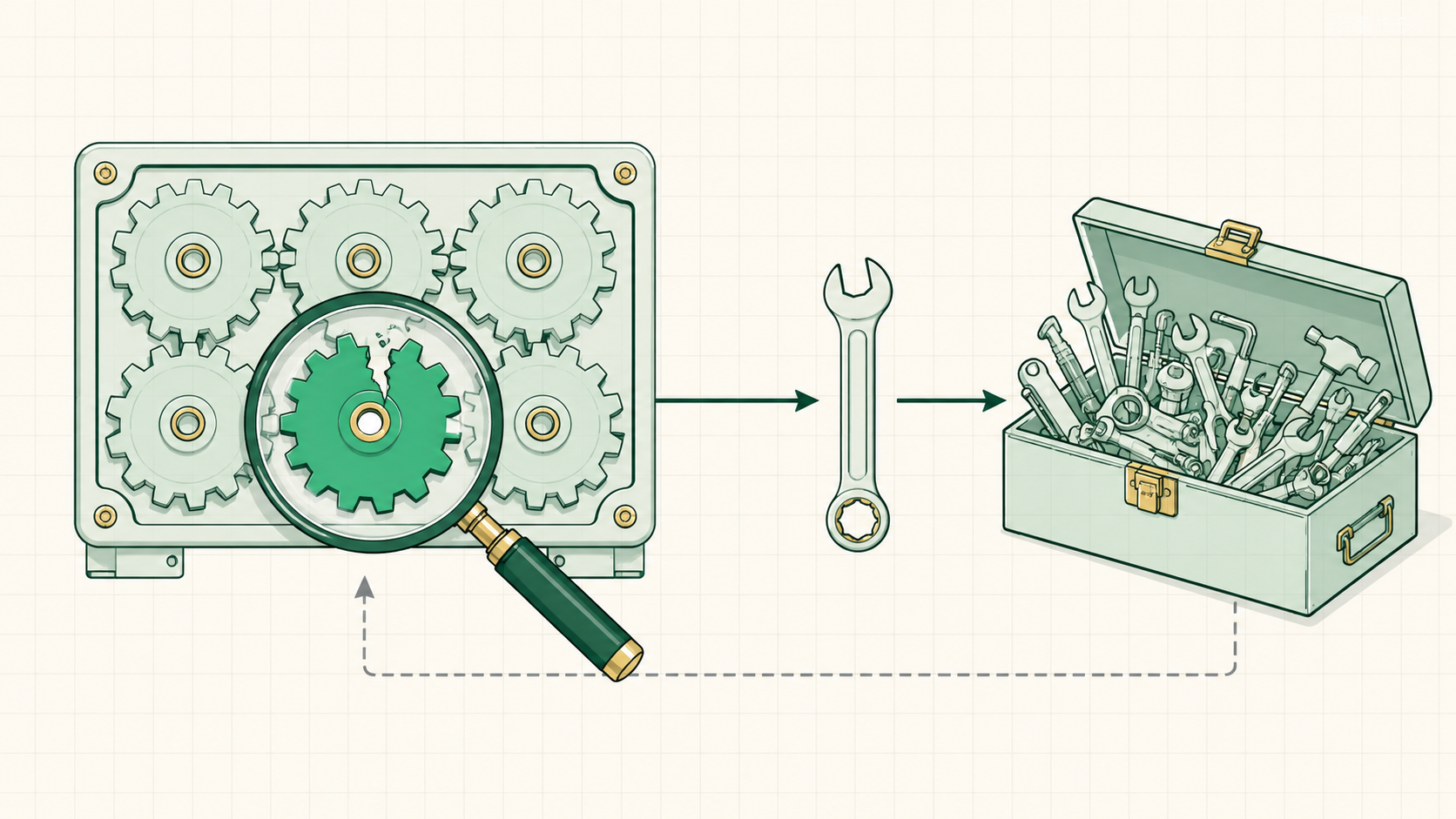
Learn this and know their business better than they do, because most people never learned the first principles of how business operates.
 🖼Image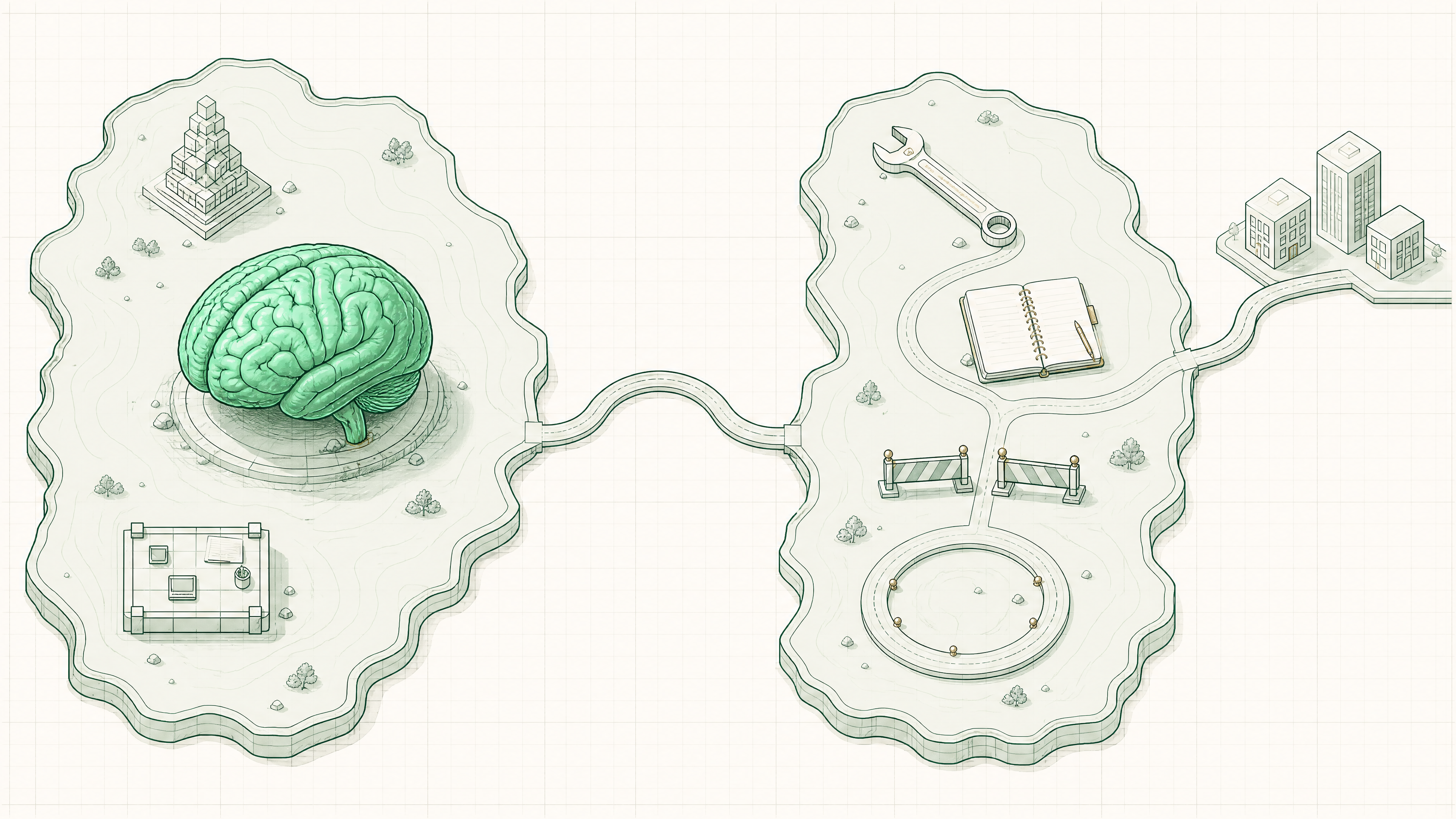
Every AI tool has a brain at its center, the model; the first three words describe that brain: what it is, the unit it thinks in, and how much it can hold at once.
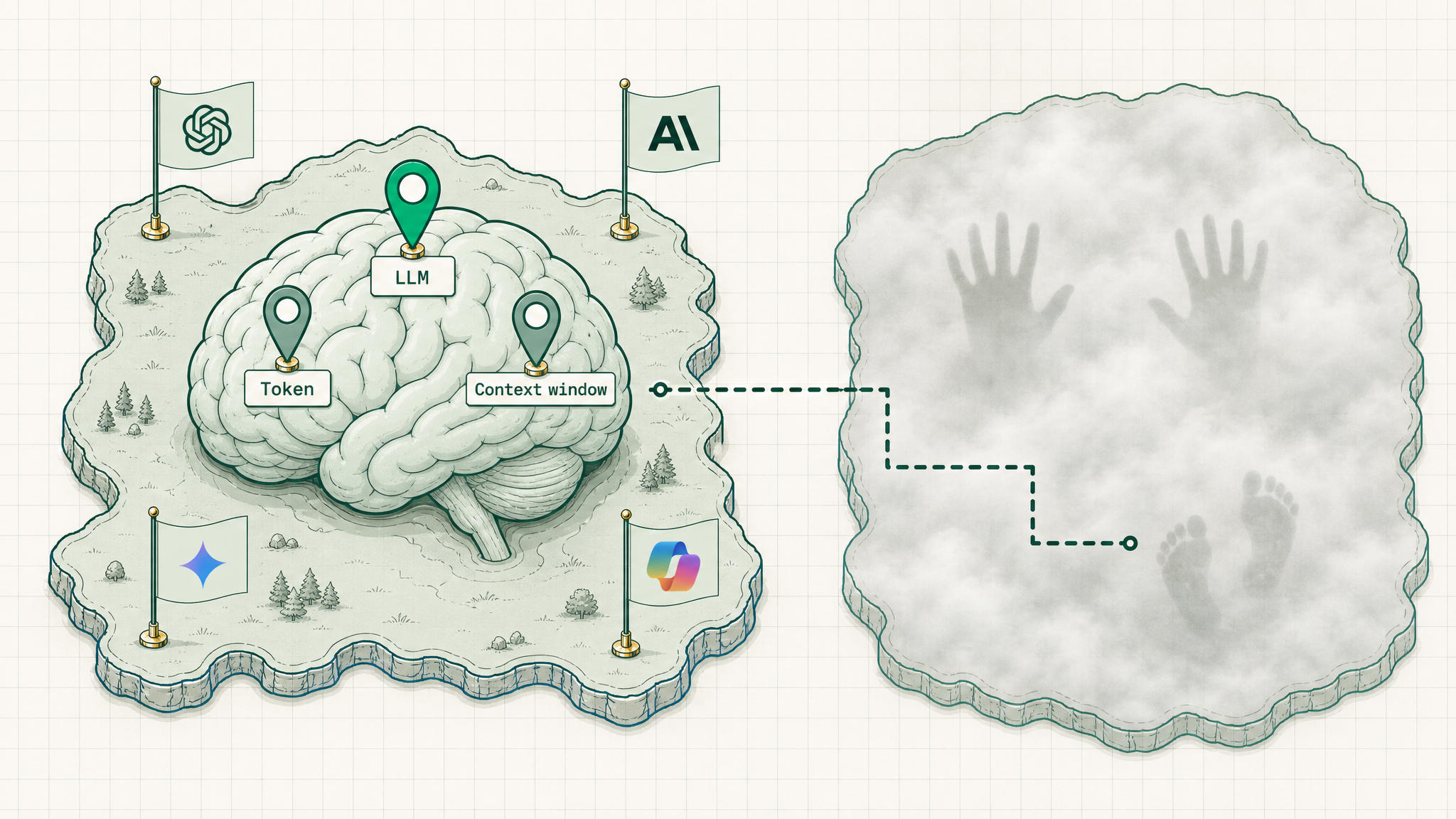 🖼Image
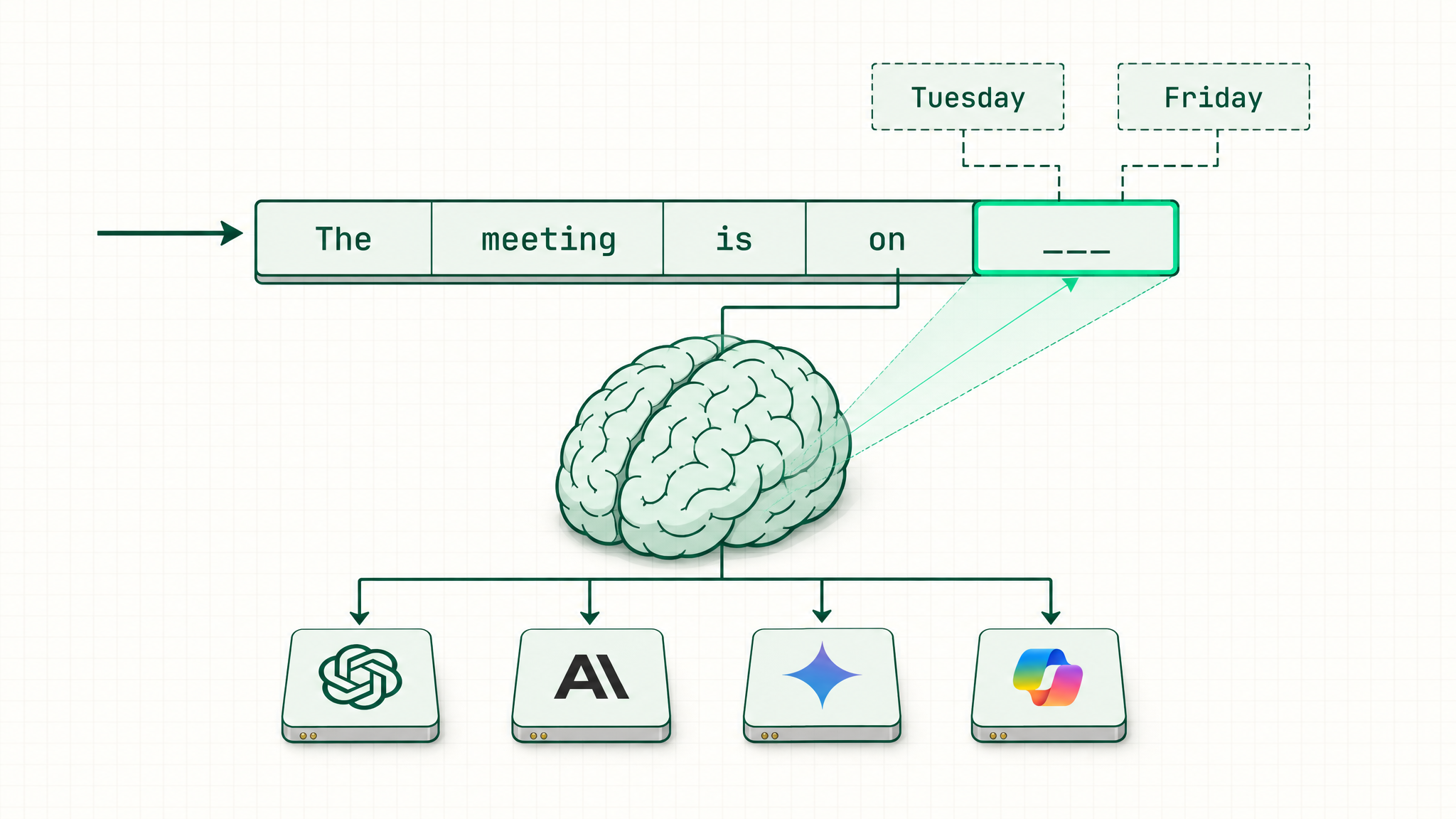
A large language model is a brain trained on a huge slice of the internet; it works by predicting the next piece of text, one step at a time.
 🖼Image
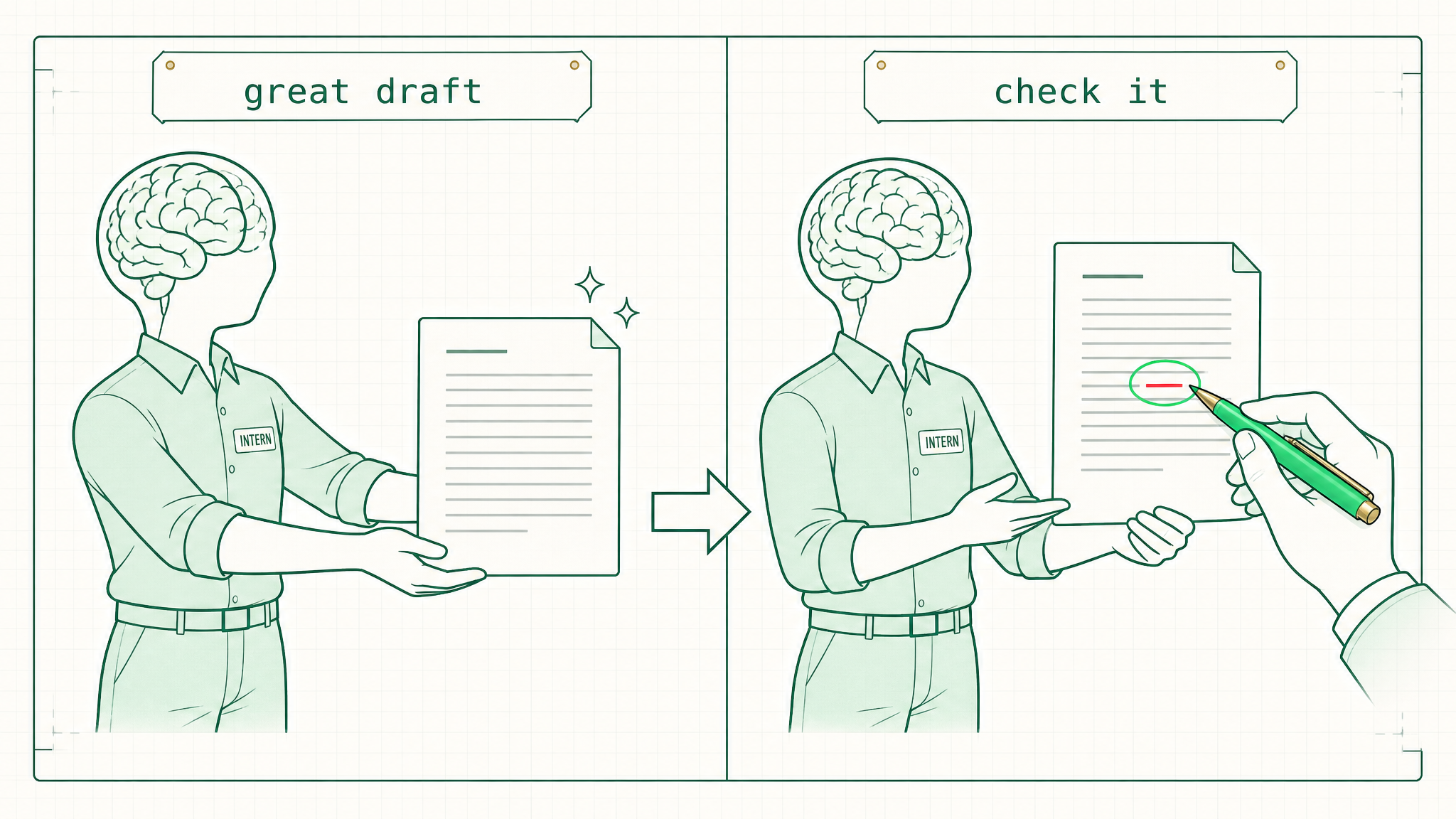
Because it predicts instead of looking things up, it can sound completely sure and still be wrong; the move is to use it like a sharp intern and check anything that matters.
 🖼Image
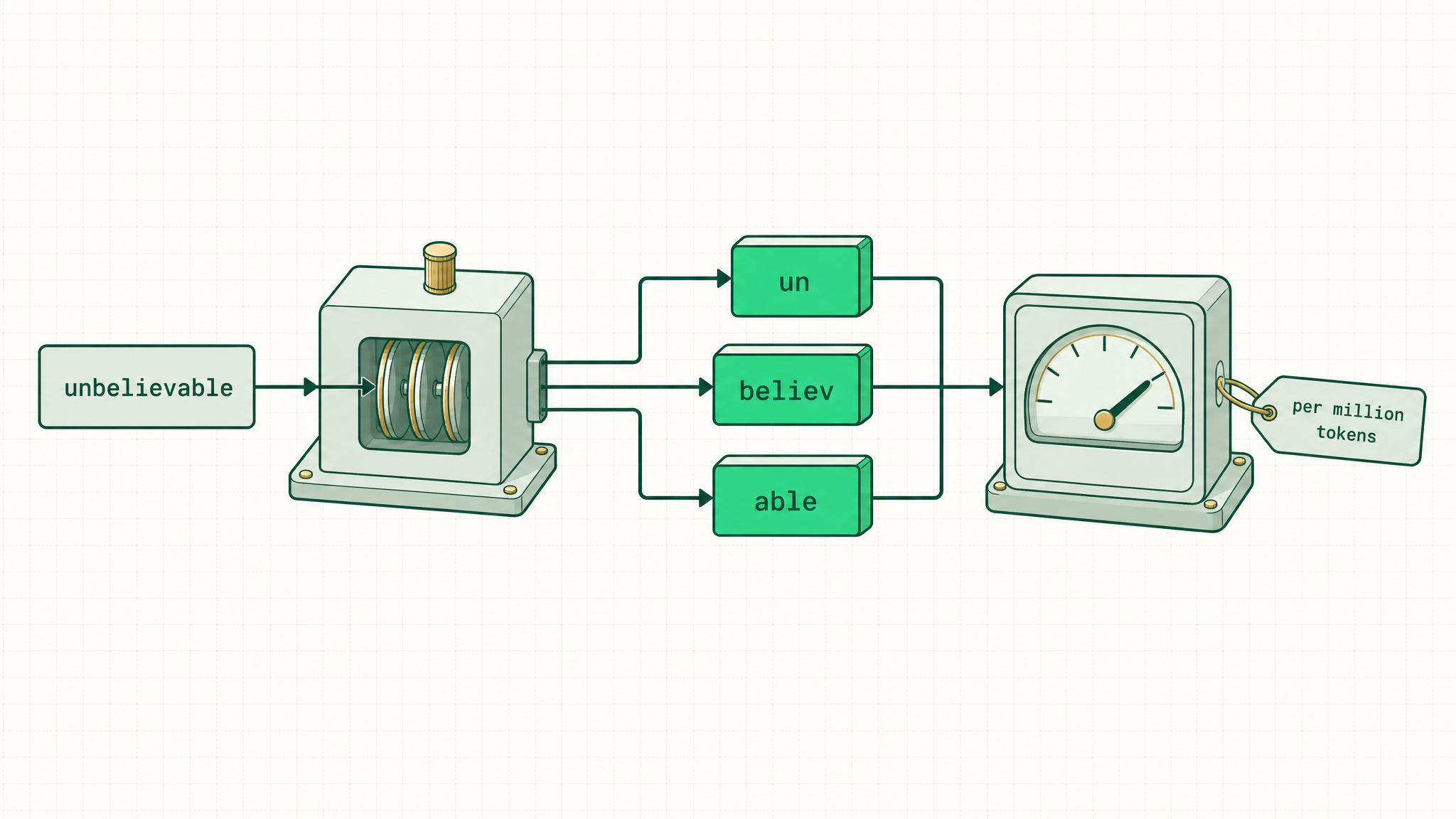
Every word gets chopped into small chunks called tokens; that's the unit the brain reads in, and the unit everything gets counted in.
 🖼Image
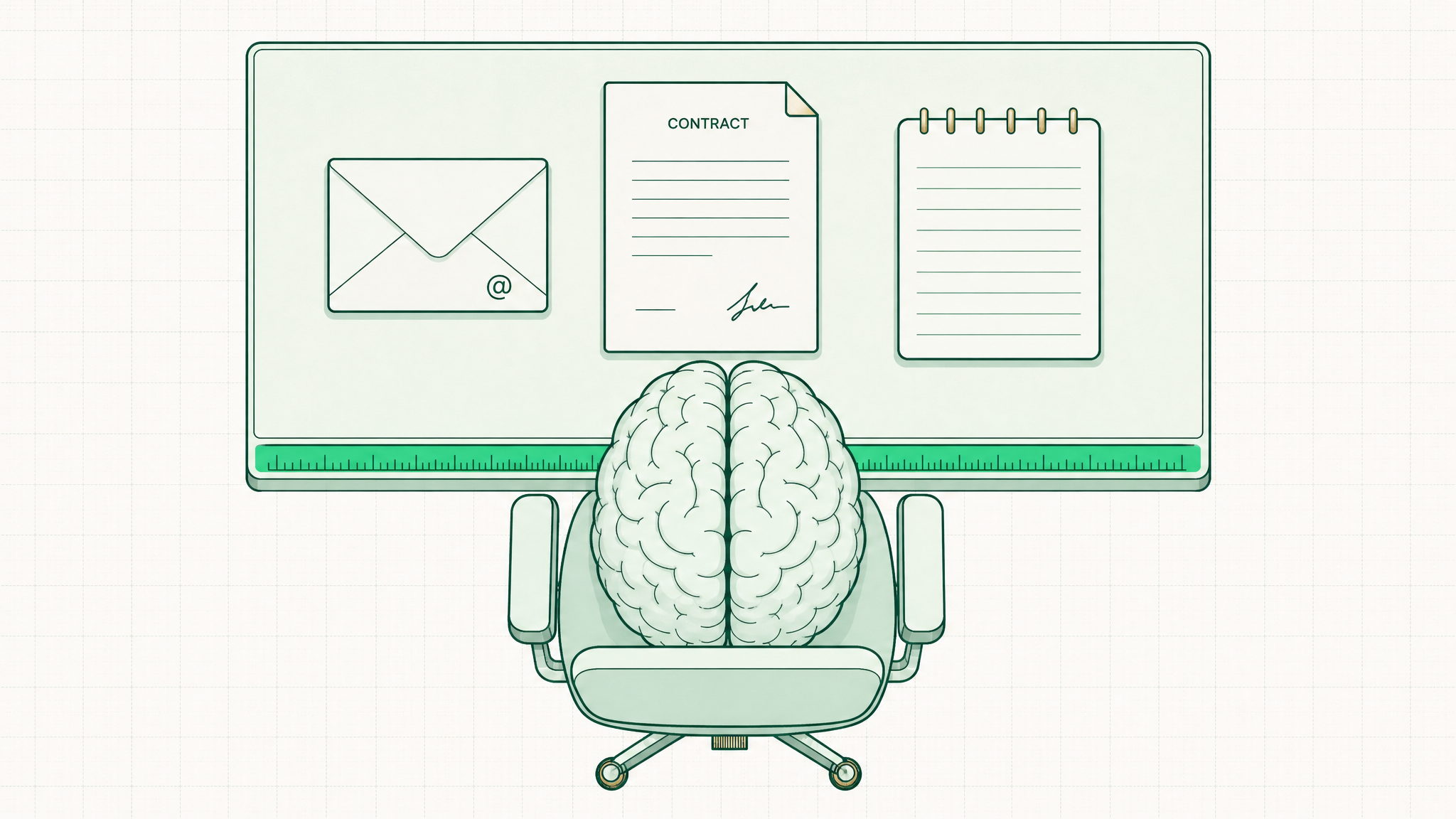
The context window is the brain's working memory: everything it can keep in mind at once, measured in tokens.
 🖼Image
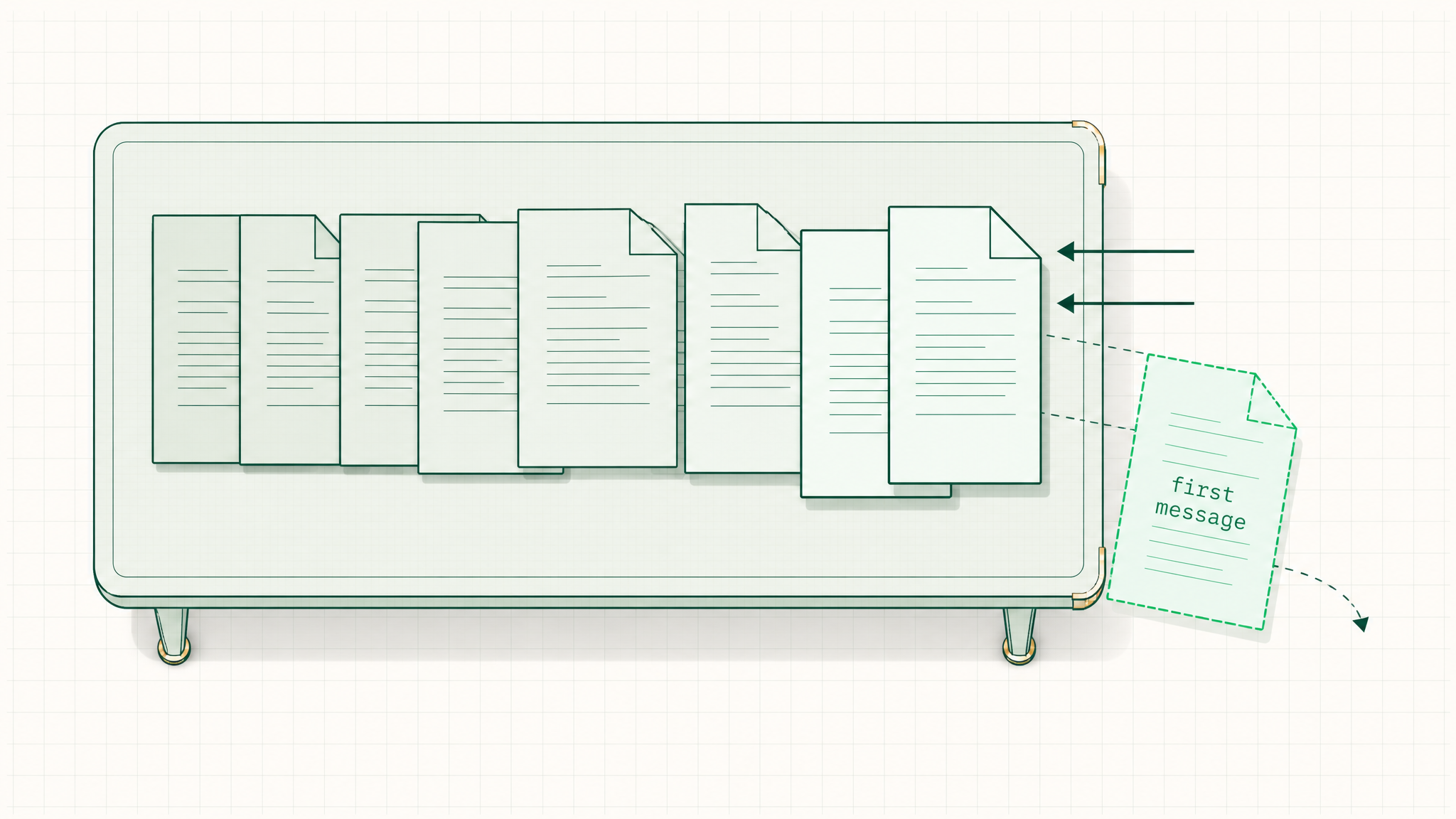
When the working memory fills, the oldest things fall away, which is why a long chat forgets how it started, and why a bigger window can take on a whole document at once.
 🖼Image
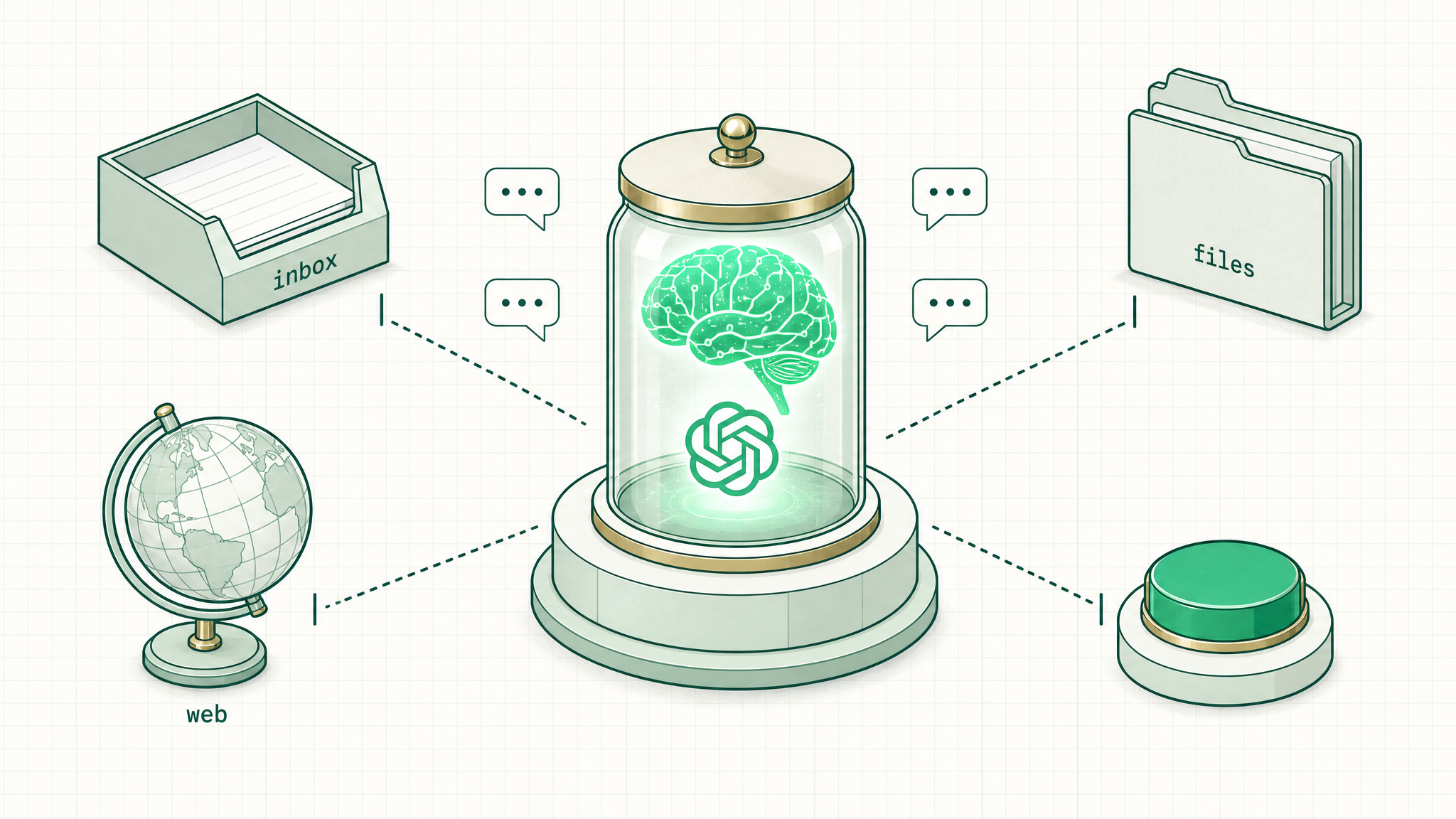
That was the original ChatGPT: a brilliant brain to talk to that couldn't reach an inbox, a file, or the web, or take a single action. What a brain needs is hands and feet.
 🖼Image
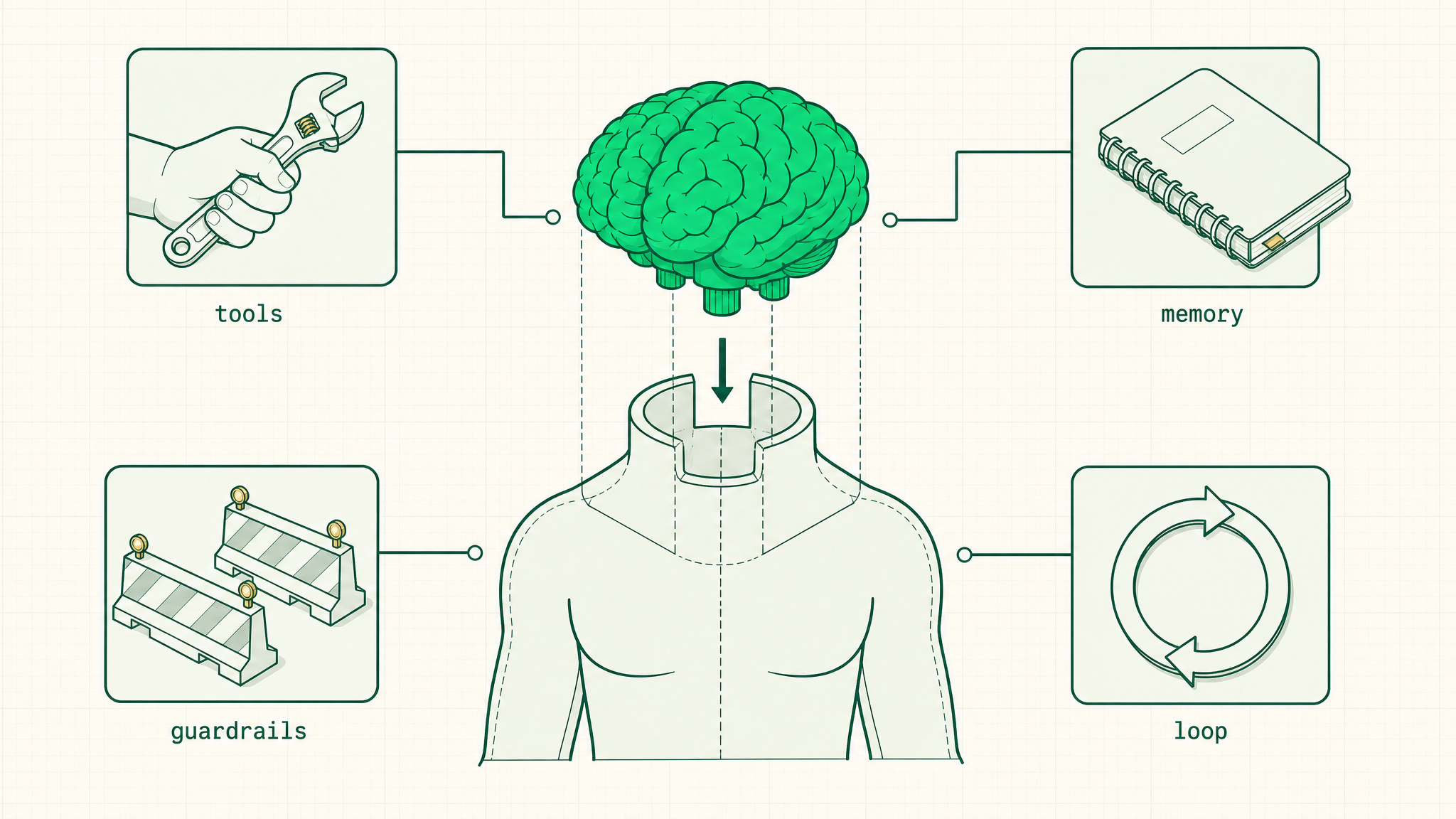
The harness is the body built around the brain: everything that lets it reach real tools, remember, and take action.
 🖼Image
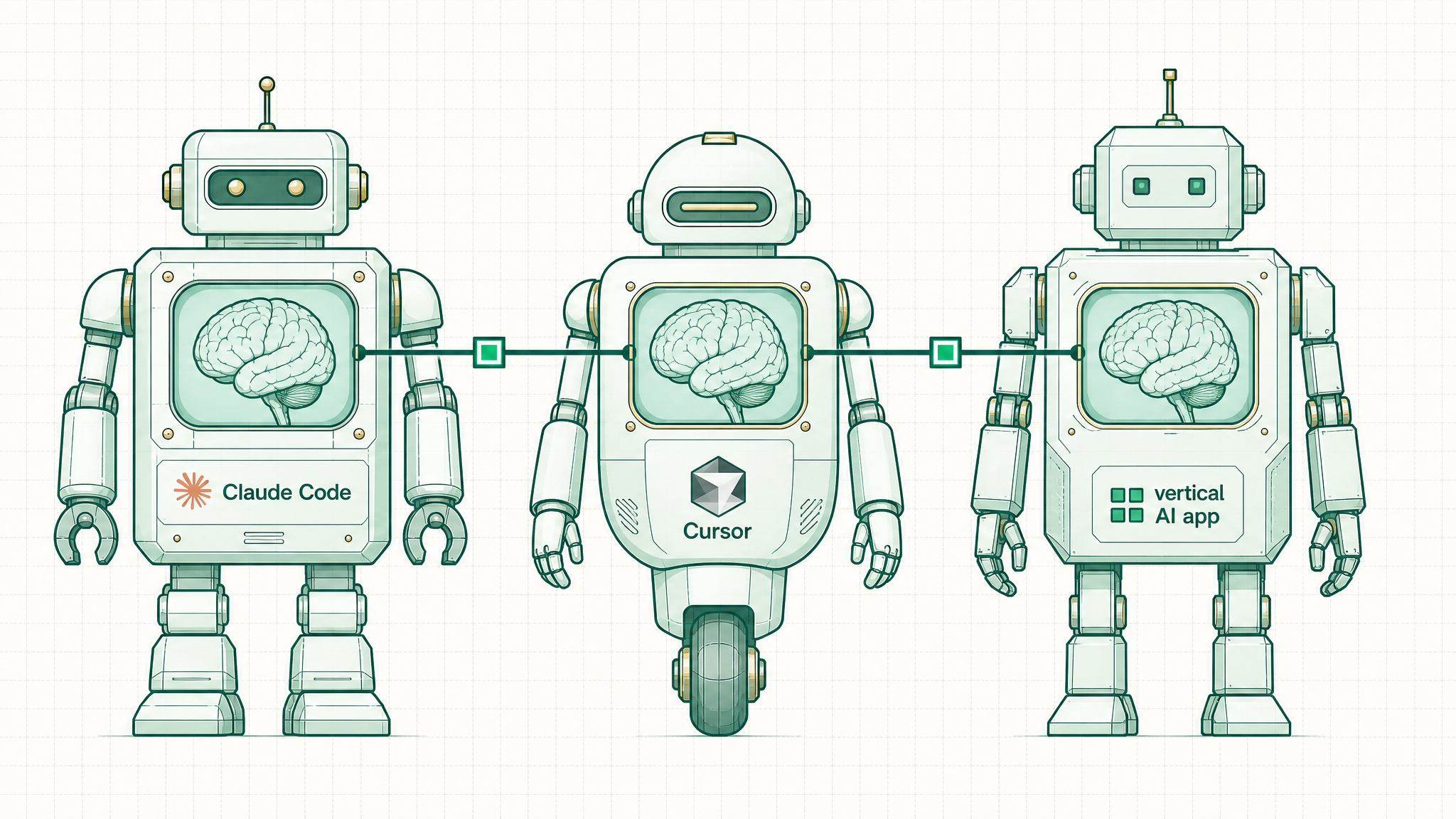
The AI tools anyone actually uses are harnesses wrapped around a model they never see, and the same brain in a better harness does dramatically more.
 🖼Image
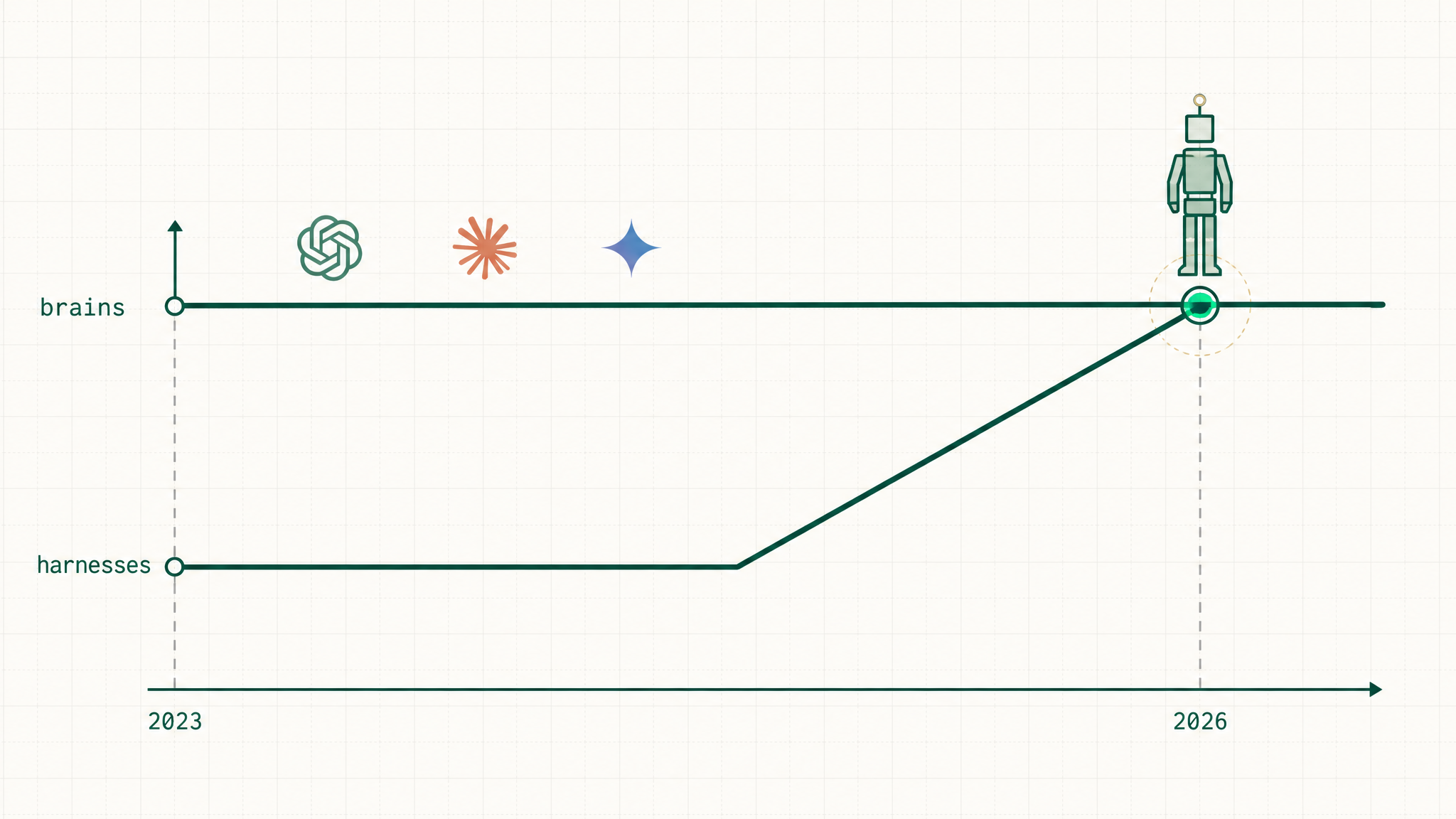
The brains were already smart a while ago; what changed in 2025 and 2026 is the harnesses got good, and that's what set agents loose.
 🖼Image
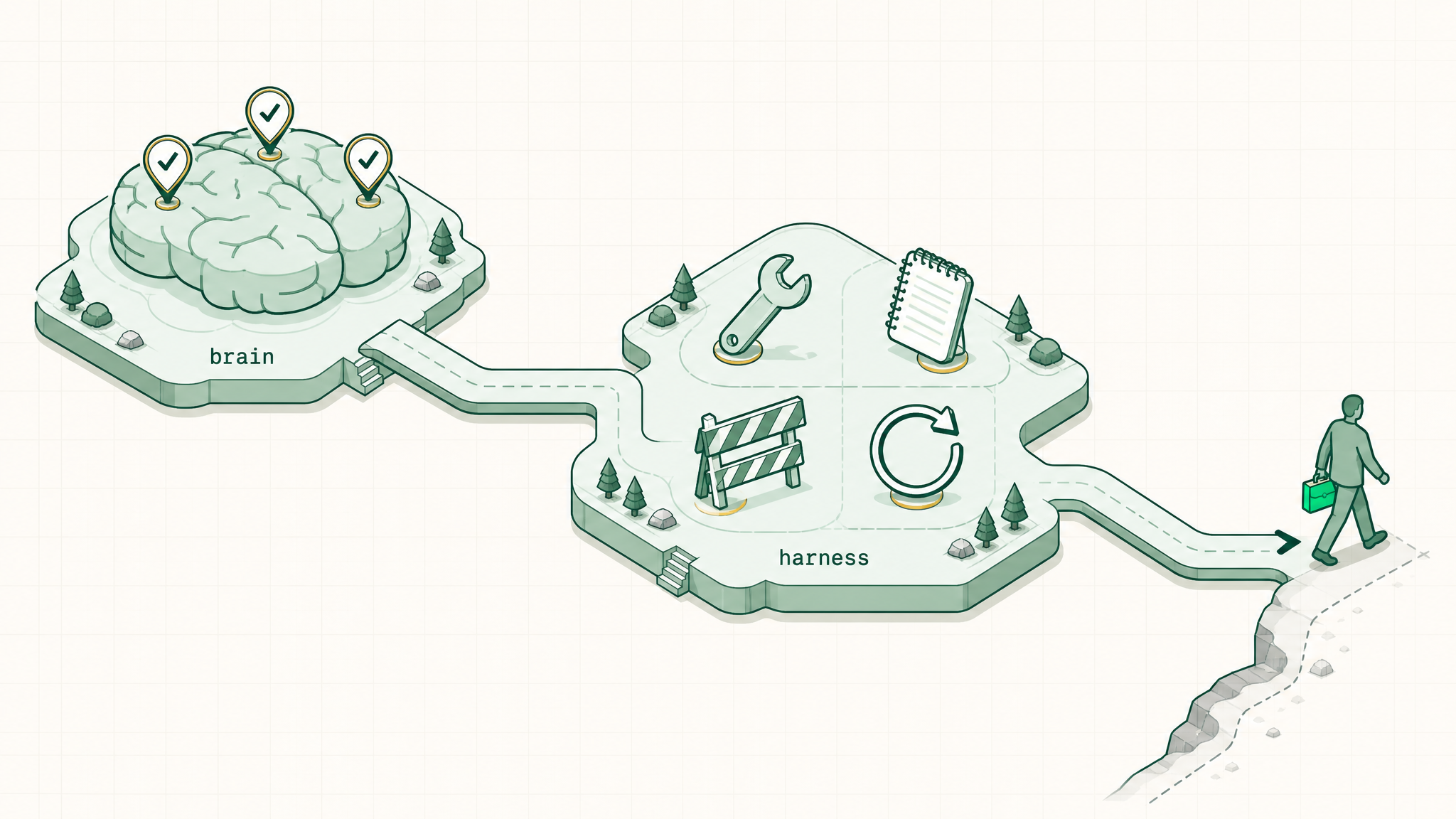
The first three words built the brain; the harness gave it hands and feet. Together that's a whole body, and a brain with a body can finally go do the work.
 🖼Image
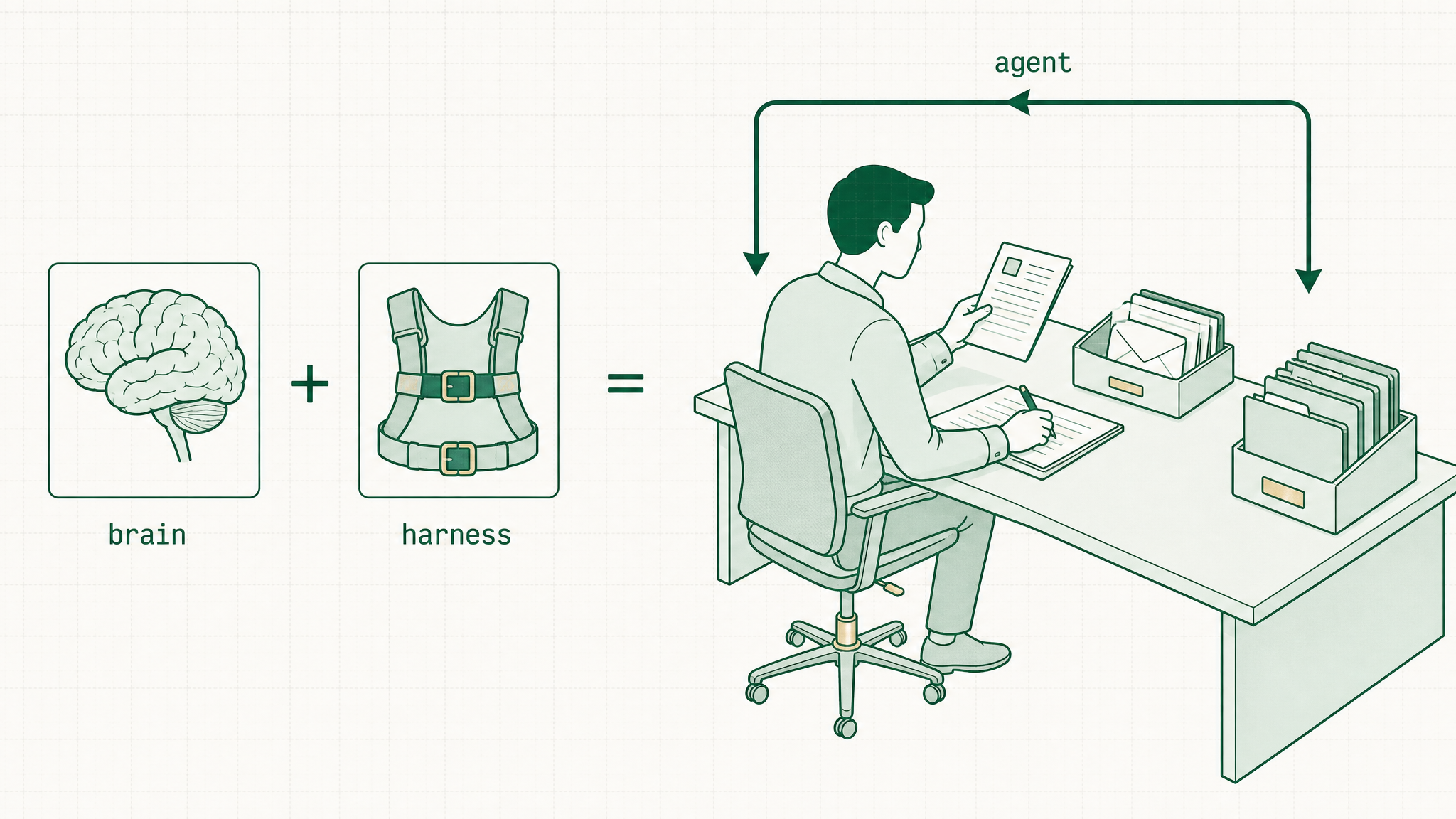
An agent is the brain and the harness working together: it takes action, checks its own work, and keeps going until the job is done.
 🖼Image
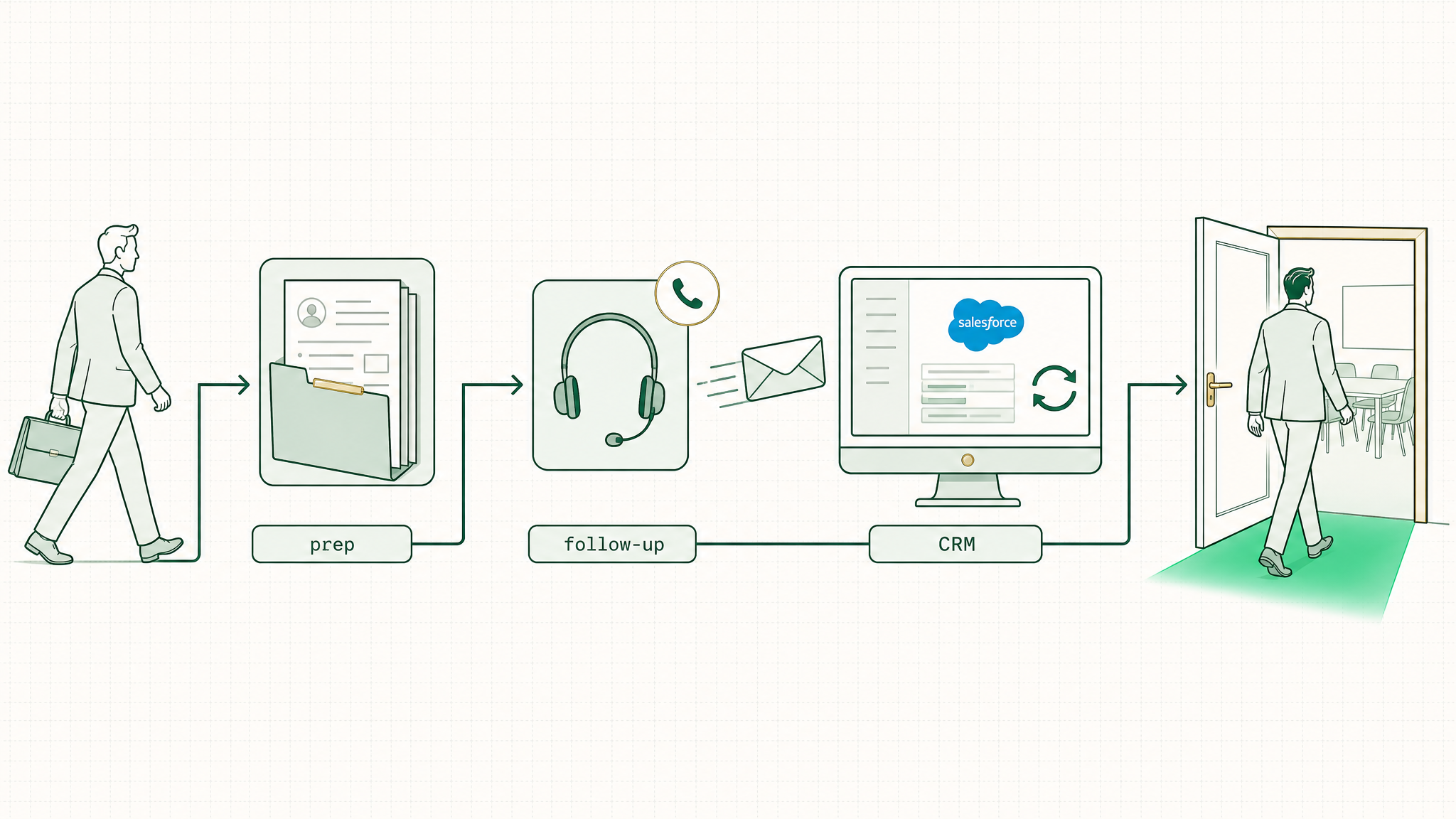
Point an agent at a deal and it does the steps a rep never has time for, so the rep walks in warm and follows up fast.
 🖼Image
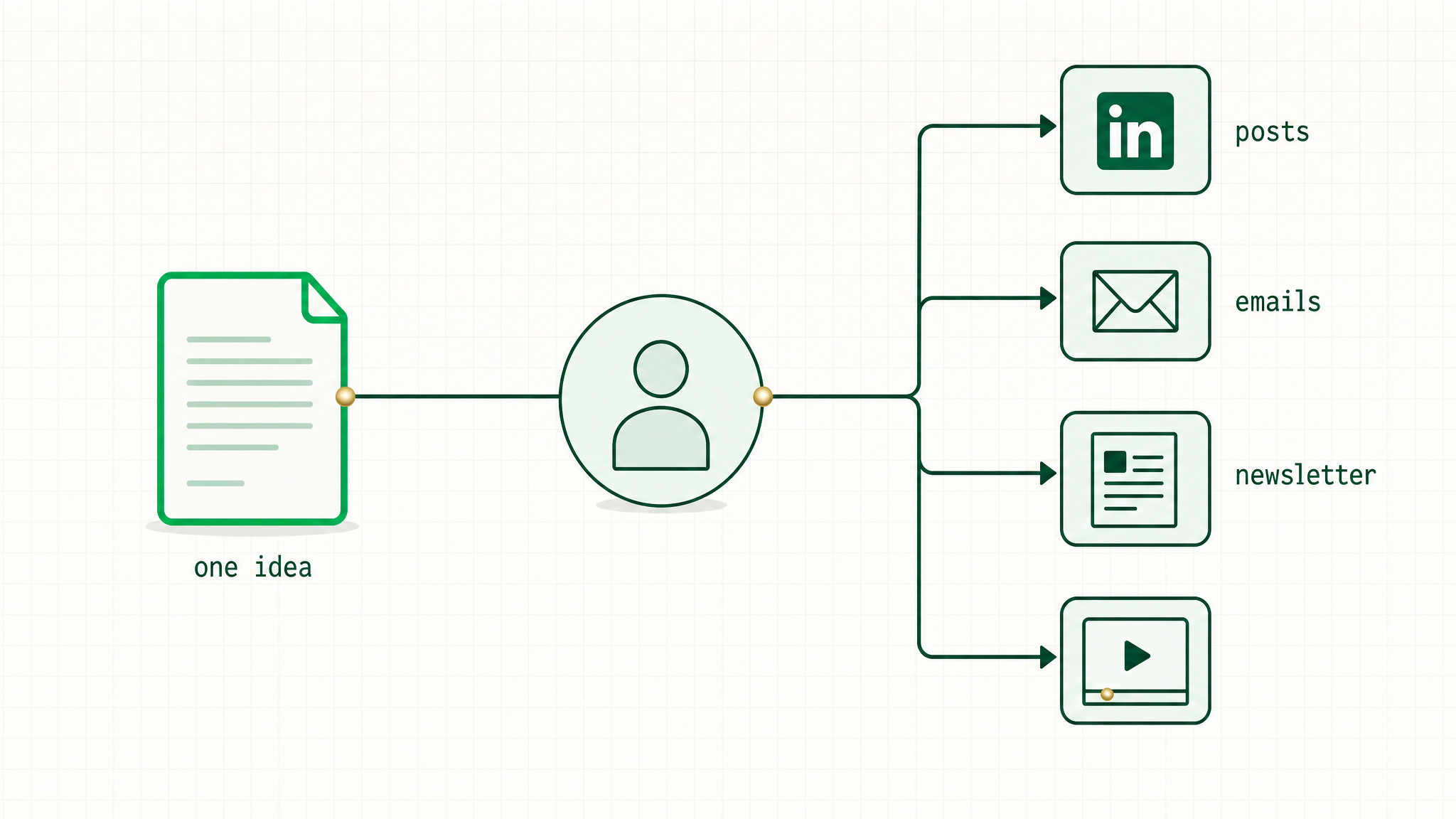
Hand an agent one idea and it carries it through the steps, turning a single brief into a week of content.
 🖼Image
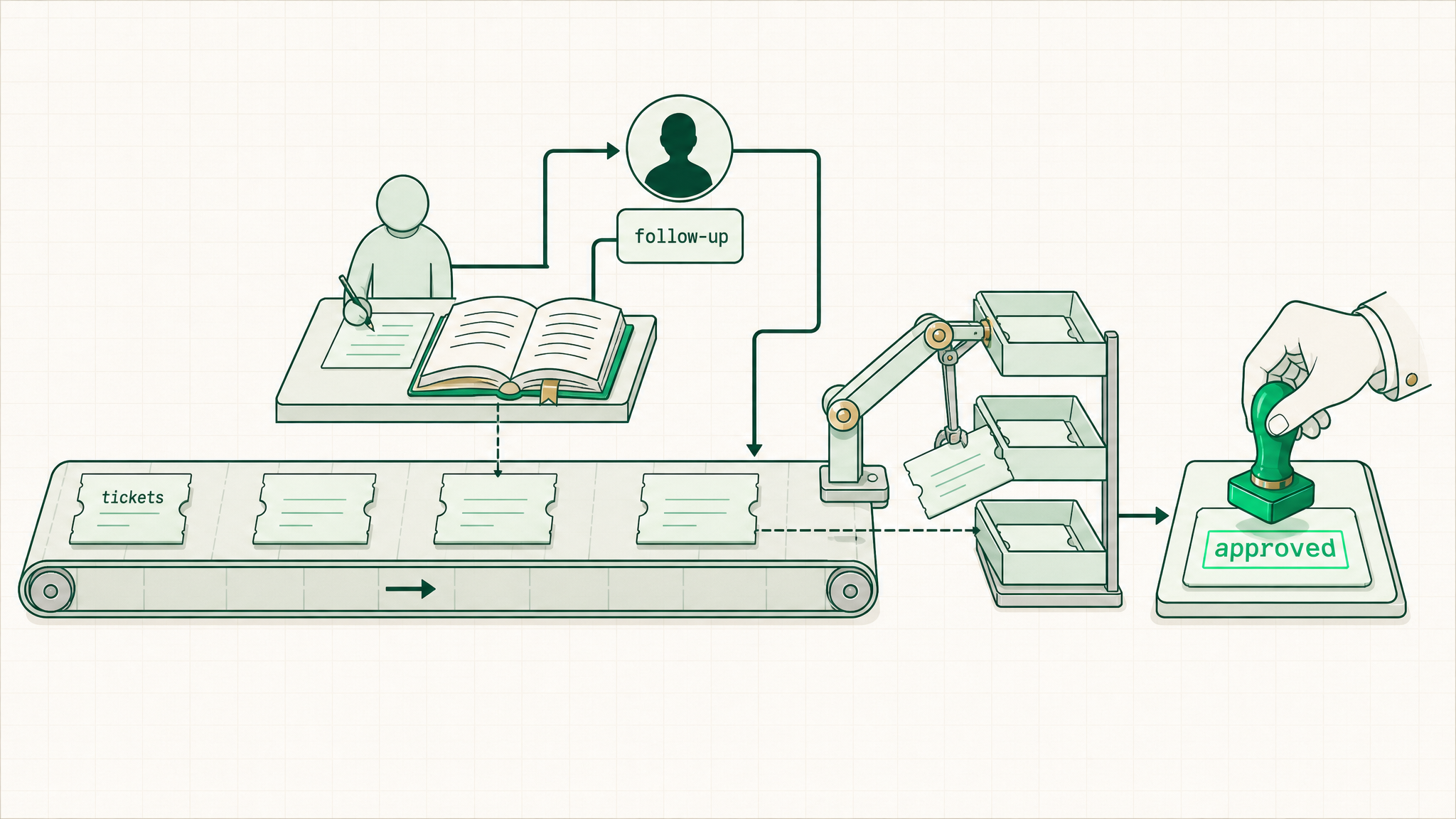
An agent takes the multi-step tasks that eat a team's day and runs them start to finish, with a person approving the result.
 🖼Image
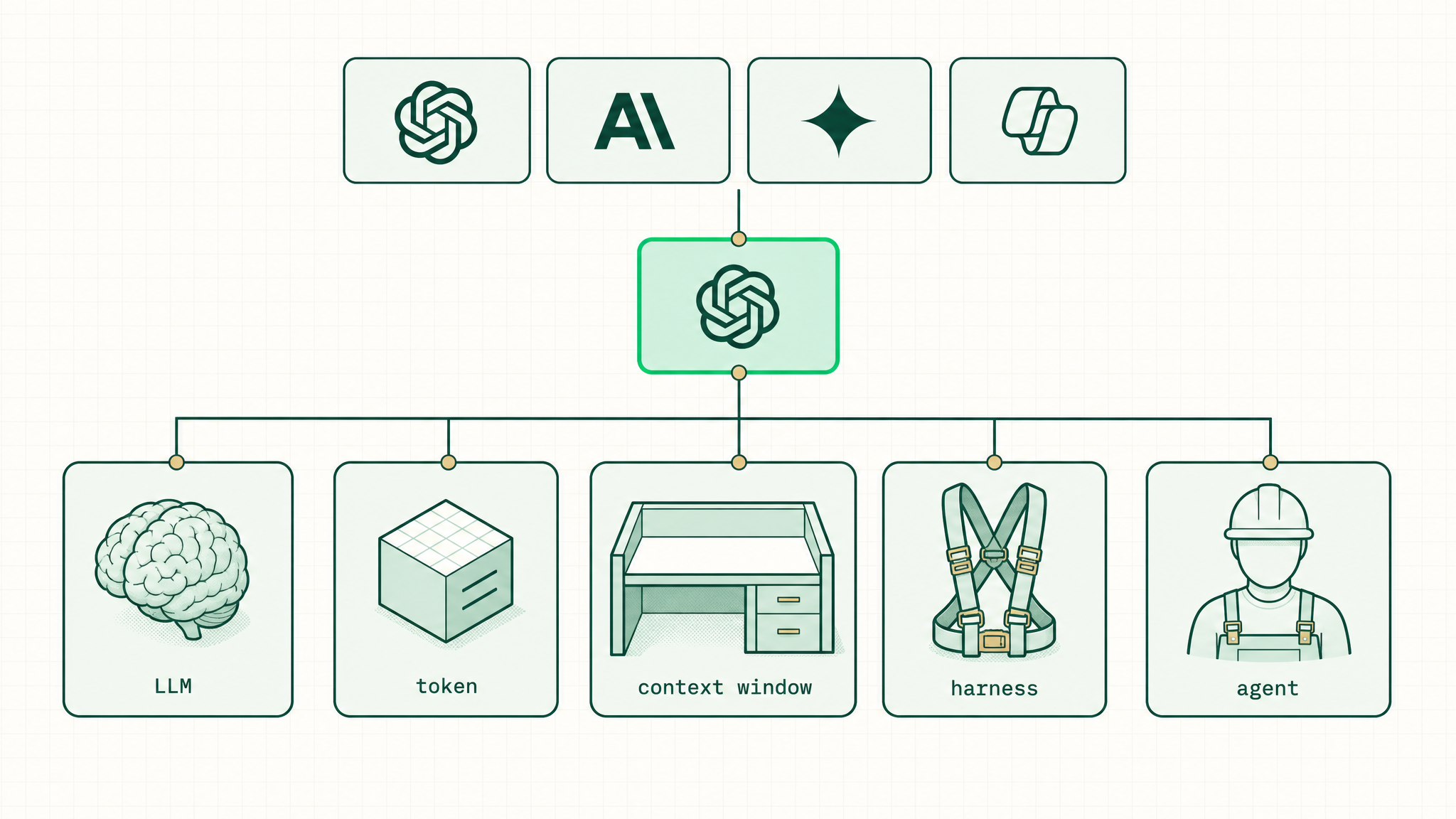
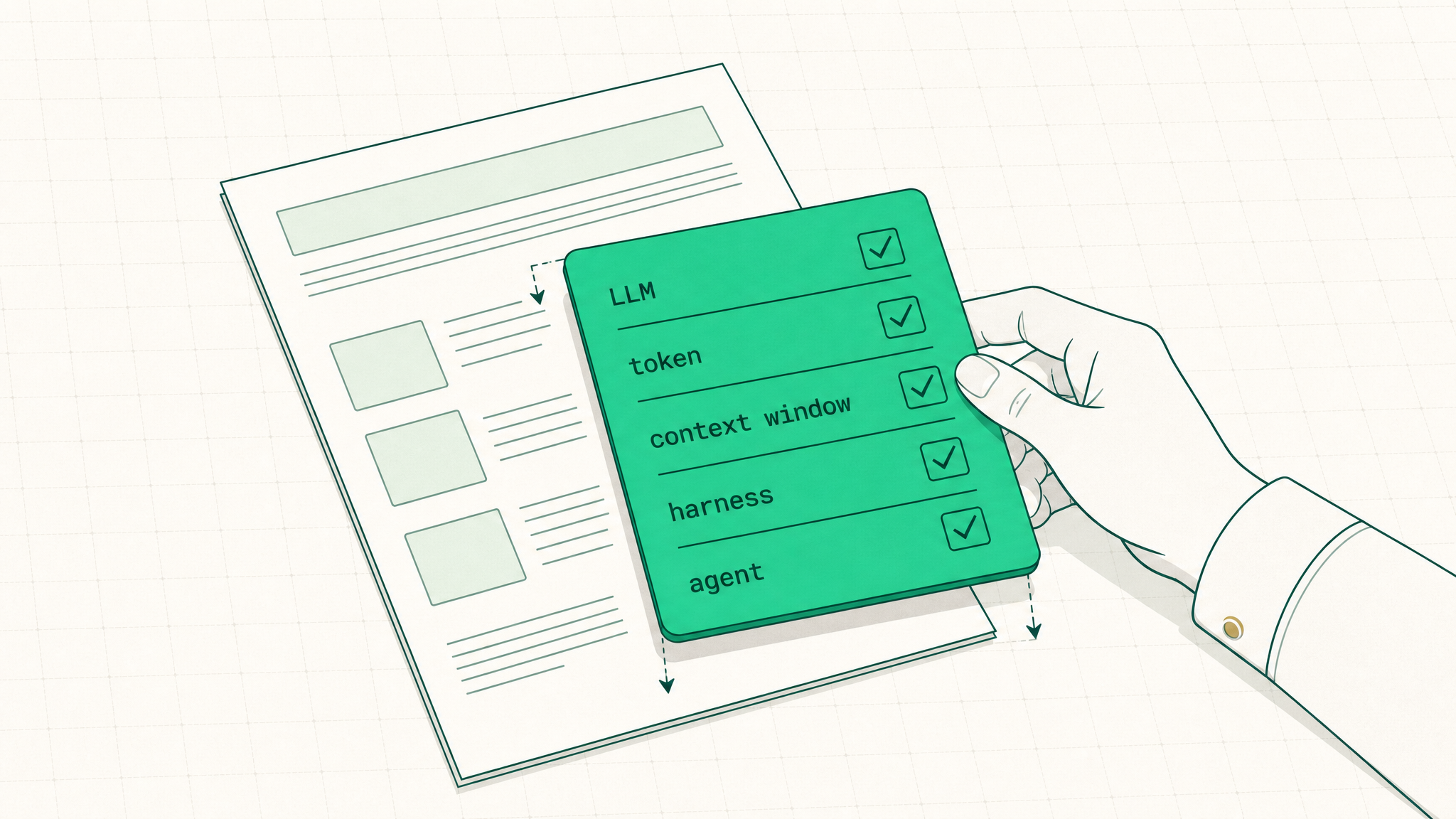
Put any AI product on these five words and its whole story shows up: how capable it is, what it costs, how much it holds, what it can do, and whether it can act.
 🖼Image
Next time an AI tool or vendor shows up, place it on the five words and ask what its harness can actually reach and do; that one habit is what separates the people who get AI from the people who don't.
 🖼Image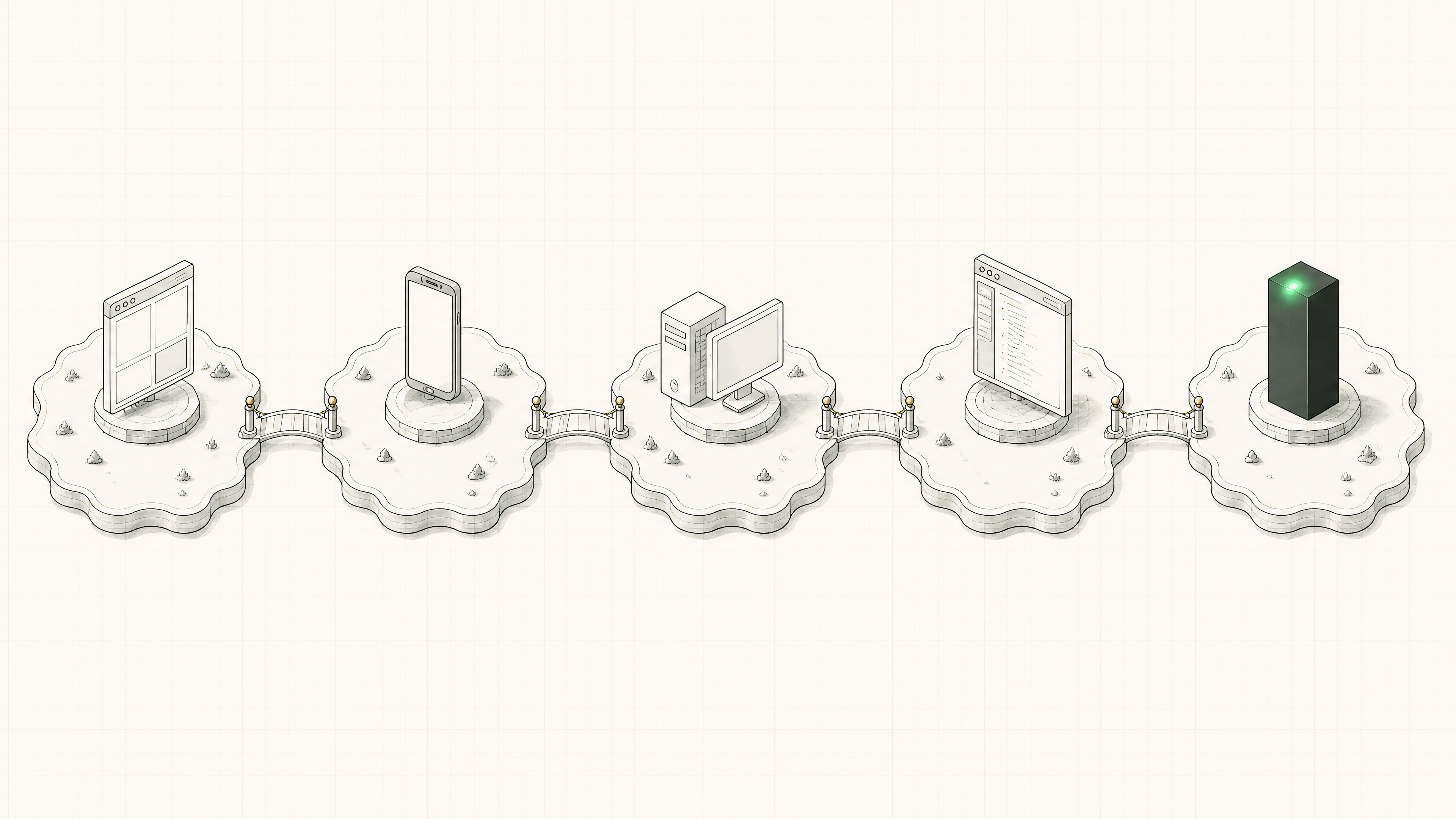
ChatGPT or Claude in a tab — the way almost everyone touches AI first: zero setup, nothing installed, log in and type.
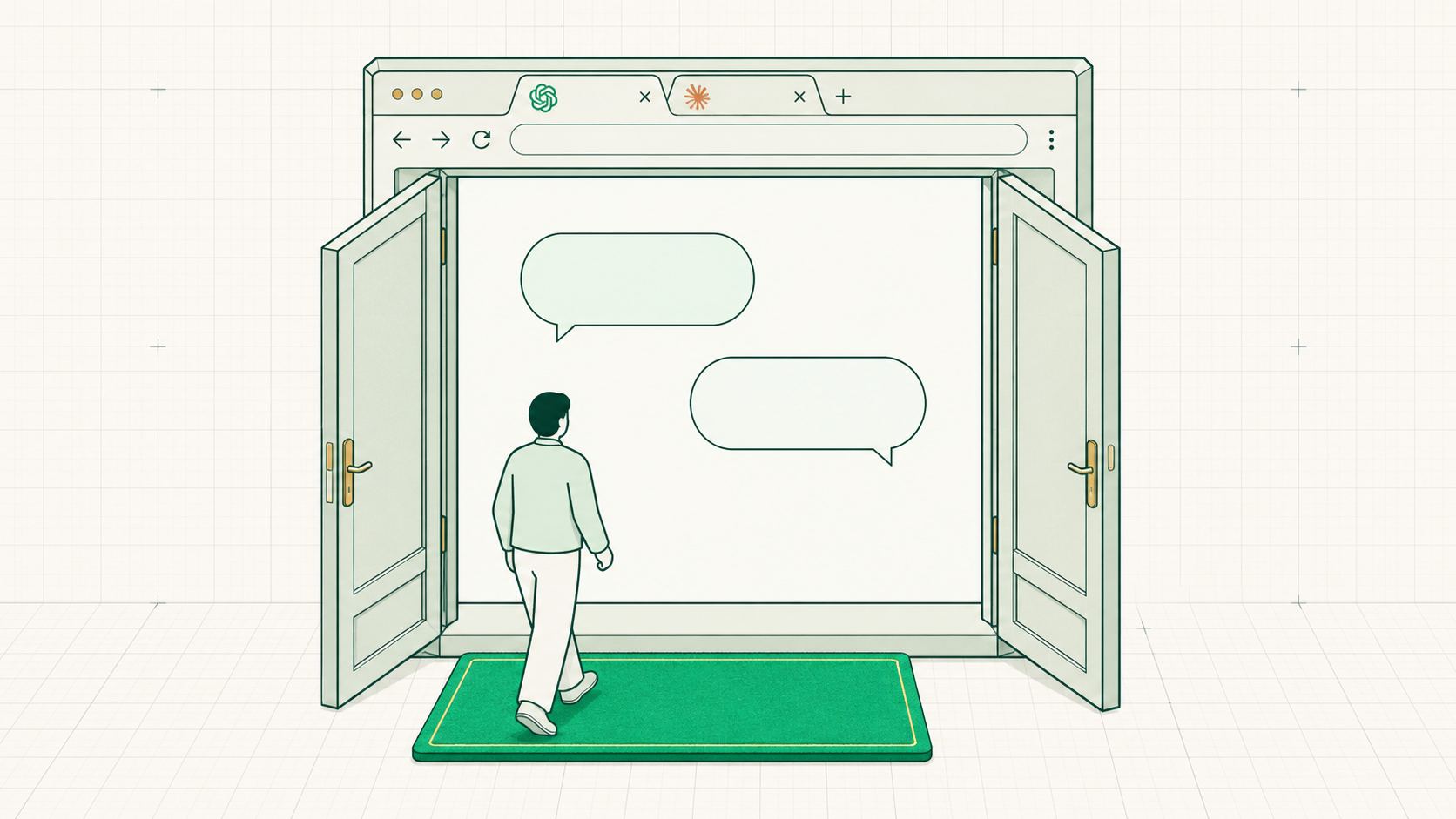 🖼Image
The same AI, riding in a pocket — voice conversations in the car, a photo of a document, quick questions between meetings.
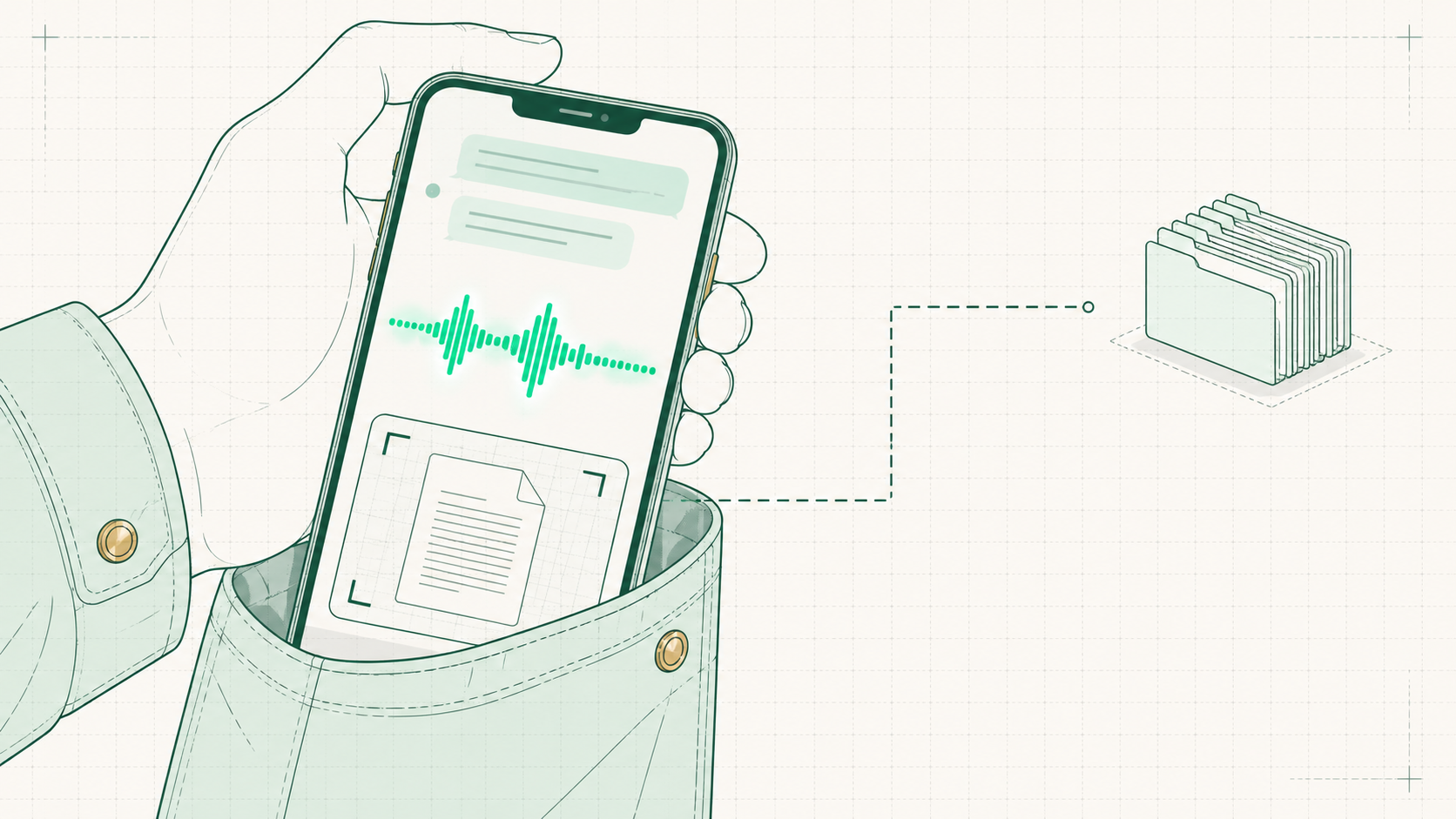 🖼Image
The same chat, installed on the actual computer — closer to the work, and files can already enter the picture here.
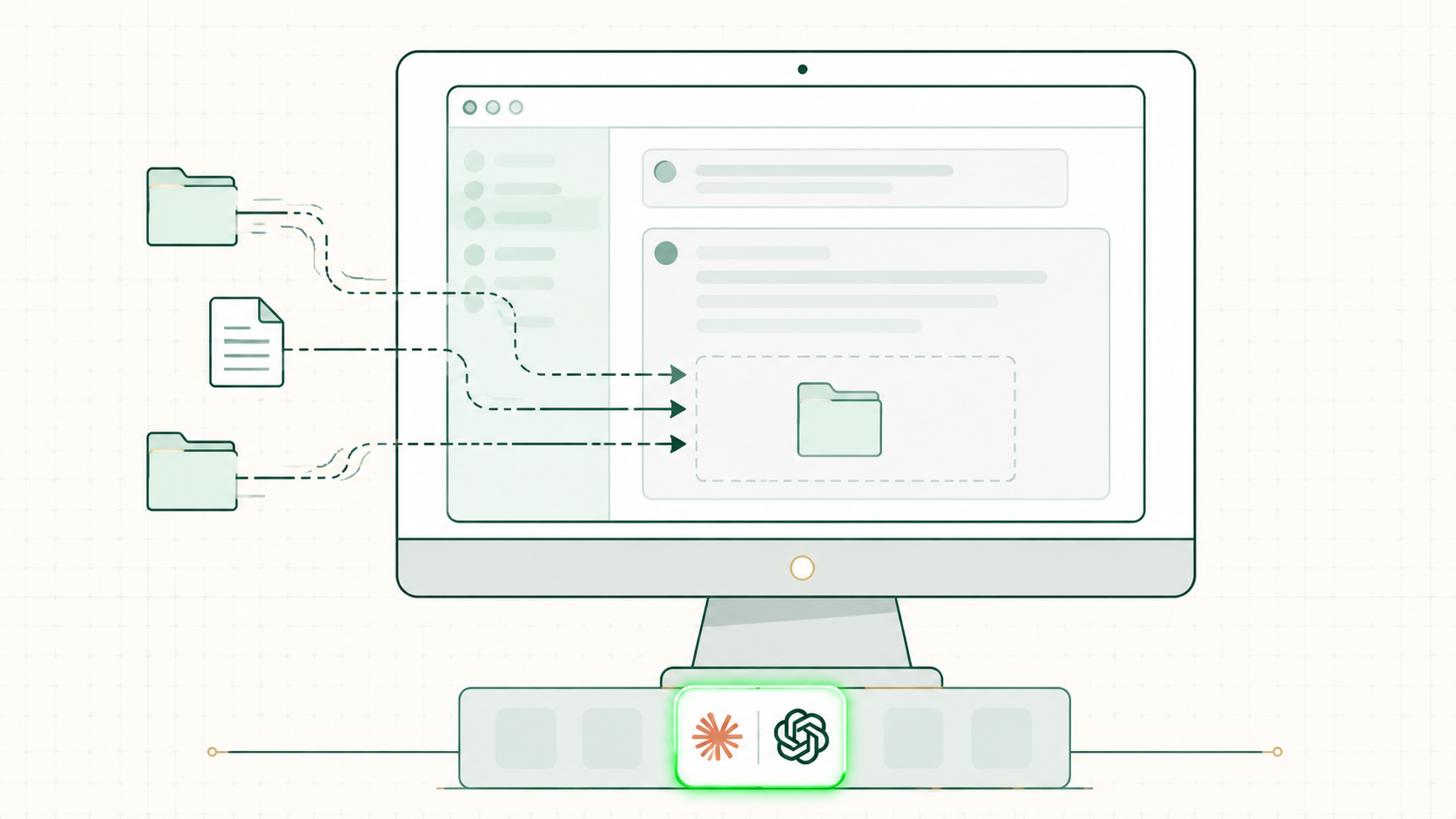 🖼Image
A free editor where the AI works inside a folder of real files — reading them, writing them, keeping everything about the business in one place.
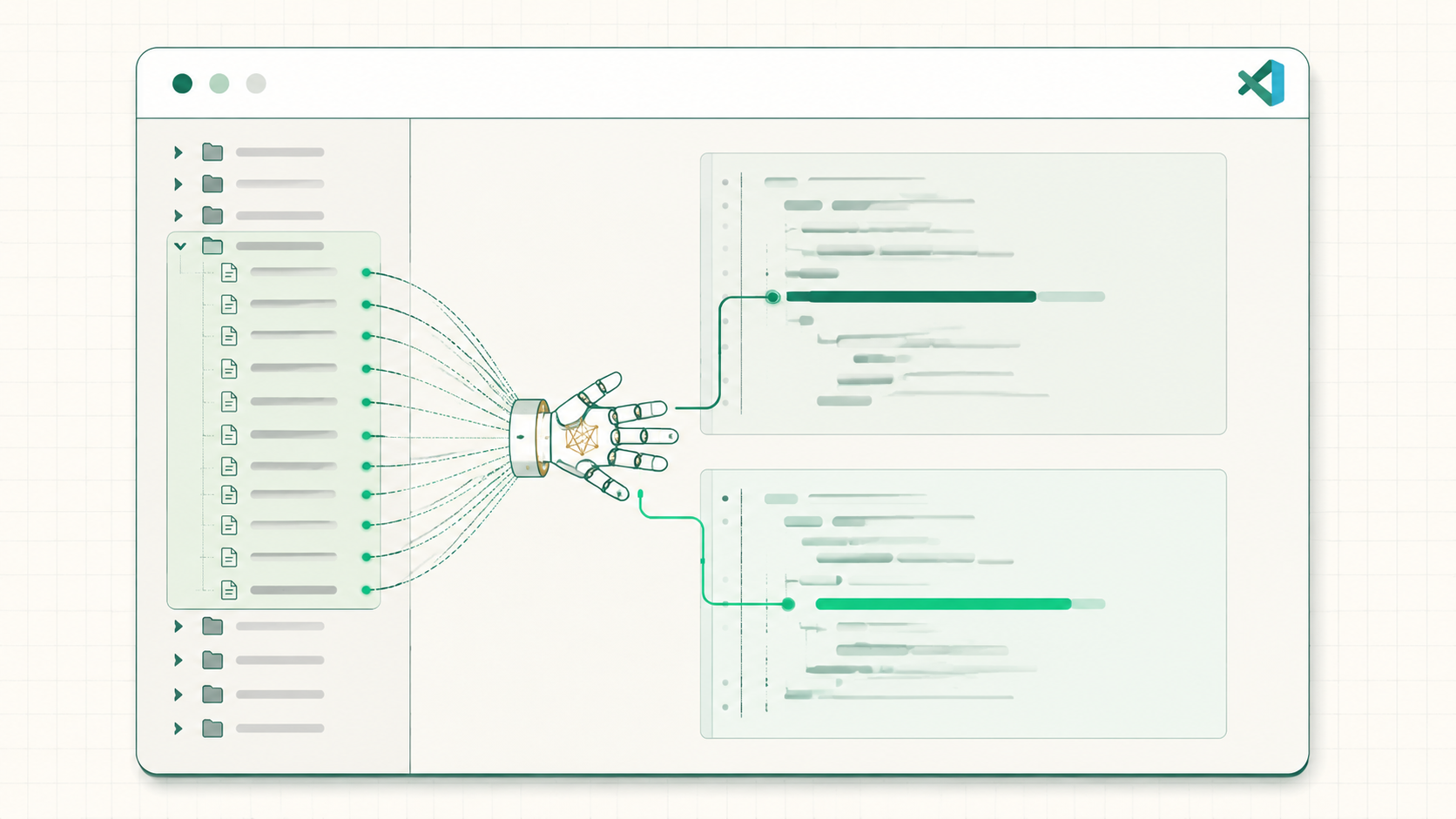 🖼Image
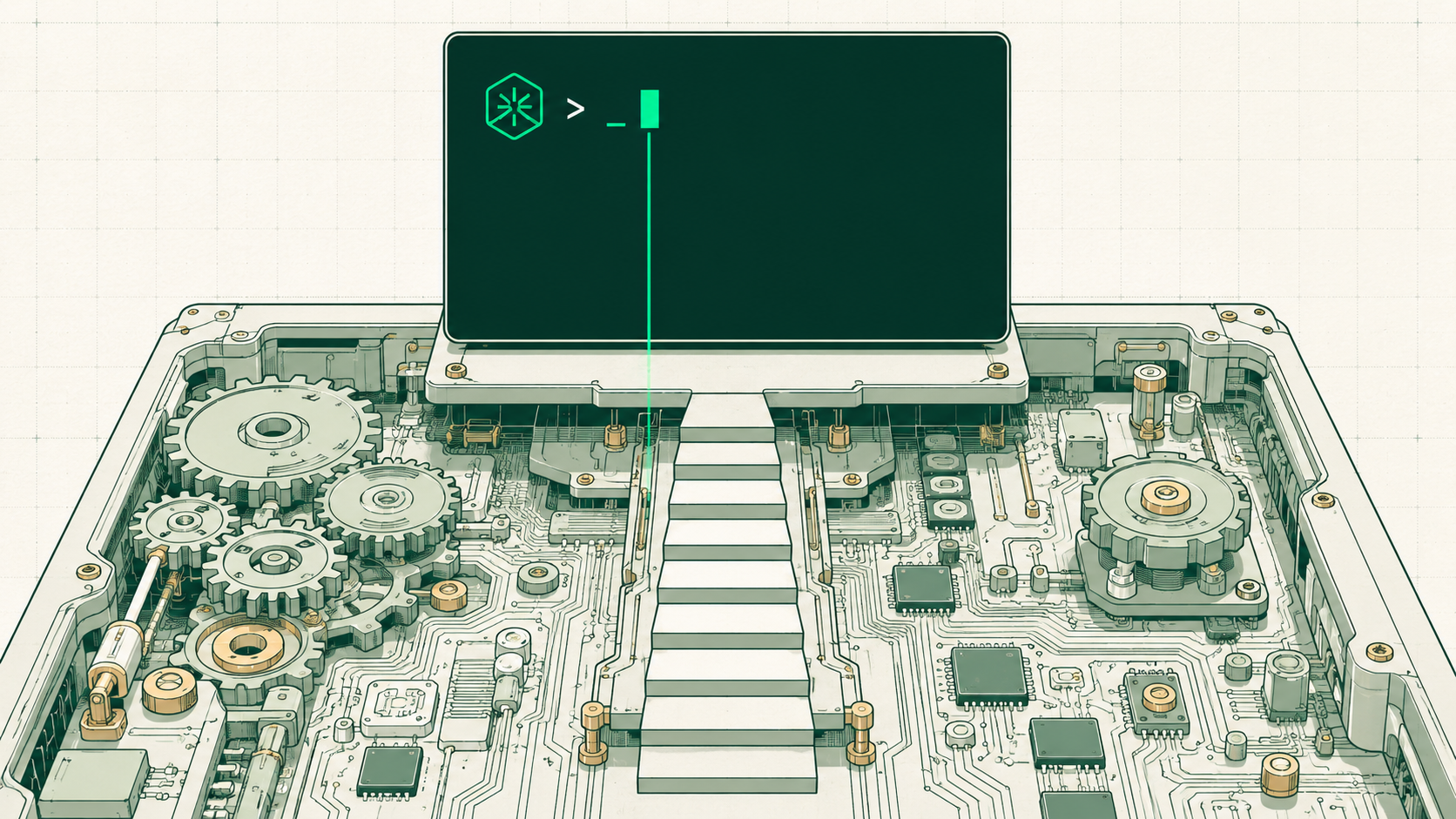
The text window developers use — the AI running right on the machine, with the fewest layers between it and the work.
 🖼Image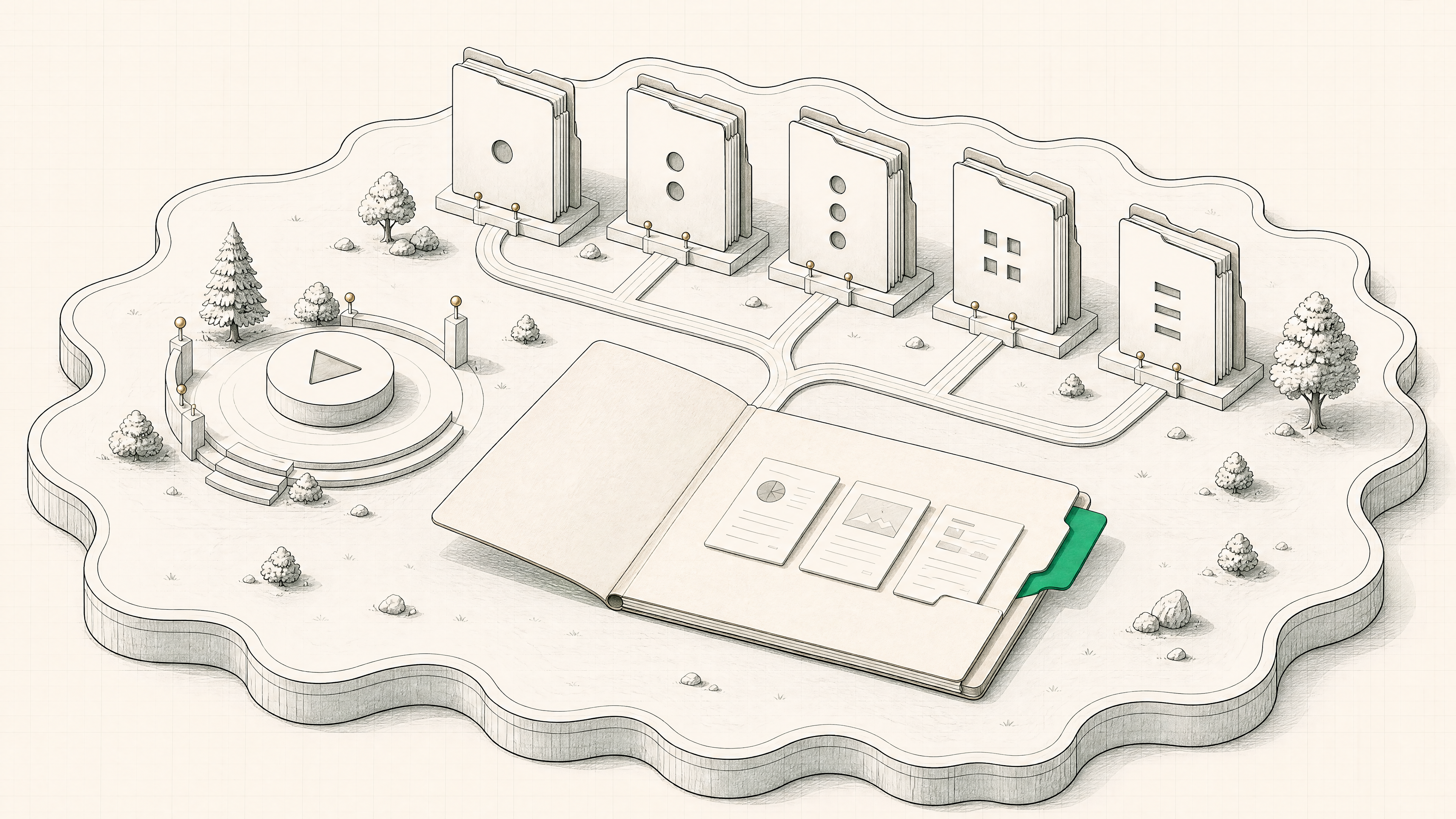
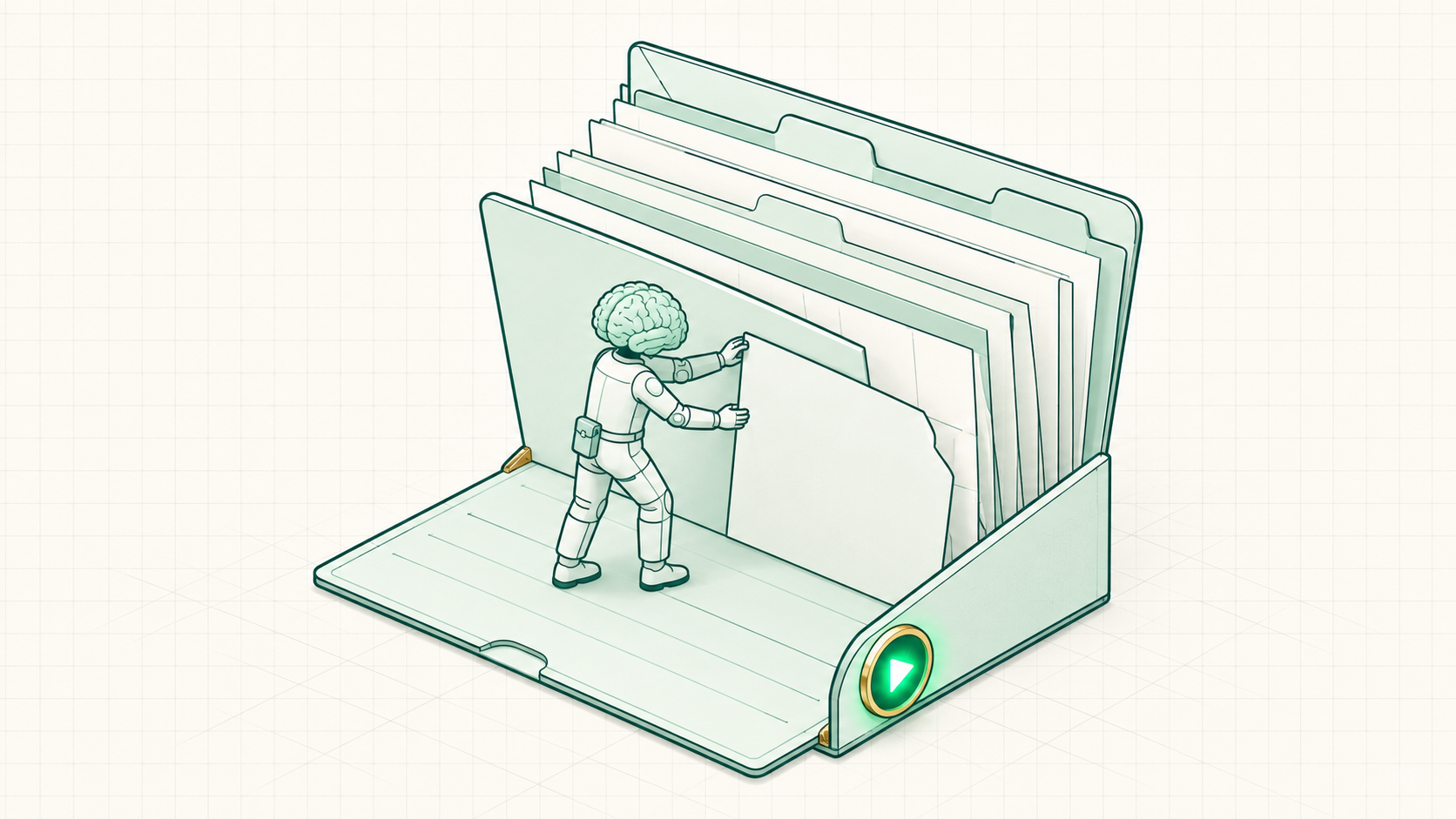
Before any setup, one live example — the AI working inside a real business folder, doing a real task, start to finish.
 🖼Image
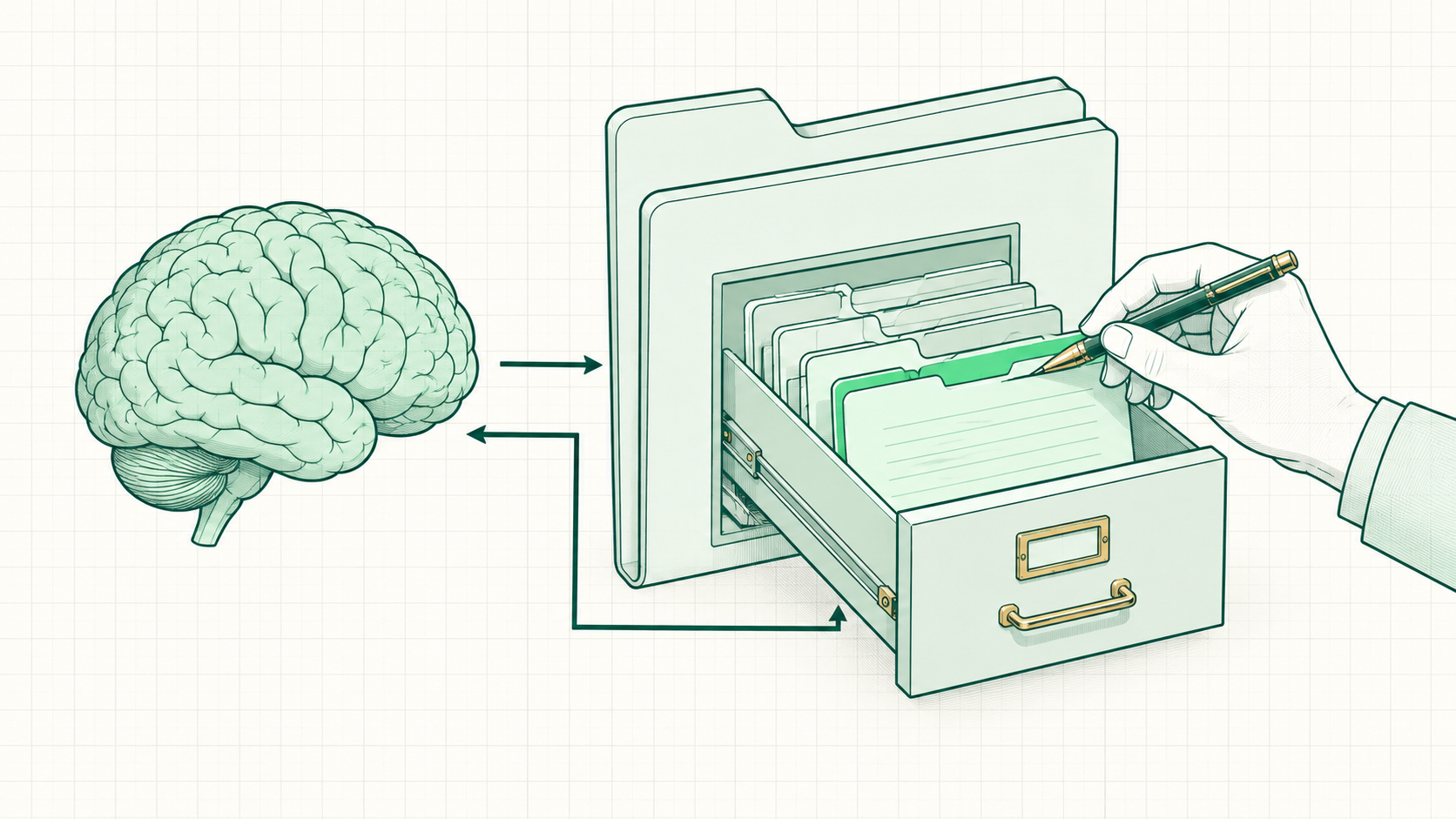
The AI remembers the business between sessions because its memory is just files in the folder — visible, editable, owned.
 🖼Image
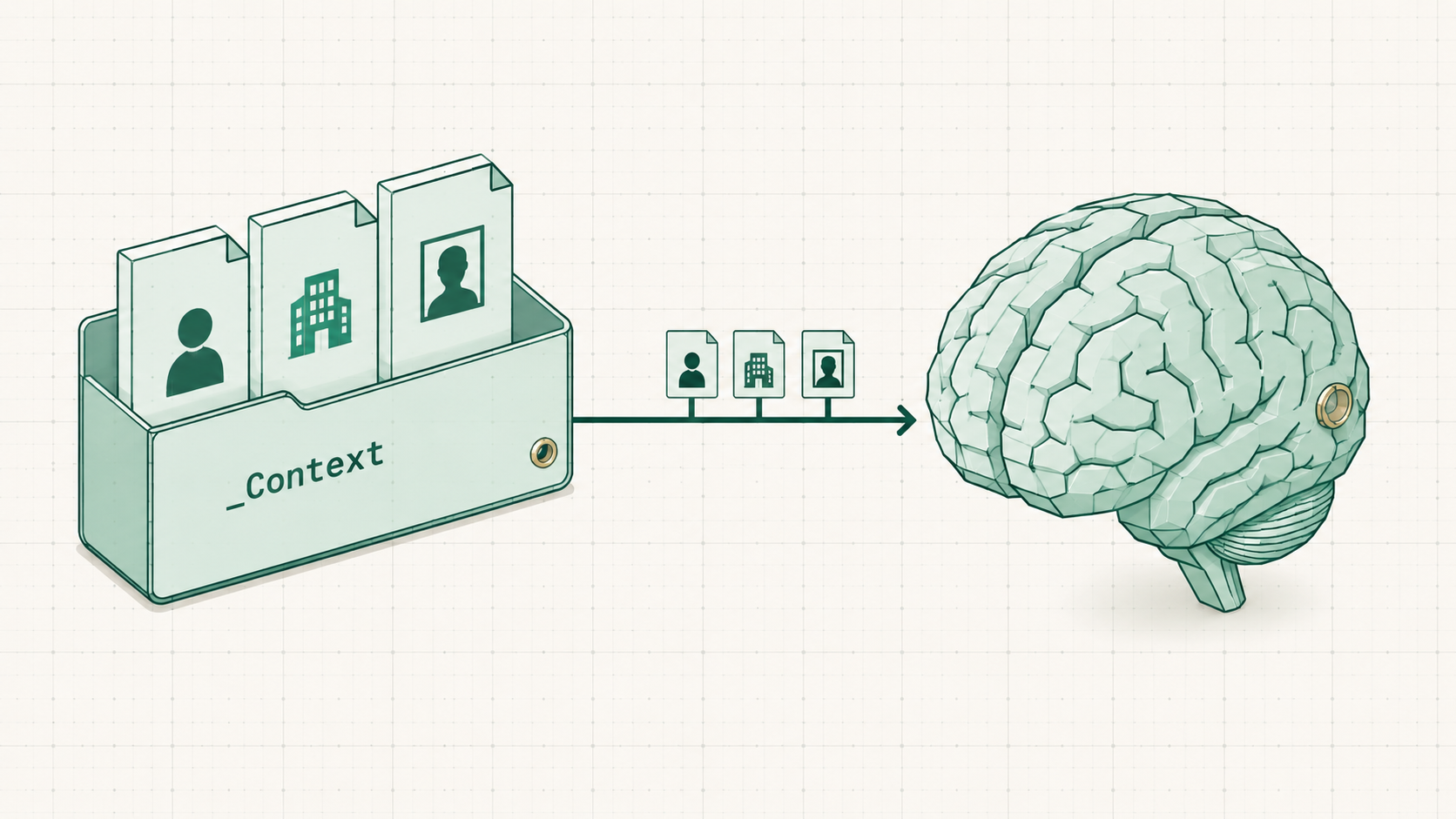
One folder the AI reads before any job: who the customer is, what the company is, and who's running it.
 🖼Image
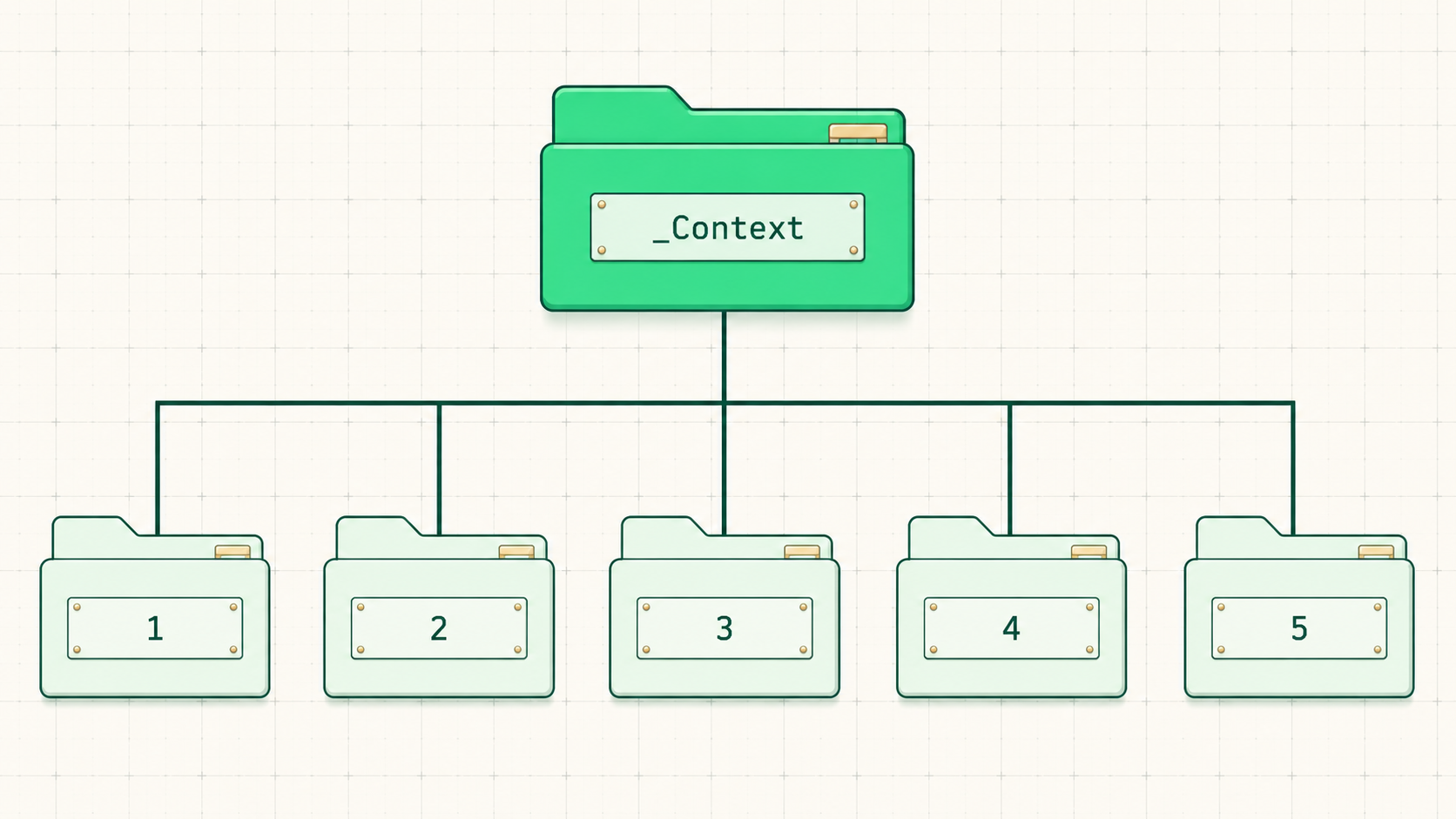
The same jobs from the first half, now sitting on the computer as numbered folders — the mental model becomes the file system.
 🖼Image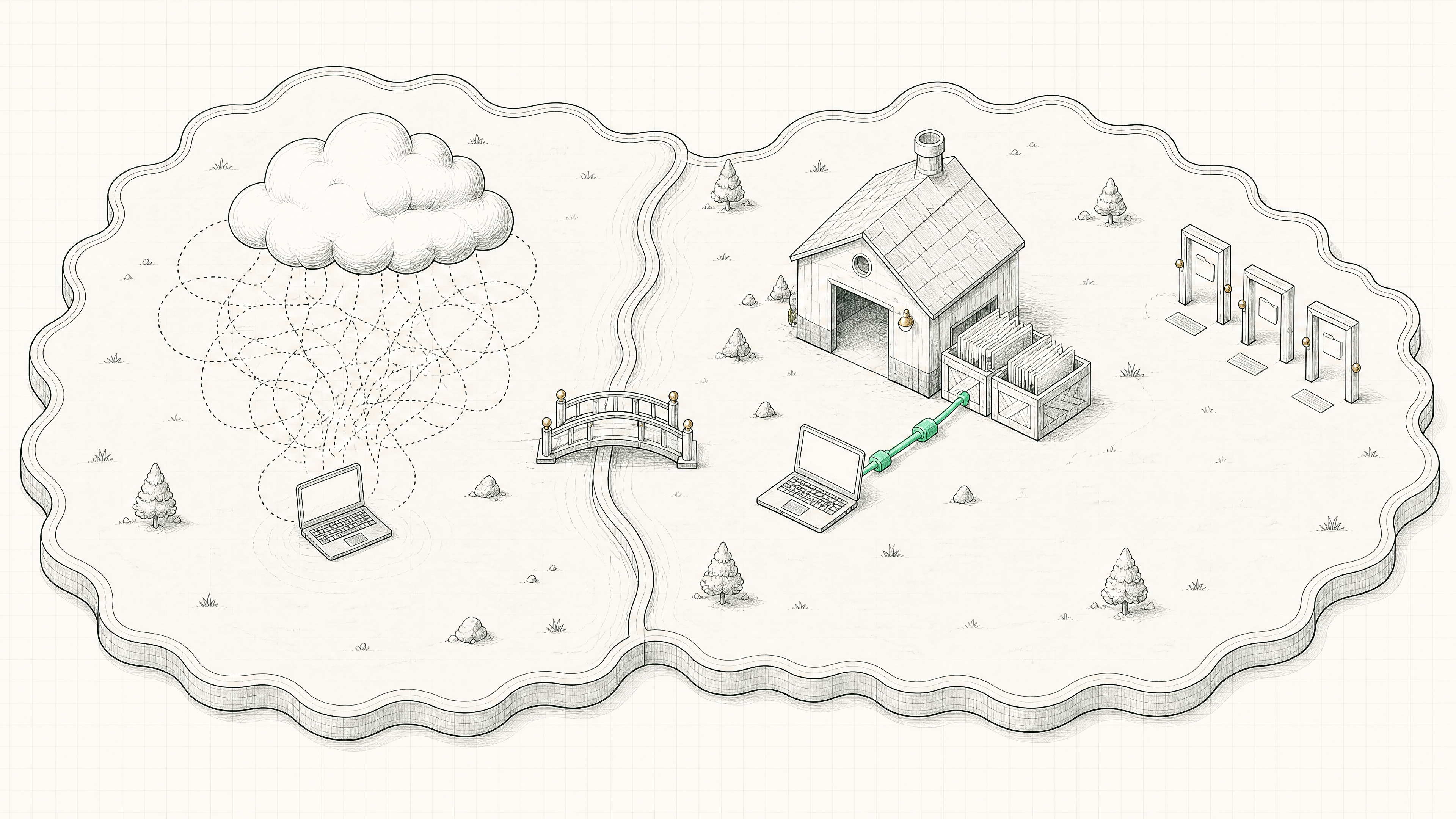
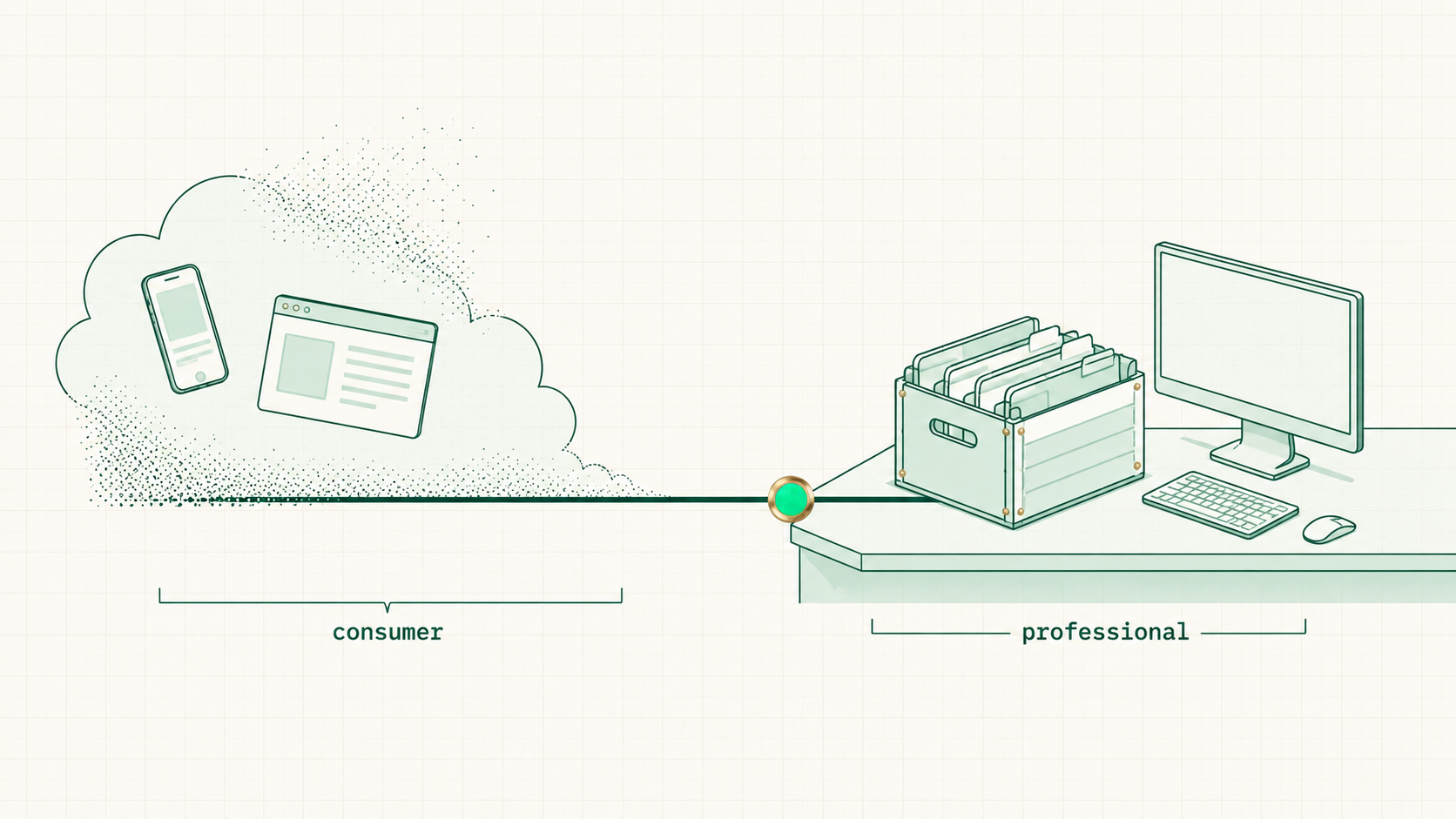
The same five places, now as a spectrum — the further left, the more it lives in the cloud, because consumers aren't going to manage files on a computer; the further right, the more the power of local unlocks.
 🖼Image
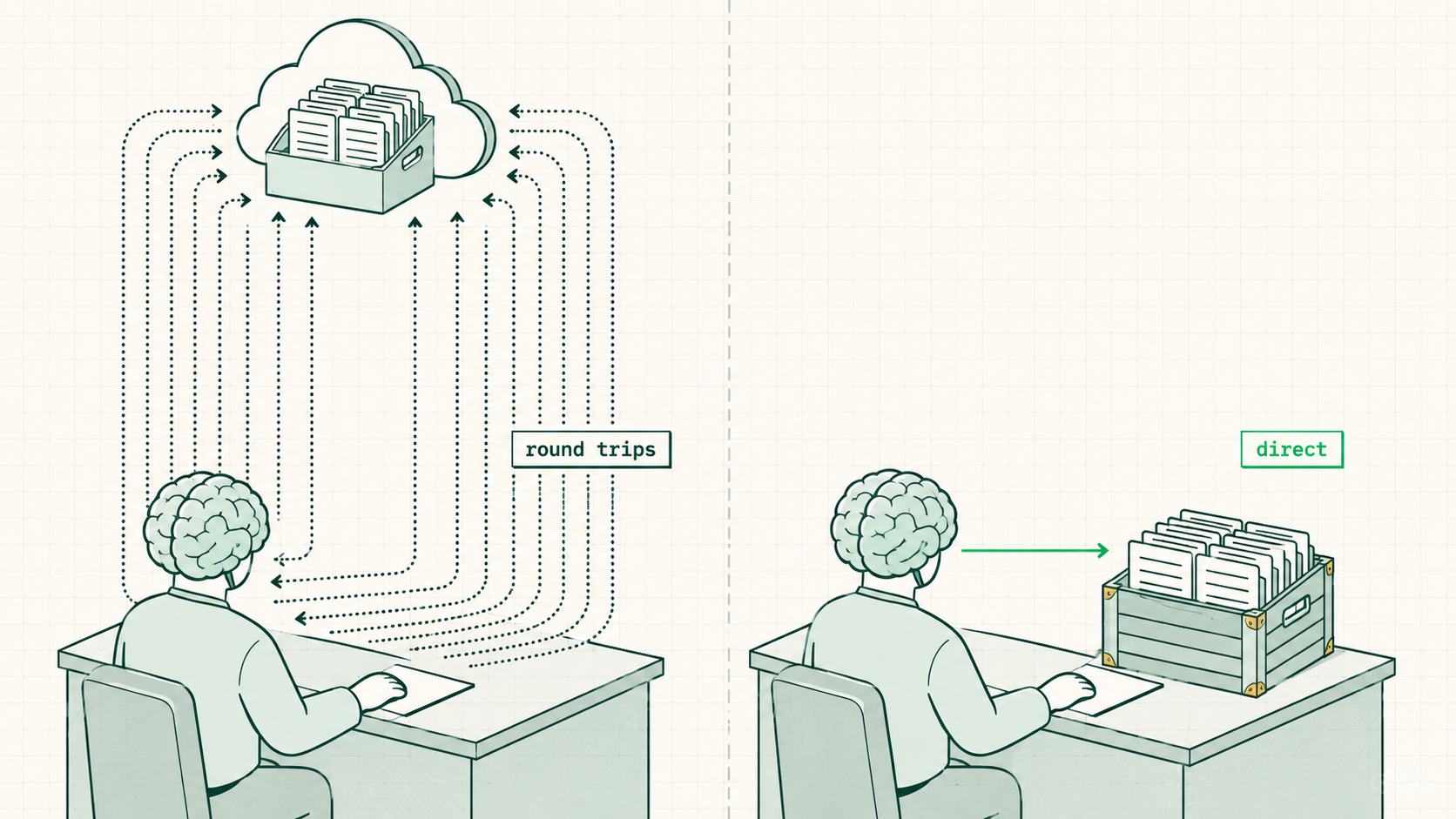
Local means the files are ON the computer — the AI works with them directly instead of making round after round of calls out to the cloud. Direct is faster.
 🖼Image
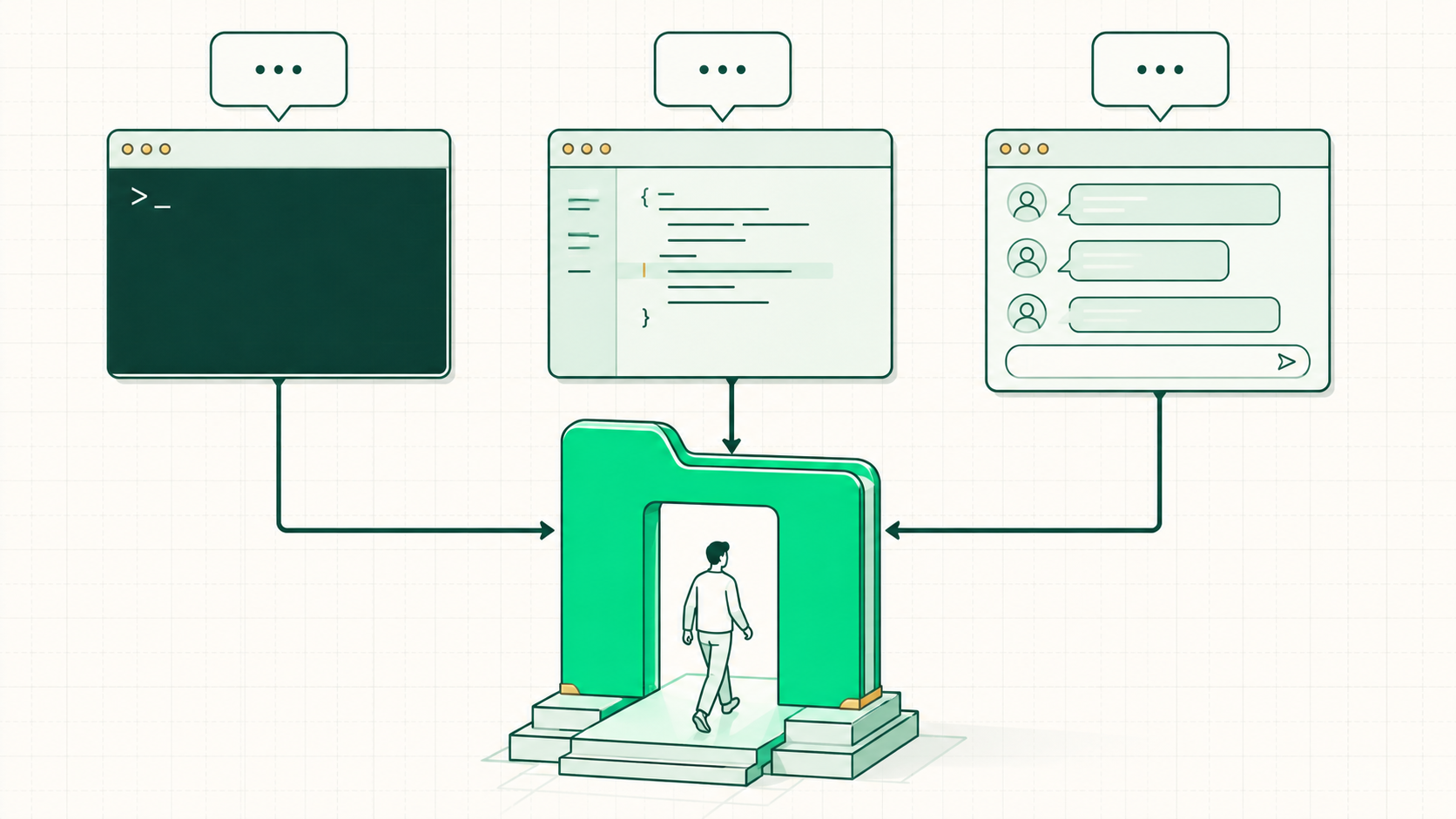
Cowork, Claude Code, and VS Code all open with the same question — which folder to work in. Every professional AI tool starts from the files.
 🖼Image
The same structure, built live — a folder for the business, the context files, the five jobs.